
Key Takeaways
The right bouquet does not need to solve grief. It only needs to acknowledge love, memory, and the person your mom is missing.
- Let your mom’s feelings guide the style and tone of the flowers.
- Choose blooms or colors connected to her mother and shared memories.
- Decide whether the arrangement should feel comforting, joyful, or quietly nostalgic.
- Add a personal note or keepsake to make the gesture more intimate.
- Plan delivery around the date, setting, and support your mom may need.
Understand the emotion behind the gift
Choosing flowers for mum who misses her own mother begins with recognizing that Mother’s Day can hold several emotions at once. Your mom may feel grateful, tender, distracted, peaceful, or deeply sad. A bouquet can make room for all of those feelings without asking her to perform happiness. The kindest gesture is usually one that says, “I remember her with you.”
Recognize grief, remembrance, and love
Grief is not separate from love; it is often one of the ways love continues to appear. Flowers can acknowledge the bond between your mom and her mother without making the loss the only thing worth remembering. A bouquet of familiar blooms, paired with a few sincere words, may feel more comforting than a grand gesture designed to create a particular reaction.
Consider whether the loss is recent or longstanding
The timing of a loss can shape what feels appropriate, but it does not determine how someone should grieve. A recent loss may call for quiet colors and a smaller arrangement, while a longstanding absence may bring a more layered mixture of memories and celebration. Even years later, a birthday or Mother’s Day can reopen feelings unexpectedly, so avoid assuming that time has made the occasion simple.
For additional ideas about honoring a mother’s memory on this holiday, see these Mother’s Day remembrance traditions.
Let her feelings guide the tone of the gesture
Think about how your mom usually responds to emotional moments. Does she appreciate a heartfelt conversation, a private note, or a visible family ritual? Her personality matters more than a fixed rule about which flowers are “right.” Her own memories matter most, so use symbolism as a starting point rather than a script.
Avoid turning a tender moment into a forced celebration
A Mother’s Day bouquet does not have to be bright, enormous, or overtly festive. Avoid language that suggests she should feel lucky, cheerful, or “over it.” Instead, offer the flowers without pressure and let her decide whether the day becomes reflective, celebratory, or a mixture of both.
Choose flowers with a meaningful message
Flower meanings can help you shape a thoughtful arrangement, especially when you are unsure what to say. Still, symbolism varies by culture, family, and personal experience. Start with the flowers your mom already loves, then use traditional associations to refine the choice. A sympathy flower guide can offer useful background on color and common meanings without replacing your knowledge of her preferences.
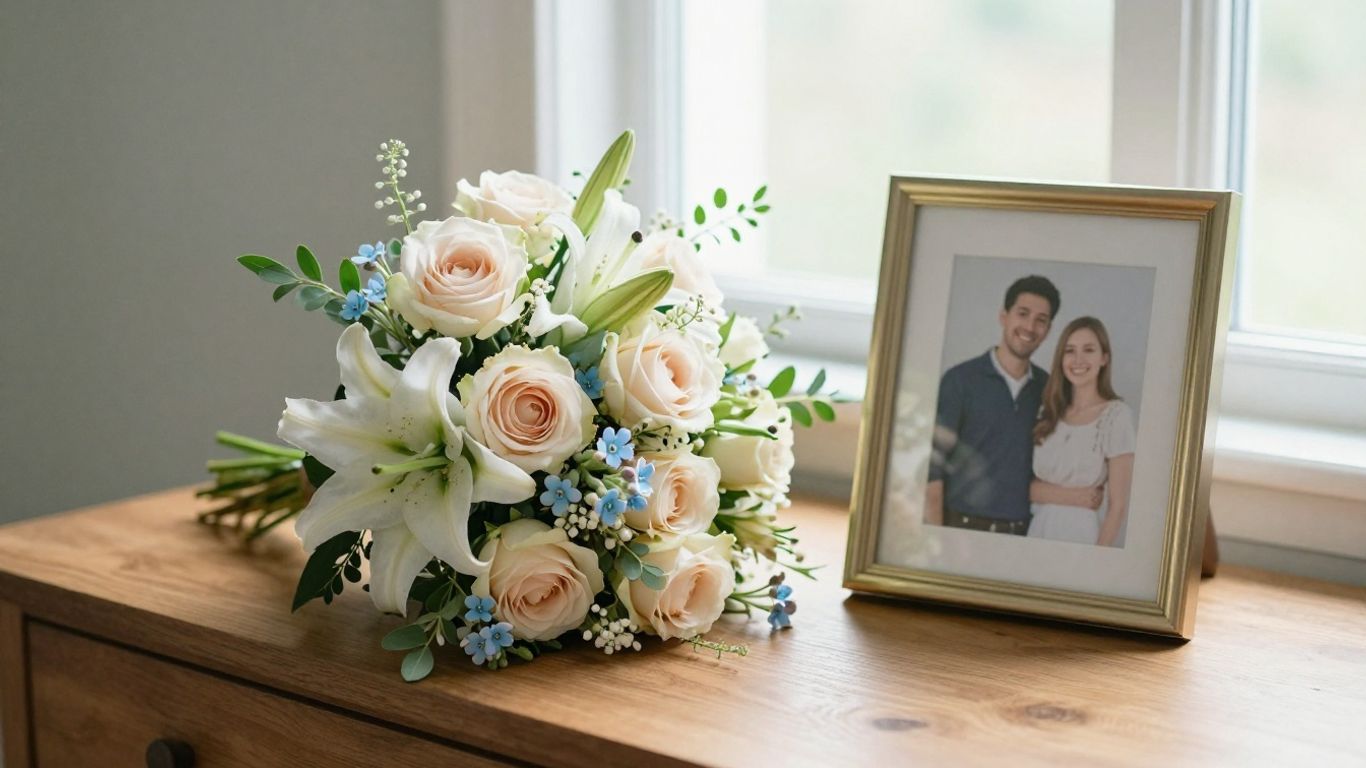
Use roses to express enduring love
Roses can convey affection, devotion, and remembrance, but the color changes the feeling. Red roses may feel intimate and intense, pink roses gentler, and cream or white roses quieter. If your grandmother grew roses or kept them in the house, that personal association will usually matter more than any general flower dictionary.
Consider lilies, carnations, and chrysanthemums
Lilies can create a serene, graceful arrangement, while carnations often feel familiar and lasting. Chrysanthemums may suit a family that associates them with gardens, autumn visits, or memorial traditions. These flowers can be used separately or combined, but the overall arrangement should reflect your mom rather than look like a generic sympathy display.
Explore forget-me-nots and other remembrance flowers
Forget-me-nots have an obvious connection to memory, which can make them especially fitting when your message is about keeping someone close. Blue flowers, delicate wildflowers, and seasonal garden blooms can also suggest tenderness without being solemn. If a particular flower appeared in your grandmother’s yard, that connection may say more than a conventional symbol.
Balance traditional symbolism with your mom’s personal preferences
A bouquet should be meaningful to the person receiving it, not merely correct according to a list of meanings. Consider her favorite colors, flowers she dislikes, and whether she prefers loose garden arrangements or polished designs. The following guide can help you compare the emotional direction of common choices before you decide.
| Flower or style | Possible feeling | Personal question to ask |
|---|---|---|
| Roses | Love, devotion, remembrance | Did her mother grow or favor them? |
| Lilies | Peace, grace, quiet reflection | Would their fragrance suit her home? |
| Carnations | Familiarity, affection, lasting care | Do they recall family occasions? |
| Chrysanthemums | Tradition, family, seasonal memory | Are they connected to a place or season? |
Use the table as a prompt for conversation with yourself, not as a set of rules. The strongest arrangement may combine a traditional flower with one that has an entirely private family meaning.
Match the bouquet to her relationship with her mother
No two mother-daughter relationships carry the same history. Some are close and easy, some are complicated, and some are shaped by distance or unfinished conversations. The bouquet should leave room for that truth. You are not required to present the relationship as perfect in order to honor what it meant.
Recreate flowers her mother used to grow
A grandmother’s garden can be one of the clearest routes to a meaningful bouquet. Think about roses along a fence, hydrangeas near a porch, herbs in a kitchen window, or daffodils that appeared every spring. Recreating even one familiar flower can make the arrangement feel like a small piece of home rather than a store-bought seasonal object.
Choose colors connected to family memories
Color can carry a memory just as strongly as a scent. Perhaps your grandmother wore soft lavender, decorated with yellow, or kept blue vases throughout the house. You can echo that palette subtly through ribbon, flowers, or the vase itself instead of making the arrangement overly literal.
Include blooms from a meaningful place or season
A flower associated with a family holiday, hometown, vacation, or birth month can give the bouquet a quiet narrative. Seasonal flowers may recall a garden visit or a particular time of year when everyone gathered. If the memory is specific, mention it in the card so your mom understands why you chose those blooms.
Select a garden-style arrangement for a natural, familiar feeling
A loose, garden-style bouquet often feels personal because it resembles flowers gathered at home. Varied heights, soft greenery, and a slightly unstructured shape can suggest an old-fashioned vase on a kitchen table. It is a good choice when your mom would prefer warmth and familiarity over a formal presentation.
Decide between a comforting and celebratory arrangement
The same person may want comfort one year and celebration the next. There is no need to choose a permanent style for every Mother’s Day. Consider the particular date, the family mood, and the memories your mom has been sharing recently. A bouquet can be gentle without being gloomy, or joyful without ignoring the loss.
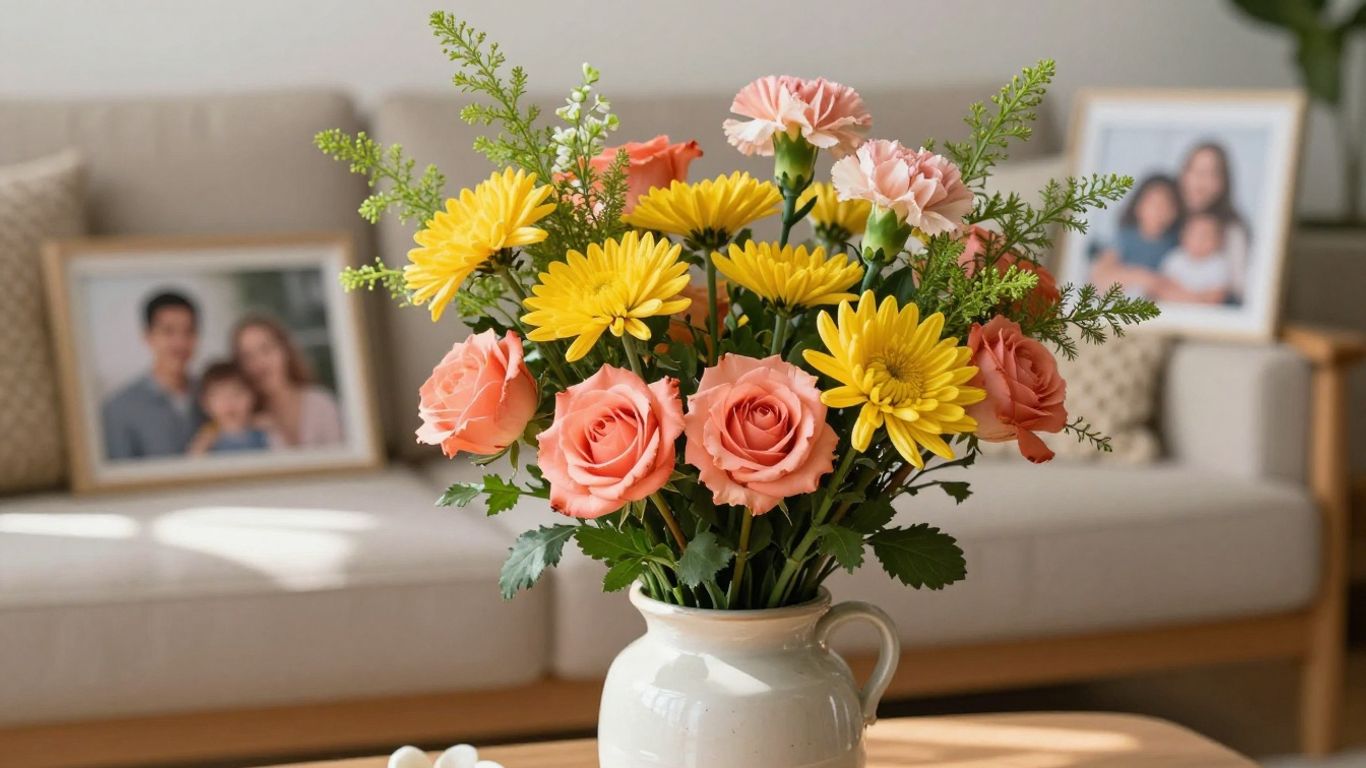
Choose soft colors for a gentle expression of sympathy
White, blush, cream, pale blue, and soft lavender can create a calm arrangement. These colors may be suitable when the loss feels close or when your mom tends to prefer understated gestures. Keep the shape open and airy, and avoid adding so much greenery or decoration that the flowers feel formal and distant.
Use bright blooms to honor a joyful memory
Bright flowers can be right when your grandmother was known for laughter, strong color, or a lively garden. Yellow, coral, orange, and vivid pink may recall celebrations, summer afternoons, or a favorite dress. The point is not to deny sadness but to make space for the parts of her life your mom wants to remember with pleasure.
Combine nostalgic flowers with a modern design
You can pair an old-fashioned flower with a contemporary vase or a simple architectural arrangement. For example, familiar carnations or roses may feel fresh when grouped with clean lines and restrained foliage. This approach works well for someone who appreciates family history but does not want a traditional memorial-style display.
Know when a simple bouquet may feel more appropriate than an elaborate display
A smaller bouquet can be more considerate if your mom is private, overwhelmed, or living in a compact space. It also allows the personal message to remain central instead of making the delivery feel like an event. If you are uncertain, choose quality, familiarity, and ease of care over size.
Personalize the flowers for your mom
The arrangement is only one part of the gift. A note, photograph, vase, or small practical detail can show that you considered how your mom will experience the flowers after they arrive. Personal touches are most effective when they are restrained and specific. One meaningful addition is often enough.
Add a handwritten note that acknowledges her mother
Write in your natural voice rather than searching for a perfect condolence phrase. You might mention a quality your grandmother passed down, a memory your mom has shared, or a simple promise to spend time together. A short note such as “I know you’re thinking of Grandma today; I’m thinking of her with you” can be more reassuring than a polished paragraph.
Include a framed photo or small keepsake
A photograph can make the bouquet part of a larger remembrance ritual. Choose an image your mom genuinely likes, not necessarily the most formal family portrait. A recipe card, garden seed packet, or small object connected to home may work just as well if it has a clear personal meaning.
Choose a vase she can reuse or associate with home
A reusable vase extends the gesture beyond the life of the flowers. Look for a shape and color that fits her home, or choose something reminiscent of a vase her mother used. Avoid an oversized container if your mom prefers practical objects and does not enjoy arranging flowers herself.
Consider her allergies, pets, and flower-care preferences
Check for fragrance sensitivities, pollen concerns, pets, and mobility issues before ordering. Some people love fresh flowers but dislike trimming stems and changing water, while others enjoy caring for a bouquet each morning. A florist can often suggest a lower-maintenance arrangement, and a non-floral keepsake may be kinder if fresh flowers would create difficulty.
Plan the delivery with care
Timing can change how a bouquet is received. A surprise may feel lovely for one mom and uncomfortable for another, particularly on a difficult anniversary. Think about where she will be, whether she will have company, and whether someone can help her enjoy the flowers when they arrive. Guidance on sending sympathy flowers also reinforces that there is no single perfect moment; the meaning and context matter.
Choose the right time for Mother’s Day, an anniversary, or a birthday
Mother’s Day is an obvious date, but an anniversary of a death, your grandmother’s birthday, or a family milestone may feel more personal. You can send flowers before the date if your mom finds anticipation difficult, or afterward if the day itself is crowded with emotion. Ask a trusted family member for timing advice when you are unsure.
Decide whether to send flowers privately or give them in person
An in-person delivery lets you offer a hug, share a story, or sit quietly together. A private delivery may be better if your mom dislikes attention or needs time before talking. Either choice can be loving; the decision should reflect how she usually prefers to receive support.
Coordinate delivery if she may need emotional support
If the date is likely to be especially hard, arrange for a sibling, relative, or close friend to check in. The flowers should not arrive as the only expression of care. You might plan a meal, a walk, or a phone call around the delivery so your mom has company if she wants it.
When arranging any time-sensitive delivery, even practical planning advice such as reducing appointment cancellations can be useful for thinking through confirmations and rescheduling. For a home-related delivery, a separate roofing contractor guide is obviously not relevant to flowers, but it illustrates why choosing information that matches the situation matters. Likewise, a competitive intelligence report, a beauty blog guide, and advice on Lunar New Year decorations belong to entirely different planning contexts; they are reminders to keep research focused rather than piling on unrelated ideas.
Offer alternatives when fresh flowers are not the right choice
Some families prefer a living plant, a memorial stone, a framed photograph, or a donation made in the grandmother’s name. A lasting remembrance gift can be especially suitable when your mom travels often, has pets, or does not enjoy cut flowers. You can also give a handwritten letter and spend time together, which may be the most welcome gesture of all.
Consider these simple alternatives when a bouquet would not fit:
- A flowering plant or small herb garden for the home.
- A framed photograph paired with a favorite family recipe.
- A memorial tree, shrub, or garden contribution.
- A planned visit to a meaningful place.
The best substitute still carries the same message: her mother is remembered, and your mom does not have to hold that memory alone. Choose something that can be received comfortably rather than something that merely looks impressive.
Conclusion
The most thoughtful flowers are not necessarily the rarest or largest. They are the ones that reflect your mom’s relationship with her mother, give her room to feel what she feels, and arrive with genuine care. A familiar bloom, a handwritten note, and your willingness to stay close can turn a simple bouquet into a tender act of remembrance.
Frequently Asked Questions
What flowers are appropriate for a mom missing her own mother?
Roses, lilies, carnations, chrysanthemums, forget-me-nots, and familiar garden flowers can all work well. The most appropriate choice is usually the flower connected to your mom’s memories or her mother’s home and preferences.
Should the bouquet be cheerful or subdued?
Let your mom’s personality and the occasion guide you. Soft colors may feel comforting after a recent loss, while bright blooms can honor a grandmother remembered for joy, energy, and color.
Is it still meaningful to send flowers years after a mother’s death?
Yes. Grief does not follow a fixed timetable, and anniversaries or holidays can remain significant long afterward. Flowers can acknowledge an enduring bond without suggesting that your mom should still feel one particular way.
What should I write in the card?
Keep the message simple and personal. Mention that you are thinking of her, acknowledge her mother by name if appropriate, and include one memory or quality that feels true to your family.
Is it better to give the flowers in person?
Not always. An in-person gift allows for companionship, while a private delivery gives your mom space. Choose the method that matches her comfort with attention and emotional conversations.
What can I give instead of fresh flowers?
Consider a plant, framed photograph, memorial garden contribution, keepsake, family recipe, or shared outing. A thoughtful alternative can be more suitable when your mom has allergies, pets, limited space, or little interest in flower care.
How can I support my mom beyond sending flowers?
Stay available without pressuring her to talk or celebrate. A phone call, meal, visit, or quiet walk can help her feel accompanied, especially around Mother’s Day and other dates connected to her mother.