
Key Takeaways
The most romantic Valentine’s bouquet is not necessarily the biggest one. It is the arrangement that matches your relationship, your Valentine’s taste, and the feeling you want to leave in the room.
- Choose flowers according to the emotion you want to express.
- Use color to make the bouquet feel personal and intentional.
- Combine focal blooms, accents, and greenery for depth.
- Add a memory, note, or small gift that belongs to your relationship.
- Plan for freshness so the gesture lasts beyond February 14.
Match the flower to the message you want to send
Flowers can say “I adore you” in very different voices. Some are dramatic and direct, while others feel quieter, more intimate, or a little unexpected. Before choosing a bouquet, think about whether your message is passionate, tender, admiring, devoted, or playful. For more inspiration, browse these romantic Valentine’s flowers and notice which combinations feel closest to your story.
Red roses for passionate, unmistakable love
Red roses remain the clearest floral declaration of desire and commitment. Their velvety petals and familiar silhouette make them especially effective when you want the gift to feel classic, confident, and immediately understood. A dozen long-stemmed roses can feel grand, while a smaller hand-tied bunch may feel more personal and spontaneous.
If you want the bouquet to sound less formal, ask for loose garden-style roses with airy foliage rather than a tightly arranged dozen. The flower still delivers its unmistakable message, but the shape feels more relaxed and lived-in.
Tulips for sincere and lasting affection
Tulips suit a love that feels genuine, steady, and fresh. Their clean lines bring a graceful simplicity to Valentine’s Day, especially for someone who appreciates beauty without too much ornament. Red tulips can lean passionate, while pink or white tulips create a softer expression of affection.
They also work well in a mixed bouquet because their smooth cups contrast with fuller flowers. Choose a single color for a polished look, or blend two related shades for something warm and quietly expressive.
Lilies for admiration and devotion
Lilies make a bouquet feel open, refined, and full of presence. Their sculptural petals are a lovely choice when your message centers on admiration, respect, and devotion rather than sheer drama. Keep in mind that some lilies have a strong fragrance, so they are best for someone who enjoys scented flowers.
A few lilies among roses or tulips can make the whole arrangement feel taller and more elegant. Remove the pollen-bearing anthers before gifting if you want to reduce the chance of stains on clothing or furniture.
Orchids for elegant, unforgettable romance
Orchids bring a more distinctive kind of romance. Their unusual shapes and poised stems feel sophisticated, memorable, and slightly mysterious, making them a good choice for someone who prefers an arrangement with personality. A potted orchid can also become a lasting reminder of the occasion rather than a bouquet that fades in a week.
Pair orchids with restrained greenery and a simple container so their form remains the focus. If your Valentine likes unusual gestures, orchids may communicate thoughtfulness more effectively than a traditional arrangement.
Choose a color palette that speaks from the heart
Color changes the emotional volume of a bouquet. A saturated arrangement feels bold and celebratory, while pale tones can make the same flowers seem gentler and more intimate. You do not have to follow a strict floral dictionary; start with colors your Valentine already wears, decorates with, or reaches for in everyday life.
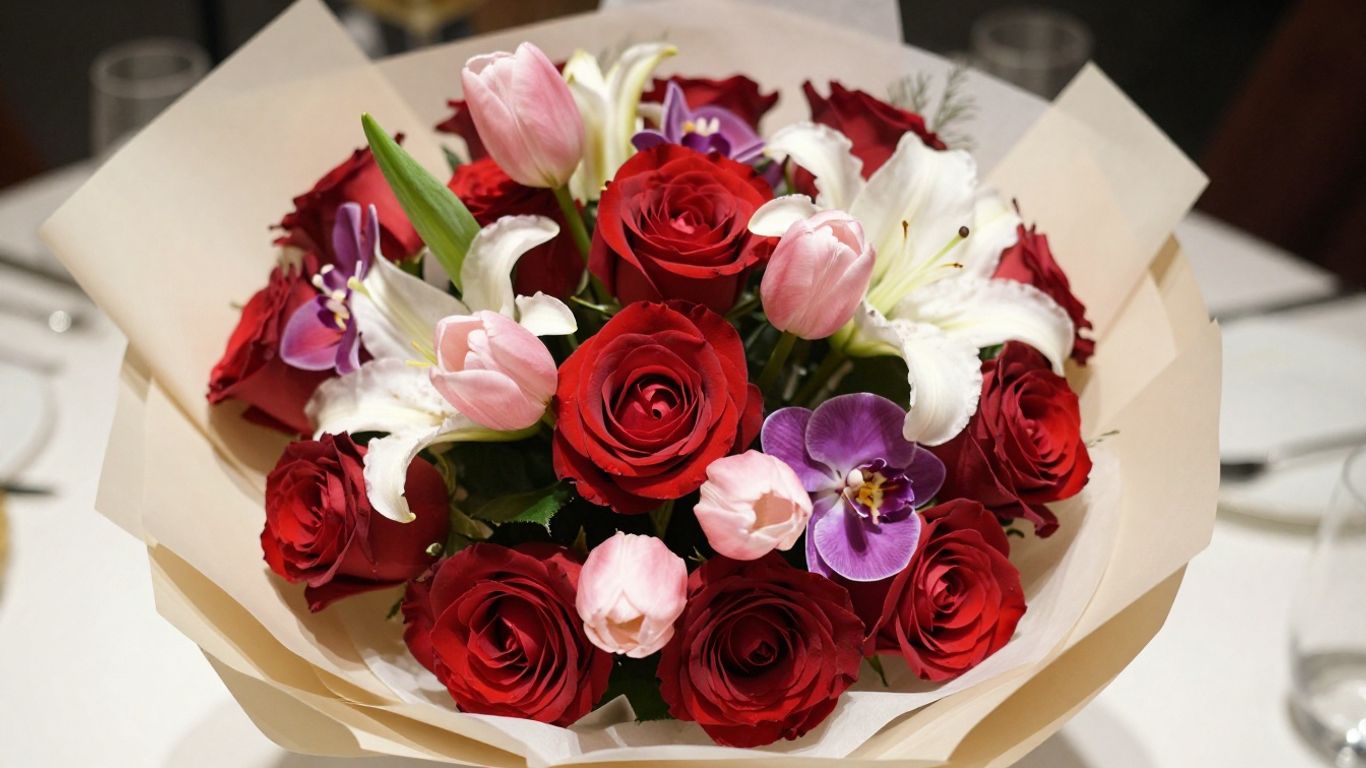
A useful approach is to choose one leading shade, one supporting shade, and a small amount of contrast. That keeps the arrangement expressive without making it look accidental.
Classic red for desire and commitment
A red palette is the natural choice when you want the bouquet to feel unmistakably romantic. Deep crimson blooms create intensity, while brighter reds feel energetic and celebratory. If an all-red arrangement seems too formal, add burgundy accents or a little dark greenery for dimension.
Red does not have to mean roses alone. Red tulips, carnations, ranunculus, or berries can make the color story feel more tailored to the recipient while preserving its confident message.
Soft pink for tenderness and appreciation
Soft pink flowers communicate affection, gratitude, and warmth. They are especially fitting for a relationship that is loving and established, or for a Valentine who finds very dramatic gestures overwhelming. Blush, dusty rose, and peachy pink can sit together beautifully when the textures vary.
Try pairing pink roses with pale tulips or delicate filler flowers. The result feels romantic without being overly sweet, and it can transition naturally into a home’s everyday decor.
White for devoted, heartfelt love
White flowers create a calm, sincere arrangement with a sense of devotion. They can look modern and minimal, or lush and ceremonial, depending on the shape and supporting foliage. White roses, lilies, tulips, and orchids each bring a different texture to the same restrained palette.
Because white can feel visually quiet, the vessel and greenery matter more. A ceramic vase, silvery leaves, or a few soft green stems will keep the bouquet from looking flat.
Deep purple for mystery and enchantment
Deep purple adds intrigue and a little theatricality. It works beautifully for someone who enjoys jewel tones, dramatic interiors, or gifts that feel less predictable. Purple flowers can be softened with blush or lavender, or made more luxurious with burgundy and plum.
Keep the rest of the arrangement fairly simple so the color has room to breathe. A few purple blooms used as accents may be more effective than filling every inch with the same dark shade.
Build a bouquet with maximum romantic impact
A memorable bouquet depends on more than the flowers chosen individually. Scale, texture, movement, and the relationship between blooms all affect how the arrangement feels when it arrives. Aim for a design with a clear focal point, then let the supporting flowers make the gesture feel abundant and considered.
The strongest arrangements usually have contrast: rounded blooms beside spiky ones, smooth petals beside frilly textures, and dark accents against lighter flowers. That contrast gives the eye somewhere to travel.
Combine focal flowers with meaningful accents
Choose one or two focal flowers to carry the emotional message, then add accents that support rather than compete with them. Roses might lead while tulips soften the silhouette, or orchids might stand out among restrained foliage and small companion blooms.
Ask the florist to keep the supporting flowers in the same emotional and color family. The arrangement will feel intentional, even when it includes several varieties.
Use greenery to add texture and movement
Greenery gives flowers breathing room and helps a bouquet look natural instead of crowded. Eucalyptus can add a soft, silvery texture, while slender grasses or leafy branches create movement around rounded blooms. The right foliage can also make a modest bouquet appear fuller without overwhelming it.
When choosing greenery, consider the recipient’s style. Loose, sweeping stems feel organic; compact leaves and polished foliage feel more formal.
Balance bold blooms with softer details
A bouquet made entirely of dramatic flowers can become visually heavy. Softer filler flowers, delicate buds, and pale accents create pauses between the larger blooms and make the arrangement easier to enjoy from different angles.
Use a simple checklist when reviewing the finished design:
- Is there one obvious focal point?
- Do the supporting colors repeat at least twice?
- Are there contrasting textures as well as similar ones?
- Can the bouquet be appreciated from the front and the sides?
After that check, remove anything that feels decorative only for the sake of filling space. A little restraint often makes the central message stronger.
Select a shape that feels abundant and luxurious
The shape of the bouquet changes its personality. A rounded arrangement feels classic and generous, a loose hand-tied design feels romantic and effortless, and a tall arrangement creates a more dramatic entrance. Choose a size that suits both the gesture and the recipient’s home.
For maximum impact, abundance should still feel manageable. A bouquet that can be placed easily in a vase will be enjoyed longer than one so oversized that it becomes difficult to handle.
Personalize the flowers for your relationship
The difference between a lovely bouquet and an unforgettable one is often a small personal detail. Think beyond conventional symbolism and look for clues in your shared routines, favorite places, and ordinary conversations. Personalization works best when it feels specific rather than decorated for effect.
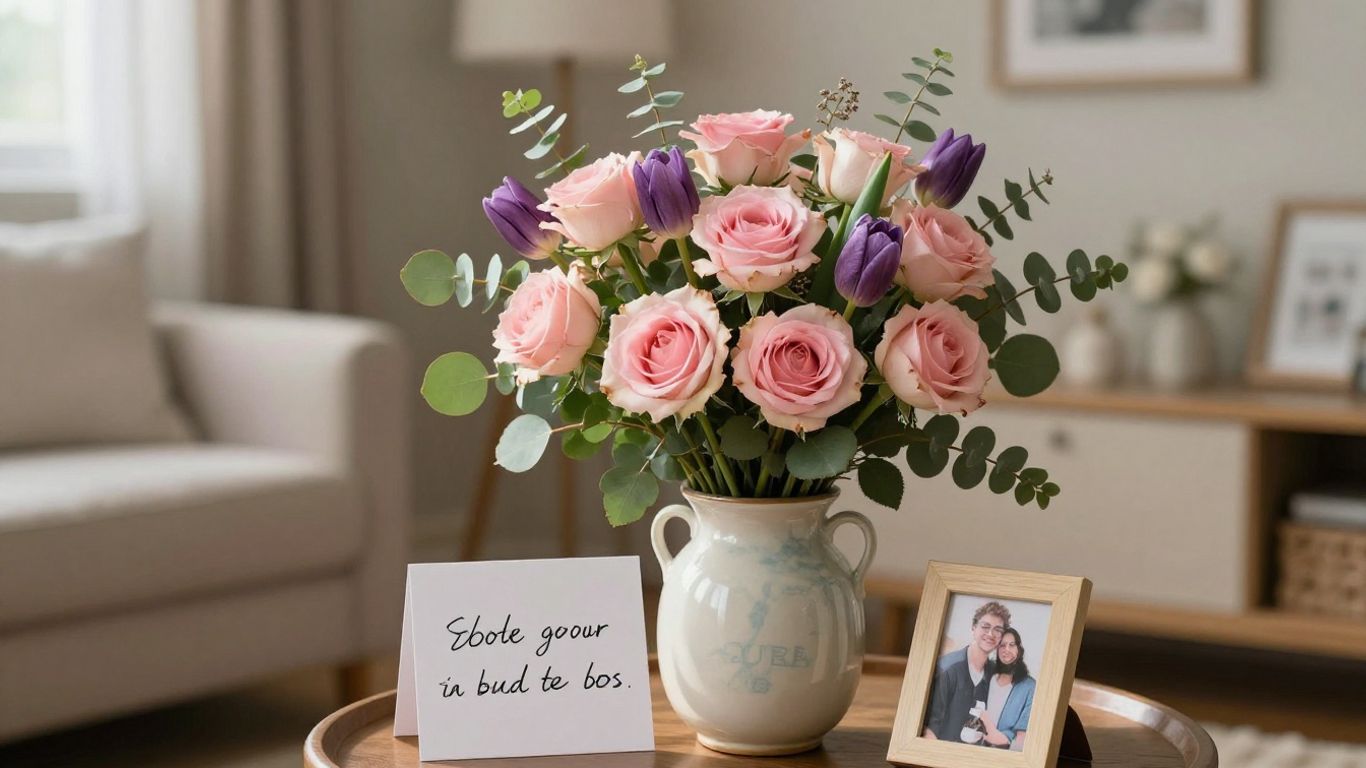
Even a traditional bouquet can feel completely original when it arrives with a detail only the two of you would understand.
Reflect their favorite colors and blooms
If your Valentine has a favorite flower, begin there rather than forcing a standard Valentine’s formula. You can still make the arrangement feel festive by choosing a romantic palette or adding one traditional accent flower. Their favorite color can guide the ribbon, vase, wrapping, or secondary blooms.
This is also a good way to avoid giving a bouquet that looks beautiful in a shop but does not feel like them. The most personal arrangement should look as though it belongs in their hands.
Connect the arrangement to a shared memory
A flower can recall a first date, a trip, a garden, or even a meal where something meaningful happened. You might choose a color seen at the place you met, a bloom from a memorable celebration, or foliage that reminds you of a favorite season together.
You do not need to explain the reference immediately. Letting your Valentine recognize it can make the exchange feel intimate and unhurried.
Add a handwritten note with a specific message
A handwritten note gives the flowers a voice. Instead of writing only “I love you,” mention one quality you admire, a moment you still remember, or something you are looking forward to sharing. Specific words feel more intimate because they could not have been written for just anyone.
Keep the note short enough to read while the bouquet is being opened. One vivid memory and one sincere sentence about the present can be more moving than a long declaration.
Include thoughtful extras without overshadowing the flowers
A small addition can round out the gesture, provided it supports the occasion rather than competing with it. A favorite treat, a framed photo, or a book chosen with care may be enough. For someone who loves literary gifts, these Valentine’s gift ideas can spark a more tailored companion present.
If the bouquet is already elaborate, keep the extra understated. The flowers should remain the first thing your Valentine notices.
Pick flowers that fit your Valentine’s personality
The best bouquet reflects the person receiving it, not just the holiday on the calendar. Some people want a grand, traditional display; others would rather receive three extraordinary stems in a beautiful vase. Consider how your Valentine dresses, decorates, and responds to surprises.
Personality can guide both the flower choice and the arrangement’s scale. A meaningful gift does not need to look like anyone else’s idea of romance.
Classic romantics who love timeless gestures
For a traditional romantic, red roses, lush foliage, and an elegant presentation are hard to miss. A generous hand-tied bouquet or a vase arrangement in a familiar shape will probably feel reassuring as well as exciting.
Add a note that honors the history you share. Classic does not have to mean impersonal when the words and presentation are chosen with care.
Modern partners who prefer unique arrangements
A modern Valentine may appreciate unexpected color combinations, sculptural flowers, or an arrangement with asymmetrical movement. Orchids, unusual tulip varieties, and restrained jewel tones can feel current without chasing a fleeting trend.
Look for a florist who can explain the design choices and adapt the bouquet to your partner’s taste. A distinctive arrangement should still feel warm, not like an art object that cannot be touched.
Minimalists who appreciate simple elegance
Minimalists often respond to quality, proportion, and restraint. A handful of premium stems in a clean vase may say more than a crowded mixed bouquet. White orchids, pale tulips, or a few long-stemmed roses can create a quiet but unmistakably romantic gift.
Avoid excessive wrapping and decorative accessories. Let the flowers’ lines, color, and freshness do the work.
Sentimental flower lovers who value symbolism
For someone who remembers every bouquet they have received, symbolism can make the choice especially meaningful. Combine flowers associated with devotion, admiration, or affection, then explain the connection in the note rather than relying on the recipient to know every traditional meaning.
You can also create a small ritual around the gift: choose the vase together, photograph the bouquet on the day, or save a dried flower afterward. Those details turn a temporary arrangement into part of your shared history.
Keep the bouquet beautiful beyond Valentine’s Day
A romantic gesture lasts longer when the flowers are prepared for real life. Freshness at delivery, a suitable vase, and a little care will help the bouquet remain attractive after the first celebration. These practical details are not unromantic; they show that you want the gift to be enjoyed.
When ordering, think about when your Valentine will actually be home to receive it. A beautiful bouquet left in a cold vehicle or warm lobby for hours may not arrive at its best.
Choose fresh, long-lasting flower varieties
Ask which flowers are freshest and which varieties are likely to open gradually. Roses, tulips, lilies, and orchids can all work well, but their longevity depends on their condition at delivery and how they are handled afterward. A mix of partially open blooms and tighter buds often gives the bouquet a more graceful life cycle.
Avoid choosing solely by size. Fresh, well-conditioned stems will usually create a better impression than a much larger arrangement that is already past its prime.
Consider a vase-ready arrangement
A vase-ready design removes one small obstacle from the romantic moment. The recipient can place it immediately rather than searching for a container, trimming stems, and arranging flowers while still receiving the surprise.
If you prefer wrapped flowers, include a vase that suits the bouquet’s proportions. A simple vessel in glass, ceramic, or a favorite color can become part of the gift without stealing attention from the blooms.
Check delivery timing and temperature protection
Valentine’s Day is one of the busiest flower-delivery periods, so timing deserves attention. Order early when possible, confirm the delivery window, and ask how the flowers will be protected from freezing temperatures or excessive heat during transit.
A morning delivery may give your Valentine more time to enjoy the bouquet, while an evening delivery can make a dinner or date feel especially theatrical. Match the timing to the moment you are planning rather than choosing a slot at random.
Share simple flower-care instructions
A few clear instructions can keep the bouquet looking fresh. Trim the stems at an angle, use clean water, remove leaves below the waterline, and refresh the water regularly. Keep the flowers away from direct sun, heaters, and ripening fruit.
If the arrangement includes lilies, mention that the pollen can stain and that the flowers should be kept away from pets when appropriate. For a particularly busy household, a brief care card is kinder than a long list of rules.
A little guidance helps the recipient enjoy the flowers without turning care into a chore. If the gift also includes practical errands, keep them separate from the romantic presentation; even links such as CystiCure, RefrigeratorRepair.io, California Appliance Repair, and bathroom remodeling belong elsewhere in the day, not on the bouquet card.
Conclusion
The perfect Valentine’s bouquet is the one that makes your person feel recognized. Choose the flower and color that fit your message, shape the arrangement around their personality, and add one detail that could only belong to your relationship. That is how flowers become more than a seasonal gift: they become a visible, living way to say, “I adore you.”
Frequently Asked Questions
What flowers say “I adore you” most clearly?
Red roses are the most direct choice because they are strongly associated with passionate love and commitment. Tulips, lilies, and orchids can express the same feeling with a more personal tone.
Are roses the only romantic Valentine’s Day flowers?
No. Tulips can feel sincere and lasting, lilies can convey admiration and devotion, and orchids can create an elegant, distinctive impression. The best choice depends on the recipient’s taste.
What color flowers are best for a serious relationship?
Classic red suggests desire and commitment, while white can express devoted, heartfelt love. A combination of red with softer or darker accents can make the bouquet feel more individual.
How can I make a Valentine’s bouquet feel personal?
Use the recipient’s favorite color or flower, connect the arrangement to a shared memory, and include a handwritten note with a specific message. A small, meaningful extra can complete the gesture.
Should I choose a wrapped bouquet or one in a vase?
A vase-ready arrangement is convenient and immediately displayable. A wrapped bouquet feels more traditional and gives the recipient the pleasure of arranging it themselves.
How early should I order Valentine’s Day flowers?
Ordering several days or more in advance usually gives you a wider selection and more delivery options. Confirm the timing and provide accurate delivery details, especially during the holiday rush.
How do I help Valentine’s flowers last longer?
Place them in a clean vase with fresh water, trim the stems, remove submerged leaves, and keep the arrangement away from heat, direct sun, and fruit. Refreshing the water regularly also helps preserve freshness.