
Key Takeaways
A memorable Valentine’s bouquet begins with the recipient, not a fixed recipe. Choose a style that suits them, use flowers that feel intentional, and give the arrangement enough care to last beyond the first evening.
- Match the bouquet’s colors and shape to their personality.
- Combine focal flowers with fillers and greenery for depth.
- Condition stems before arranging them.
- Add a note, keepsake, or detail tied to a shared memory.
- Keep the finished bouquet cool, hydrated, and away from direct sun.
Choose a bouquet style that matches their personality
The most romantic arrangement is the one that feels as though it was chosen for one particular person. Think about the colors they wear, the way they decorate their home, and whether they prefer classic details or something a little unexpected. A personal sense of style will make even a modest bouquet feel remarkably thoughtful.
Classic red roses with timeless appeal
Red roses are a natural choice when you want the bouquet to feel traditional, passionate, and instantly recognizable. Use an odd number of roses in the center, then soften the outline with a little eucalyptus or delicate white filler. For more inspiration beyond a standard arrangement, browse these Valentine’s bouquet ideas and borrow one detail rather than copying the whole design.
Keep the shape rounded and the palette restrained. A velvet ribbon or folded cream paper can make the roses feel elegant without competing with their color.
Soft pastel blooms for a gentle romantic look
Blush roses, peach ranunculus, pale tulips, and lavender-toned blooms create a quieter kind of romance. This palette works especially well for someone who likes airy interiors, soft clothing, or flowers that look gathered rather than formally arranged. Vary the flower heads slightly so the bouquet has movement instead of looking like a tightly packed ball.
A few sprigs of silvery foliage can keep pastels from becoming too sweet. Choose a warm ivory wrap rather than bright white if you want the overall effect to feel softer.
Wildflower-inspired designs for a relaxed feel
A wildflower-inspired bouquet should look abundant but not overly controlled. Combine flowers with different stem lengths, let a few pieces lean outward, and include airy grasses or fern-like greenery. The charm comes from small irregularities, so do not trim every bloom to exactly the same height.
This style suits someone who enjoys gardens, weekend walks, or an unfussy home. Kraft paper, linen ribbon, or a simple ceramic vase will reinforce its relaxed character.
Modern monochromatic arrangements for minimalist tastes
A monochromatic bouquet uses one color family while relying on shape and texture for interest. Try several shades of pink, white, burgundy, or even one dramatic red, pairing open blooms with buds and sculptural greenery. The limited palette makes the silhouette especially important, so step back often while arranging.
For a minimalist recipient, fewer flowers can be more effective than a crowded bundle. A clean wrap, narrow ribbon, and visible stems will give the gift a composed, contemporary finish.
Select flowers with meaning and lasting beauty
Flowers can carry a message, but their symbolism should support the relationship rather than dictate it. Choose blooms that remind you of the person, then use color and texture to create a bouquet that feels alive. If you want a quick reference for traditional choices, this guide to Valentine’s Day flowers offers ideas ranging from roses to tulips and lilies.
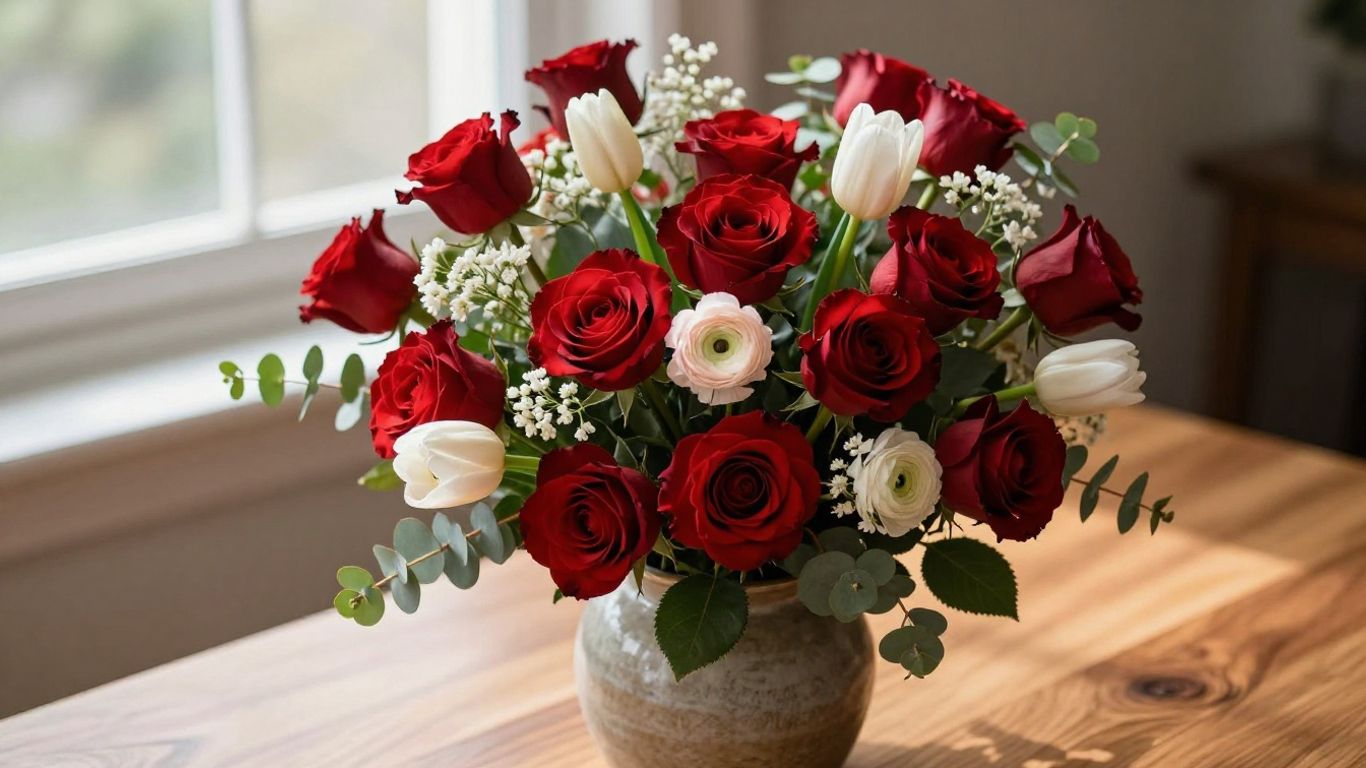
What different Valentine’s Day flowers symbolize
Roses often suggest love and admiration, while tulips can bring a cheerful, uncomplicated feeling. Carnations, lilies, daisies, and ranunculus each create a different mood, even when their formal symbolism varies between traditions. The most meaningful choice may simply be a flower they once mentioned, grew in a garden, or carried on an important day.
Color changes the tone too. Deep red feels dramatic, blush feels tender, yellow feels sunny and friendly, and white gives the bouquet a calm, clean appearance.
Combining focal flowers, fillers, and greenery
Start with one or two focal flowers that draw the eye, then add supporting blooms with smaller heads. Fillers such as waxflower or baby’s breath create light between the larger flowers, while greenery provides shape and helps the arrangement feel grounded. A good bouquet has places for the eye to rest; packing every gap can make it look heavy.
Use this simple structure when shopping or gathering flowers:
- Choose one dominant flower for the central focus.
- Add one supporting flower with a different shape.
- Include a light filler to soften open spaces.
- Finish with greenery that frames the outer edge.
After the list, look at the stems together before cutting them. If every flower has the same visual weight, add a smaller bloom or more greenery rather than simply adding volume.
Choosing fresh blooms that will open beautifully
Look for sturdy stems, clean leaves, and flower heads that are free from bruising or slimy petals. Roses and similar blooms are often best when their outer petals are firm and the center is still partly closed, giving them room to open at home. Avoid flowers with drooping leaves, yellowing foliage, or waterlogged stems.
Buy as close to the presentation time as practical, especially if the flowers will travel. When choosing between a fully open bloom and a healthy bud, the bud usually gives the recipient more days of enjoyment.
Pet-safe and allergy-friendly flower options
If the recipient has pets or allergies, ask about sensitivities before choosing highly scented flowers. Keep the bouquet away from cats and dogs unless you have confirmed that every variety is safe, since some popular flowers can be dangerous if chewed. Low-scent options and flowers with less loose pollen may be more comfortable for an allergy-sensitive home.
A thoughtful alternative is a smaller arrangement of clearly identified flowers. It is easier to check each variety and easier for the recipient to place safely.
Gather the materials for your bouquet
Preparation makes the arranging stage calmer and helps the flowers stay in good condition. Set everything on a washable surface before you begin, including the container or wrapping materials. A small collection of reliable tools is more useful than a drawer full of decorative supplies.
Essential flowers and greenery
For a medium bouquet, gather a focal flower, a supporting flower, one filler, and two kinds of greenery. Try to buy a few extra stems in case a bloom is damaged or a stem snaps while you work. The final number depends on the flower sizes, but variety matters more than strict counts.
Keep the flowers in clean water while you prepare the rest. Separate any leaves that would sit below the waterline, since submerged foliage can spoil the water quickly.
Vases, floral tape, and cutting tools
Use a clean vase or bucket for conditioning and sharp floral shears for cutting stems. Dull scissors can crush the stem, making it harder for the flower to drink. Floral tape, twine, and a small amount of waterproof tape are helpful when you need to hold a shape, but the bouquet should not depend on excessive binding.
A narrow-necked vase can support a loose arrangement, while a wider vessel gives a round bouquet room to spread. Match the container to the finished silhouette before you make the final cut.
Wrapping paper, ribbon, and decorative accents
Choose wrapping paper that will not disintegrate if it touches a little moisture. Tissue layered over kraft paper creates softness, while matte paper gives a more modern look. Ribbon, raffia, a small charm, or a sprig of dried foliage can finish the gift, but one or two accents are usually enough.
If the recipient loves books, you could pair the flowers with ideas from this Valentine’s gift guide for a librarian, choosing a small literary keepsake to accompany the bouquet. The floral design should remain the central gift rather than becoming hidden beneath decorations.
Sustainable alternatives to floral foam
Floral foam is not necessary for a hand-tied bouquet. A reusable vase, a chicken-wire nest inside a container, or a simple taped grid across the vase opening can hold stems while allowing water to circulate. For wrapped flowers, tie the stems securely and use a small refillable water pouch for transport.
Reuse paper, ribbon, and containers whenever possible. Even a glass jar wrapped in fabric can look intentional when the proportions and colors are right.
Build the bouquet step by step
Arrange the bouquet in your hand rather than placing each stem randomly into a vase. This lets you see the shape as it develops and makes it easier to rotate the design. Work slowly, because removing one crowded stem often improves the whole arrangement.
Prepare and condition the flower stems
Remove leaves and thorns that would fall below the waterline, then recut each stem at an angle with clean shears. Place the flowers in fresh, lukewarm water while you work, giving them time to recover from travel. Keep delicate heads away from drafts and rough surfaces.
If a stem is bent or damaged, cut above the weak area rather than trying to hide it in the bouquet. Healthy stems make the final arrangement easier to balance.
Create a balanced central focal point
Choose the strongest flower and place it slightly above the center of the bouquet. Add two or three companion blooms around it, turning the bundle as you go so the focal point can be seen from several angles. The center should feel intentional, not like a single flower floating above everything else.
Avoid making the bouquet perfectly flat. A small difference in height gives the center dimension and makes the flowers look more natural.
Layer supporting blooms and textured greenery
Build outward with supporting flowers, alternating sizes and directions. Tuck filler blooms into open spaces, then place greenery around the perimeter to create a soft frame. Let some leaves sit behind the flowers and a few peek through the middle.
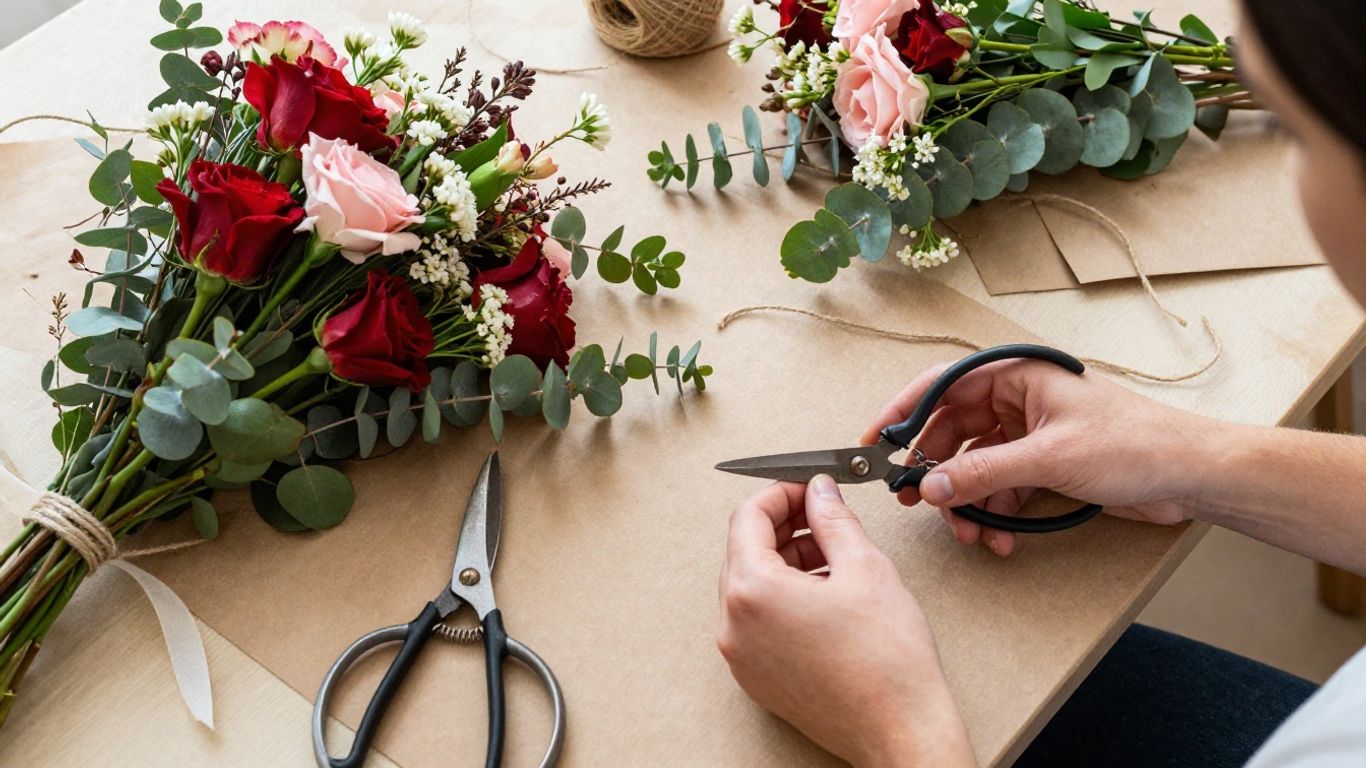
Turn the bouquet frequently as you add each layer. If one color or texture appears in a cluster, distribute another stem nearby so the eye travels naturally across the arrangement.
Secure the arrangement for a polished shape
When the silhouette feels right, hold the stems at the point where they naturally cross and tie them with floral tape or twine. Do not bind too tightly, or the stems may bruise and the flowers may look forced. Trim the bottoms together, keeping enough length for the vase or wrapping method you have chosen.
Place the bouquet in water immediately if it will be displayed. If it is being wrapped, protect the lower stems with damp paper or a water source designed for flower transport.
Add personal touches that make the gift memorable
A bouquet becomes much more personal when it includes one small clue to the relationship. The detail does not need to be expensive or elaborate; it only needs to show that you noticed something. Think of the arrangement as a visual message, with the flowers setting the mood and the finishing touch completing the thought.
Incorporating their favorite colors
Start with a color they genuinely enjoy rather than relying only on traditional Valentine’s shades. A favorite blue can appear in a ribbon or a few blue-toned flowers, while a love of green may call for an arrangement rich in foliage. Use one familiar color as an anchor, then add two supporting tones.
If you are unsure, look at their everyday surroundings. Their clothing, ceramics, artwork, or favorite room can reveal a palette that feels more personal than a generic red-and-pink combination.
Including a handwritten message or keepsake
A handwritten note gives the bouquet a voice after the flowers fade. Keep it specific: mention a small kindness, a shared joke, or the moment you first realized how much they mattered. A photograph, recipe card, pressed-paper tag, or tiny envelope can also become a keepsake without overwhelming the arrangement.
Place the note where it can be found easily, but keep it dry. A small sleeve tied to the ribbon is often safer than slipping paper between damp stems.
Choosing meaningful charms and decorative details
A charm can refer to a hobby, a pet, a favorite place, or a private joke. Choose something lightweight so it does not pull down delicate stems, and attach it to the ribbon rather than the flowers themselves. Natural details such as a tiny pinecone, a smooth stone, or a dried seed pod can add texture when they suit the recipient.
Restraint matters here. One memorable object usually says more than several unrelated decorations competing for attention.
Matching the bouquet to a shared memory
Use a flower, color, or shape connected to a moment you both remember. Perhaps a yellow bloom recalls a sunny trip, or a loose garden style brings back the first home you shared. This approach turns the bouquet into a small story rather than a seasonal purchase.
For another gift-planning idea, you might pair the bouquet with this thoughtful gift guide for a future mom, selecting only the suggestions that suit your own shared memory. Personal relevance is always more moving than simply choosing the most elaborate option.
Wrap and present the bouquet beautifully
Wrapping should protect the flowers while allowing their natural shape to remain visible. Before you fold the paper, hold the bouquet at the height where it will be carried and check that no important bloom is hidden. The presentation begins before the recipient sees the flowers, so clean edges and a secure tie are worth the extra minute.
Selecting paper and ribbon combinations
Use two layers of paper when you want contrast: a soft inner layer around the stems and a sturdier outer layer for structure. Neutral paper lets vivid blooms stand out, while a colored wrap can make a pale bouquet feel warmer. Keep the ribbon proportional to the bouquet; a narrow tie suits a delicate bundle, and a wider ribbon works for a fuller one.
Fold the paper into a gentle cone rather than a tight cylinder. This protects the flowers without pressing their heads together.
Keeping stems hydrated during transport
Wrap the cut ends in damp paper, then cover that layer with a leak-resistant pouch or plastic wrap. The moisture should reach the stems but not the outer paper. Keep the bouquet upright and away from a hot car dashboard, heater, or direct afternoon sun.
If delivery will take several hours, use a proper water-filled transport sleeve when available. Check the wrapping before handing it over so no water has seeped into the folds.
Styling the bouquet for photos or delivery
For photographs, place the bouquet near a window with gentle, indirect light. A plain surface, a visible ribbon, and a little breathing room around the flowers will make the image feel more natural than a crowded background. Turn the arrangement until the focal blooms face the camera without forcing every stem forward.
If someone else is delivering it, attach the note securely and make sure the bouquet can stand upright. Small practical details protect the surprise from becoming a crumpled bundle.
Timing the presentation for maximum impact
Give the bouquet when the recipient has a moment to enjoy it rather than while they are rushing between plans. A quiet morning, an arrival home, or the start of a shared meal can make the presentation feel unhurried. If the flowers are being delivered, coordinate the timing so they are not left outside in extreme temperatures.
The gesture does not need a theatrical reveal. A simple handoff accompanied by a sincere sentence can be more affecting than a complicated setup.
Keep the bouquet fresh after Valentine’s Day
A little care can extend the life of the arrangement and preserve the feeling behind it. Tell the recipient what to do when you give them the flowers, or include a small care card with the note. The routine is simple, but consistency makes the difference.
Trimming stems and changing the water
Trim the stems again before placing the flowers in a clean vase, cutting at an angle with a sharp tool. Remove any leaves that would sit underwater, then fill the vase with fresh water. Change the water every day or two, rinsing the vase if it becomes cloudy.
When the water level drops, top it up rather than waiting for the stems to become exposed. Clean water helps the flowers continue drinking.
Positioning flowers away from heat and sunlight
Place the vase in a cool area with indirect light. Avoid radiators, heat vents, sunny windows, and fruit bowls, since warm conditions can shorten vase life. A stable surface also prevents accidental knocks as the stems become softer.
If the room is warm during the day, move the bouquet to a cooler spot overnight. Even a small change in temperature can help delicate blooms last longer.
Removing fading blooms to extend vase life
Remove flowers as they wilt, especially if their petals fall into the water. A fading bloom can affect the appearance of the entire arrangement and contribute to murky water. Recut nearby stems if they have softened, then adjust the remaining flowers into a smaller design.
Do not wait until every flower fades before making changes. A bouquet often looks lovely in a new shape with only a few strong stems left.
Repurposing flowers as they begin to dry
Some flowers can be air-dried by hanging them upside down in a dark, dry, well-ventilated place. Others are better pressed between paper or used as loose petals in a small dish. Remove any moldy or wet material rather than trying to preserve it.
Dried stems can become part of a tiny arrangement, a card decoration, or a keepsake tied to the original note. The bouquet then continues its story in a quieter form.
Conclusion
A Valentine’s bouquet to make hearts skip a beat does not require a florist’s studio or an extravagant budget; it needs a thoughtful style, fresh flowers, careful construction, and one detail that belongs to the person receiving it. Choose with intention, present it gently, and care for it well so the gesture lingers after the holiday.
Frequently Asked Questions
What flowers are best for a Valentine’s bouquet?
Roses are classic, but tulips, ranunculus, carnations, daisies, lilies, and seasonal flowers can all create a beautiful bouquet. The best choice depends on the recipient’s taste, scent sensitivities, and the mood you want to create.
How many flowers should a Valentine’s bouquet contain?
There is no required number. A small bouquet may use five to nine substantial stems, while a fuller arrangement can include more supporting flowers and greenery. Focus on balance and proportion rather than counting alone.
How can I make a bouquet look fuller?
Add flowers with different head sizes, use airy fillers, and frame the edges with greenery. Varying stem heights also creates volume. Avoid squeezing in too many blooms, since open space helps the arrangement look intentional.
Should I choose red flowers for Valentine’s Day?
Red is traditional, but it is not mandatory. Pink, peach, white, lavender, yellow, and mixed palettes can feel equally romantic when they suit the recipient or connect to a shared memory.
How long can a wrapped bouquet stay without water?
Try to keep cut flowers hydrated as much as possible. A properly wrapped bouquet may manage a short trip, but several hours without water can cause wilting, especially in warm conditions. Use damp stem wrapping or a water pouch for longer transport.
How often should bouquet water be changed?
Change the water every day or two, and rinse the vase if it becomes cloudy. Recutting the stems and removing submerged leaves can also help the flowers take up clean water.
Can I include flowers if the recipient has pets?
Yes, but first check the safety of every flower and keep the arrangement where pets cannot chew it. If you are uncertain, choose clearly identified, low-scent flowers and tell the recipient what varieties are included.