
Key Takeaways
Flowers can offer quiet companionship when someone is having a hard time. The most thoughtful choice considers the recipient’s feelings, space, health, and personality.
- Choose blooms whose colors and forms suit the emotion you want to express.
- Roses, sunflowers, daisies, lilies, and orchids can each convey support in a different way.
- A modest arrangement may feel more comfortable than an elaborate display.
- Personal words make a floral gift warmer and more specific.
- Check allergies, pets, care needs, and delivery timing before ordering.
What flowers that say “I am here for you” communicate
Flowers that say i am here for you do not need to solve anything. They simply create a visible reminder that someone is thinking about the recipient, even when conversation feels tiring. A well-chosen bouquet can be gentle, hopeful, or quietly respectful. Its meaning comes from the flowers, the colors, the timing, and the note attached.
Comfort without demanding conversation
A bouquet can offer care without asking the recipient to reply, explain, or appear cheerful. Soft flowers in a calm palette often work well when a person needs company but not more questions. The gesture says, “You do not have to carry this moment alone,” while leaving them free to receive it in their own way.
Encouragement during a difficult season
When someone is facing stress, illness, disappointment, or uncertainty, brighter flowers can bring a small lift to an otherwise heavy day. Sunflowers and yellow daisies feel open and friendly, while mixed seasonal flowers can make the gift feel spontaneous rather than formal. The aim is encouragement, not forced optimism.
Steady friendship and emotional support
For a friend, choose flowers that feel warm and sincere without creating romantic confusion. Daisies, alstroemeria, gentle roses, and cheerful mixed bouquets can express affection rooted in companionship. Floral symbolism can help, but the most convincing message is often a simple note about one specific way you value the friendship.
Remembrance, sympathy, and quiet presence
In grief, flowers should be chosen with restraint and sensitivity. White lilies, pale roses, chrysanthemums, or a subdued seasonal arrangement may communicate peace and remembrance. If you are unsure about local customs or the family’s preferences, a smaller bouquet with a private note is usually a considerate choice. Resources about flowers that express feelings can offer additional inspiration, but personal knowledge of the recipient matters more than a fixed flower dictionary.
The best flowers for expressing support
There is no single correct bouquet for emotional support. Some flowers feel sunny and energetic, while others are graceful, calm, or quietly affectionate. Consider what the person is likely to welcome in their home, then let the arrangement’s color and scale refine the message.
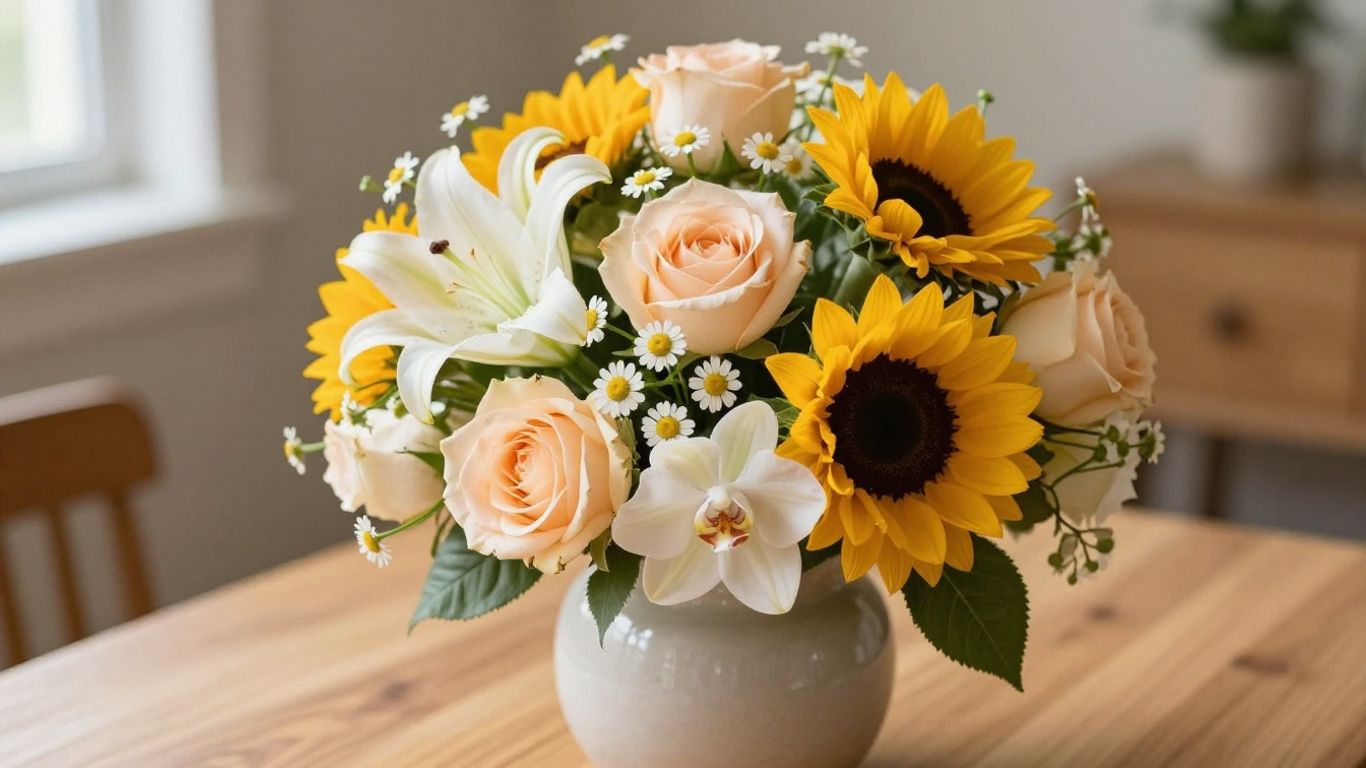
Roses for lasting care and reassurance
Roses can be tender, reassuring, or deeply affectionate depending on their color and styling. Pink and peach roses are often easier to read as caring than a dramatic red arrangement, especially for a friend or colleague. A loose bouquet of garden-style roses feels personal and warm, while a simple handful can be quietly comforting.
Sunflowers for hope and positivity
Sunflowers bring height, brightness, and an unmistakable sense of warmth. They suit a friend who needs encouragement or someone beginning again after a difficult stretch. Pair them with greenery or small white flowers if a full sunflower bouquet feels too bold for the recipient’s taste or space.
Daisies for gentleness and friendship
Daisies have an uncomplicated, approachable quality that makes them useful for many supportive occasions. White daisies feel clean and gentle; colorful gerbera varieties add more energy. Their friendly appearance works particularly well when you want to brighten a room without making the gesture feel solemn or overly serious.
Lilies for sympathy and peace
Lilies are elegant and often associated with peace, remembrance, and sympathy. Their fragrance can be powerful, though, so consider whether the recipient enjoys scented flowers. A white lily arrangement may suit a memorial gesture, while pale pink varieties can feel softer for someone recovering from a difficult experience.
Orchids for strength and thoughtful admiration
Orchids make a composed, lasting-looking gift for someone whose resilience you admire. Their sculptural shape feels thoughtful without being loud, and a potted orchid may be suitable when cut flowers are inconvenient. For broader guidance on choosing a floral gift, which flowers to give offers another perspective on matching blooms to feeling and occasion.
How flower colors change the message
Color can change the emotional temperature of an arrangement as much as the flower itself. A single bloom may feel peaceful in white, sunny in yellow, or intimate in pink. Think about the recipient’s personality as well as traditional associations; someone who loves vivid color may find a bright bouquet more comforting than a muted one.
White blooms for peace and compassion
White flowers create a sense of stillness, tenderness, and care. They are natural choices for sympathy, recovery, or moments when you want to avoid an overly festive tone. White roses, lilies, daisies, and chrysanthemums can be softened with green foliage or combined with blush tones for a less formal appearance.
Yellow flowers for warmth and encouragement
Yellow flowers feel generous and companionable. They can say that you are thinking of someone, cheering them on, or grateful for their presence. Use them for a friend facing a demanding week, a colleague returning after an absence, or anyone who would appreciate a little brightness without a heavy message.
Pink flowers for tenderness and appreciation
Pink suggests affection, kindness, and gentle appreciation. Pale pink is especially versatile for friends, family members, and partners, while deeper pink can feel more expressive. Pink roses, carnations, lilies, and tulips can be arranged with cream or white blooms when you want the result to feel soft and balanced.
Blue and purple flowers for calm and reflection
Blue and purple tones tend to feel reflective and serene. They can suit a person who prefers understated arrangements or needs a peaceful presence during a period of uncertainty. Lavender, iris, blue delphinium, or purple statice can add depth without overwhelming a room.
A short video about flower meanings can be useful when you are comparing colors visually, but do not let symbolism overrule what you know about the person. A favorite flower or familiar color may carry more comfort than a traditional interpretation.
Choosing flowers for the situation
The right arrangement depends on what the recipient is living through, not only on the relationship you share. Grief calls for sensitivity, while recovery or a new beginning may welcome more color. Before ordering, picture the bouquet arriving at the person’s home, workplace, hospital room, or memorial setting.
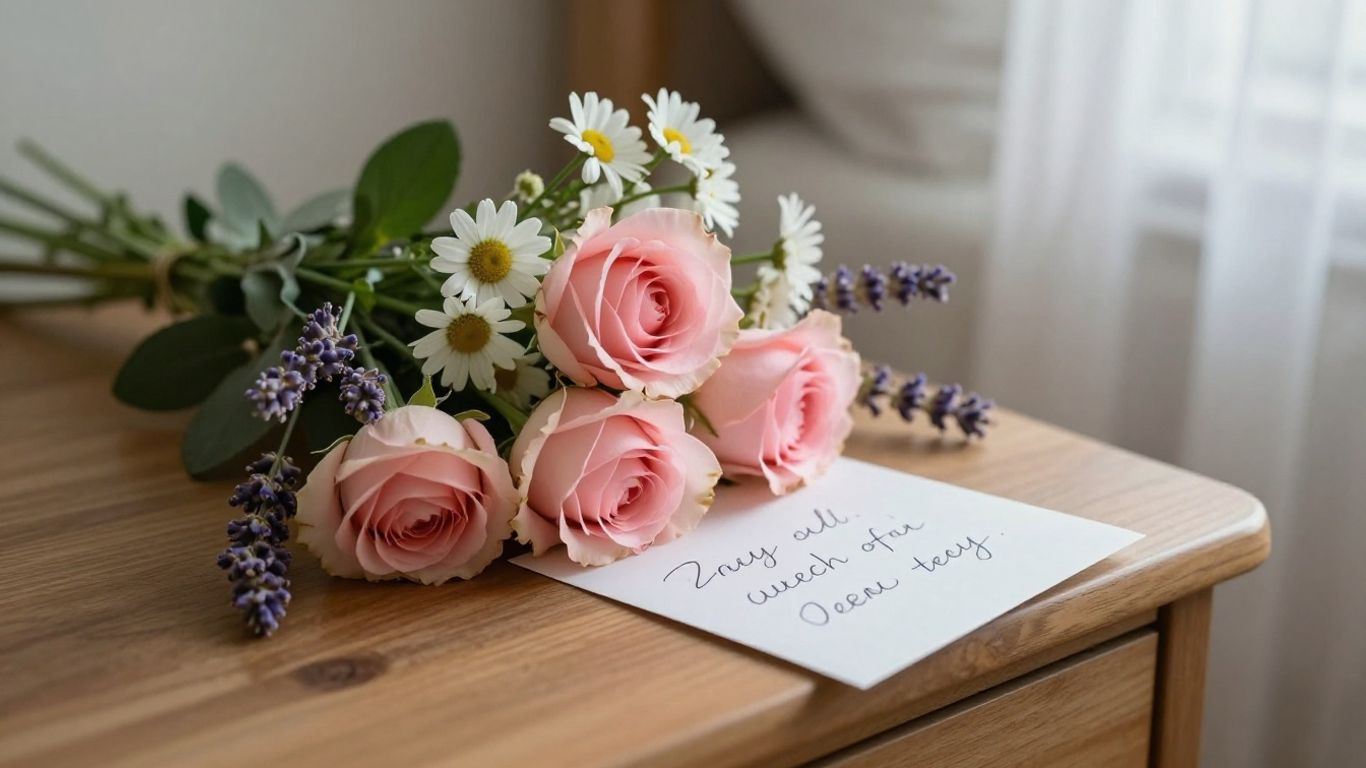
Supporting someone through grief
Choose a restrained arrangement in white, cream, soft pink, or muted green when sending condolences. Fragrance, size, and delivery location deserve care, particularly if the family is receiving many visitors. A note such as “I am thinking of you and remembering them with you” is more supportive than trying to explain the loss.
Encouraging a friend facing illness or stress
For illness or sustained stress, select flowers that are cheerful but manageable. A compact vase of daisies, a bright bunch of sunflowers, or a flowering plant can bring color without demanding much attention. Ask about hospital or workplace rules first, and avoid implying that the person should recover quickly or stay positive.
Reassuring a partner during a challenging time
A partner may appreciate flowers that feel personal rather than ceremonial. Choose a favorite bloom, a color connected to a shared memory, or a familiar arrangement that makes the home feel cared for. Red roses can be romantic, but peach, pink, or mixed flowers may communicate tenderness and steady presence more naturally.
Celebrating a personal setback or new beginning
Flowers can acknowledge progress without pretending the difficult part never happened. Sunflowers, tulips, orchids, or vivid mixed blooms work well for a fresh start, a new job, a completed milestone, or a brave next step. You might write, “I know this took courage, and I am proud of you,” rather than focusing only on the outcome.
How to create a meaningful supportive arrangement
Meaningful arrangements are usually edited rather than crowded. Start with one emotional direction—comfort, encouragement, gratitude, or admiration—and choose flowers that agree with it. Then consider practical details such as container size, fragrance, and the recipient’s decorating style.
Combine flowers with complementary meanings
Pair one focal flower with supporting blooms that soften or clarify its message. For example, sunflowers with white daisies can feel hopeful but gentle, while pink roses with greenery can express care without becoming too formal. The language of flowers can spark ideas, though the bouquet should still look natural and suited to the person.
Choose a size that fits the recipient’s space
A huge arrangement may be impressive, but it can be awkward in a small apartment, hospital room, or crowded office. A compact vase or hand-tied bunch is often easier to place and enjoy. If the recipient is away from home, a durable potted plant may be more practical than cut stems.
Add greenery for balance and lasting appeal
Greenery gives flowers breathing room and helps a bouquet feel finished. Eucalyptus, ruscus, ferns, or simple leafy stems can add texture without competing with the main blooms. Keep the foliage proportionate, since an arrangement intended to comfort should not feel visually busy.
Include a personal note with specific words of support
A note turns a pleasant delivery into a direct act of care. Mention the person, the situation, and your availability in ordinary language. Helpful messages often include:
- “No need to answer—I just wanted you to know I am thinking of you.”
- “I am here for errands, company, or quiet time.”
- “You have handled so much, and I see how hard you are working.”
- “One day at a time is enough right now.”
Specific wording makes the gesture feel genuine rather than copied from a card rack. If the recipient is a child, a supportive book can extend the conversation; Zumblies offers a series in which recurring characters navigate specific emotional challenges for children aged four to eight.
Practical considerations before sending flowers
Thoughtfulness also means making the gift easy to receive. A beautiful arrangement is less helpful if it triggers an allergy, arrives when nobody is home, or requires more care than the recipient can manage. A few quiet checks can prevent an awkward or stressful delivery.
Check for allergies and pet safety
Ask about allergies when possible, and be cautious with strongly scented flowers. If the recipient has pets, verify that the selected blooms are safe for animals before sending them. When details are uncertain, a low-fragrance arrangement or non-floral gift may be the kinder option.
Consider freshness and vase life
Freshness affects both appearance and the amount of enjoyment the recipient gets from the gift. Look for partly opened blooms, firm stems, and clear care instructions. Hardy flowers or a well-established plant may be preferable when the bouquet needs to last several days.
Choose low-maintenance options for busy recipients
Someone under pressure may not have energy for trimming stems and changing water. A compact arrangement with straightforward care, a plant that tolerates ordinary indoor conditions, or a florist’s easy-care selection can reduce that burden. Practical kindness is still kindness.
Match delivery timing to the recipient’s needs
Timing should follow the person’s circumstances. Same-day delivery may be useful after difficult news, while a later delivery can give someone breathing room after a crowded event. If you are coordinating an address or delivery window, a guide to order processing can clarify the stages between placing an order and receiving it. When ordering from a site, you may also encounter policies such as the FLOW THE KITCHEN cookie policy, which explains technical, functional, and statistical cookies and related privacy rights.
A little coordination can make the flowers feel like support rather than another interruption. If you are sending a reminder or follow-up message about delivery, keep it simple; follow-up email apps are designed for multi-step outreach, but a personal message is usually enough for a floral gift. For people navigating formal support systems, Psychosocial Recovery Coaching is distinct from Support Coordination, so flowers should remain a personal gesture rather than a substitute for professional help.
Conclusion
The best flowers that say I am here for you are chosen with attention, not just symbolism. Let the recipient’s circumstances guide the flower, color, size, and timing, then add a few honest words that leave room for whatever they are feeling. A small, thoughtful bouquet can quietly remind someone that care is close by.
Frequently Asked Questions
What flowers best say “I am here for you”?
Roses, sunflowers, daisies, lilies, and orchids are all thoughtful choices, depending on the message. Consider whether you want to convey comfort, hope, friendship, sympathy, or admiration.
Are flowers appropriate when someone is grieving?
Yes, when selected sensitively. Choose a restrained arrangement, check the family’s customs when possible, and write a sincere note rather than offering advice about the grieving process.
What color flowers should I send for encouragement?
Yellow, peach, and soft pink flowers often feel warm and uplifting. Choose colors the recipient already enjoys if you know their preferences.
Are red roses too romantic for emotional support?
They can be, particularly for a friend or colleague. Pink, peach, yellow, or white roses usually communicate care with less romantic intensity.
Should I send cut flowers or a potted plant?
Cut flowers create an immediate display, while a potted plant may last longer. Choose based on the recipient’s space, energy, preferences, and ability to care for it.
What should I write on a supportive flower card?
Keep the message simple and specific. You can say that you are thinking of them, that there is no need to respond, or that you are available for a particular kind of help.
How can I make a flower delivery more considerate?
Check allergies, pet safety, fragrance preferences, delivery restrictions, and timing. A manageable arrangement with clear care instructions is often more welcome than an oversized bouquet.