
Key Takeaways
The most romantic bouquet is personal, well timed, and suited to the person receiving it.
- Let your soulmate’s personality guide the flower choice.
- Use flower types and colors to shape the message.
- Choose an arrangement style that feels natural for them.
- Add one thoughtful personal detail rather than too many extras.
- Order early, check delivery details, and care for the flowers promptly.
Start with what makes your soulmate special
Choosing romantic valentines flowers for your soulmate begins with attention, not tradition. Think about what makes them feel seen: their taste, routines, favorite places, and the small details they mention in passing. A bouquet becomes more moving when it feels chosen for one person rather than pulled from a generic Valentine’s display.
Match flowers to their personality
Start with the way your soulmate moves through the world. Someone drawn to bold fashion may enjoy deep red roses or sculptural orchids, while a person with a relaxed, outdoorsy style may prefer a loose arrangement of seasonal blooms. If they love simple interiors, an airy bouquet with plenty of greenery may feel more thoughtful than an oversized display.
Consider their favorite colors and scents
A favorite color can be a useful starting point, but scent matters too. Some people adore the fragrance of roses or lilies; others prefer flowers with little or no perfume. If you are unsure, remember what they wear, collect, or keep around the home. Those clues often point toward a palette and fragrance level they will genuinely enjoy.
Use shared memories to inspire the bouquet
A shared memory can give the bouquet a story. Choose flowers in the colors of a favorite vacation, blooms that grew near your first apartment, or a style that recalls the table where you had an important conversation. A private reference adds emotional weight without requiring an elaborate explanation.
Choose between classic and unexpected blooms
Classic flowers are not predictable when they suit the person. Red roses can feel exactly right for a long-standing romance, while tulips, ranunculus, or unusual tropical blooms may better reflect a partner who enjoys discovering something new. A useful middle path is a familiar focal flower surrounded by less expected accents.
Learn the romantic meaning behind popular flowers
Flower meanings are best treated as a starting language, not a strict code. The recipient’s taste and your relationship should carry more weight than a dictionary definition. Still, knowing the usual associations can help you build a bouquet with a clear emotional tone.
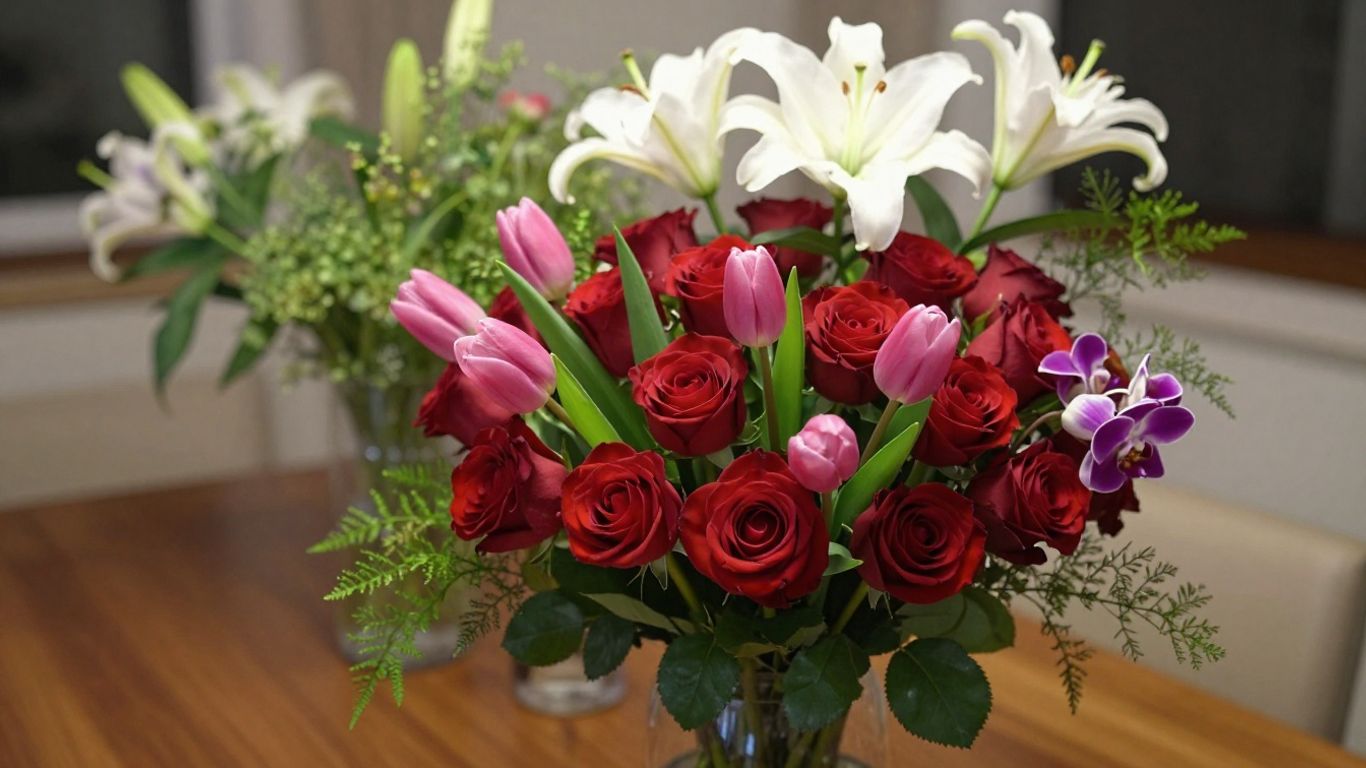
Red roses for passionate love
Red roses remain a natural choice for passionate love, devotion, and commitment. Their form is instantly recognizable, which makes them effective when you want the gesture to feel direct. For a softer result, mix them with greenery or pale companion flowers rather than relying on a dense wall of red.
Tulips for sincere affection
Tulips have a clean, graceful shape and often suggest sincere affection. They work especially well for someone who likes color and freshness without a fussy arrangement. Red tulips can feel romantic, while pink, yellow, or white varieties create a lighter expression of warmth.
Lilies for elegance and devotion
Lilies bring height, fragrance, and a sense of elegance to a bouquet. Their association with devotion makes them fitting for a relationship with depth, though their scent can be strong. Check whether your soulmate enjoys fragrant flowers before choosing a large lily-forward arrangement.
Orchids for lasting admiration
Orchids convey admiration and an appreciation for distinctive beauty. Their architectural petals suit a modern home and can make a smaller arrangement feel considered. They are a good option when your message is less about convention and more about noticing what makes your partner unusual and memorable.
Mixed flowers for a personal message
A mixed bouquet lets you combine several ideas at once: passion, tenderness, admiration, and joy. Use one dominant flower to establish the main feeling, then add supporting blooms that echo a shared memory or favorite color. For more inspiration, browse this romantic flower guide without treating any list of meanings as a rulebook.
Choose the right bouquet style
The shape and presentation of a bouquet affect how it feels before the first flower is even noticed. A compact arrangement may suit a small apartment, while a tall, abundant design can make a dramatic entrance. Consider both their decorating style and where they are likely to place the flowers.
Classic arrangements for timeless romance
A classic arrangement usually relies on familiar flowers, balanced proportions, and a polished finish. It is a strong choice when your soulmate appreciates tradition or when you want the gesture to speak plainly. Red roses, soft greenery, and a refined vase can be romantic without becoming theatrical.
Luxury bouquets for a grand gesture
For a major milestone or a deliberately lavish surprise, choose an arrangement with abundant blooms, rich texture, and a substantial presentation. A luxury design can include premium flowers and a keepsake vase, but scale should still suit the recipient’s home. This luxury Valentine’s flowers collection offers a useful reference for the mood, even if you ultimately choose something smaller.
Minimalist designs for modern tastes
Minimalist bouquets use restraint: fewer varieties, clear lines, and a limited color palette. They can feel highly intentional when your soulmate prefers uncluttered rooms or contemporary design. One striking orchid stem, a small group of tulips, or a sculptural branch may say more than a crowded arrangement.
Hand-tied bouquets for a natural look
Hand-tied bouquets have an easy, gathered quality that feels warm and personal. They are often wrapped simply, allowing stems and foliage to remain part of the visual appeal. This style suits someone who likes markets, gardens, and objects that feel made by hand rather than overly formal.
Preserved flowers for a lasting keepsake
Preserved flowers can remain as a reminder long after fresh blooms have faded. They make sense for a partner who values keepsakes, though they do not offer the same fragrance or changing beauty as a fresh bouquet. Be clear about the care instructions and choose a design they would actually want to display.
Select colors that communicate your feelings
Color can set the mood of the entire gift, especially when the bouquet contains several flower types. Start with one leading shade, then decide whether the supporting colors should soften it, brighten it, or create contrast. The most convincing palette usually connects to something your soulmate already loves.
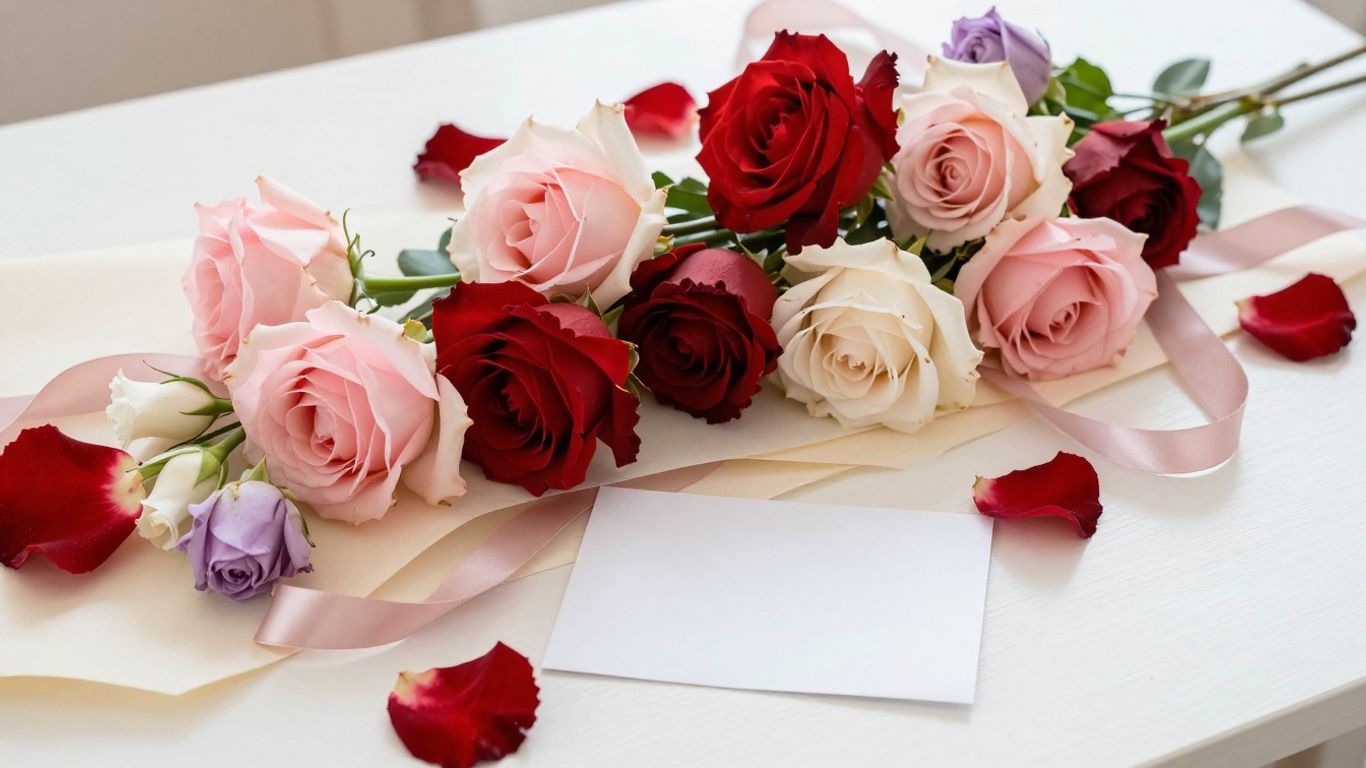
Red for passion and commitment
Red is the clearest choice for passion, desire, and commitment. It works beautifully as the main color when you want an unmistakably romantic gesture. If an all-red bouquet feels too intense, balance it with white flowers, soft foliage, or a quieter wrapping color.
Pink for tenderness and appreciation
Pink communicates tenderness, affection, and appreciation. Blush shades feel gentle and intimate, while brighter pinks bring playfulness and energy. A pink bouquet can be especially fitting when you want to celebrate not only romantic love but also the friendship beneath it.
White for devotion and new beginnings
White flowers can suggest devotion, sincerity, and a fresh chapter. They are elegant on their own and easy to combine with nearly any accent shade. Add greenery for a natural look, or pair white blooms with red when you want the arrangement to feel both pure and passionate.
Purple for admiration and mystery
Purple carries a sense of admiration and mystery. Lavender can make a bouquet feel calm and tender, while deeper violet tones create drama. This palette suits someone who likes unusual colors or prefers romance that feels a little less expected.
A custom color palette for your relationship
A custom palette might come from a meaningful place: the colors of a concert poster, a favorite team, a wedding detail, or a landscape you both remember. This quick guide can help you compare the emotional direction of common choices:
| Main color | Feeling | Useful pairing |
|---|---|---|
| Red | Passion and commitment | White or deep green |
| Pink | Tenderness and appreciation | Cream or blush |
| White | Devotion and new beginnings | Greenery or red |
| Purple | Admiration and mystery | Lavender or ivory |
Use the table as a prompt, not a formula. If your soulmate loves orange, for example, a warm orange-and-pink bouquet may feel more romantic than a traditional red arrangement simply because it reflects them.
Add thoughtful gifts and personal touches
Flowers are often most memorable when they arrive with one detail that could not have been chosen for anyone else. The addition does not need to be expensive. A few carefully selected words or a small object connected to your shared life can make the entire presentation feel intimate.
Pair flowers with a handwritten note
Write something specific rather than relying only on “Happy Valentine’s Day.” Mention a moment you still replay, a quality you admire, or something you are looking forward to doing together. Keep the note short enough to feel natural, and use your own voice rather than copying a polished romantic line.
Include chocolates, candles, or keepsakes
An extra gift works best when it matches an existing preference. Chocolates suit someone who enjoys sweets, while a candle may appeal to a person who likes creating a calm evening at home. If music is part of your relationship, a personalized song can turn a shared story into a longer-lasting digital keepsake.
Add a meaningful photograph or memento
A small photograph, ticket stub, pressed note, or other memento can connect the bouquet to a real memory. Choose something that invites a smile rather than something so precious that it cannot be handled. A simple printed photograph tucked beside the vase is often enough.
Personalize the vase or bouquet wrapping
Wrapping in a favorite color or choosing a vase with a pleasing shape can make the gift feel finished. Consider whether your soulmate prefers reusable, practical objects or decorative pieces. The presentation should complement the flowers rather than compete with them.
Avoid extras that may not suit their preferences
Thoughtfulness includes knowing what to leave out. Fragrance-heavy products, very sweet treats, disposable decorations, or novelty items can miss the mark when they do not fit your partner’s habits. If you are researching several kinds of online gifts, do not let unrelated choices such as AirDNA, an analytics tool for Airbnb and Vrbo markets, distract from what your soulmate actually enjoys.
Plan delivery and care for a memorable surprise
Even a beautiful bouquet can lose its effect if it arrives at the wrong place or sits unattended for hours. Plan around your soulmate’s schedule, the weather, and the practical details of receiving flowers. Before placing an online order, you may also want to review the seller’s Cookie Policy so you understand how the site handles cookies and consent.
Order early for Valentine’s Day availability
Valentine’s Day demand can narrow the selection, especially for popular colors and flower types. Ordering early gives you more control over the bouquet style, vase, and delivery window. It also leaves time to correct an address or change the note if your plans shift.
Choose same-day delivery when timing matters
Same-day delivery is useful for a last-minute surprise or a carefully timed arrival, but availability depends on location and order cutoffs. If you are comparing options, check the delivery area and fees before choosing the arrangement. A same-day delivery option can be helpful when your recipient is in Southeast Wisconsin and the timing is genuinely part of the surprise.
Confirm address and delivery instructions
Double-check the street address, apartment or office details, phone number, and any gate instructions. If the bouquet is going to a workplace, confirm reception hours and whether flowers can be left at a desk. These small checks prevent an otherwise lovely gesture from becoming a logistical problem.
Keep flowers fresh after they arrive
Trim the stems with a clean knife or pair of shears, place the flowers in fresh water, and remove leaves that would sit below the waterline. Keep the arrangement away from direct heat, strong sunlight, and ripening fruit. Replace the water regularly and follow any care card included with the bouquet.
Present the bouquet at the right moment
A surprise is sweetest when the recipient has time to enjoy it. If they are rushing between meetings, a quiet evening may be better than a dramatic delivery at work. You could also pair the presentation with a favorite meal or a glass of Chardonnay if that fits their taste and your plans. For a few practical reminders, keep this short list in mind:
- Check the delivery window the day before.
- Prepare a clean vase and fresh water.
- Keep the note somewhere easy to find.
- Give them a moment to enjoy the flowers.
Once the practical details are handled, the gesture can stay simple. The bouquet, your words, and the memory behind them should remain the center of the moment.
Conclusion
The best Valentine’s bouquet is not necessarily the biggest or most traditional one; it is the arrangement that reflects your soulmate clearly. Choose flowers, colors, presentation, and timing with their preferences in mind, then add one sincere detail that belongs to your relationship. That care is what turns a beautiful bouquet into a lasting romantic memory.
Frequently Asked Questions
What are the most romantic flowers for Valentine’s Day?
Red roses are the classic choice, but tulips, lilies, orchids, and mixed seasonal bouquets can be equally romantic when they suit the recipient’s personality and preferences.
How do I choose flowers for someone who dislikes roses?
Consider tulips, orchids, lilies, ranunculus, or a mixed bouquet. Focus on their favorite colors, scent preferences, and overall style rather than choosing a flower simply because it is traditional.
What flower color best expresses deep love?
Red is commonly associated with passion and commitment. You can soften it with white or pink, or choose a different color if another shade has stronger personal meaning for your relationship.
Are scented flowers a good Valentine’s gift?
They can be, provided the recipient enjoys fragrance. If allergies, pets, or scent sensitivity are concerns, select low-fragrance flowers and ask the florist about the arrangement’s contents.
Should I send a vase with Valentine’s flowers?
A vase is useful when you are unsure whether the recipient has one available. Choose a design that fits their home and can be reused, rather than adding a decorative piece that may not suit their taste.
When should I order Valentine’s flowers?
Order as early as practical for the widest selection and more delivery-time options. Same-day ordering can work in some locations, but it may limit flower choices and available time slots.
How can I make a flower delivery more personal?
Add a short handwritten note, choose a meaningful color palette, or include a small photograph or keepsake. The most personal addition is usually specific to a shared memory rather than expensive.