
Key Takeaways
The best Valentine’s Day flowers for a new relationship feel considerate, personal, and easy to receive.
- Match the size and style of the bouquet to how long you have been dating.
- Choose flowers and colors that suggest warmth without making promises you are not ready to make.
- Keep the arrangement manageable, fresh, and appropriate for your partner’s space and schedule.
- Spend what feels comfortable, then pay close attention to delivery details.
- Use a short card and a relaxed plan to make the gesture feel thoughtful rather than loaded.
Match the flowers to the stage of your relationship
Valentine’s Day can make a new relationship feel more serious than it actually is. You may want to acknowledge the occasion without turning a few dates into a declaration of lifelong devotion. Flowers can strike that balance when the gesture reflects what you already know about each other. A useful new relationship flower guide can offer another perspective, but your own sense of timing matters most.
Early dating and first Valentine’s Day expectations
If you have only been seeing each other for a short time, choose something cheerful and modest. A small bouquet of tulips, daisies, or mixed seasonal flowers says that you were thinking of them without assuming a level of intimacy that has not developed yet. Even a few stems in a simple wrap can feel more natural than a large, formal arrangement.
The card should stay equally light. “Happy Valentine’s Day—I’ve really enjoyed getting to know you” is warm, specific, and not overly intense. If you are not sure whether you are exchanging gifts, a small bouquet can also be paired with a casual message that leaves room for their response.
A few months together versus a more established relationship
After a few months, you may have enough context to make the flowers more personal. Think about whether your partner likes bright colors, minimalist spaces, gardening, or flowers that remind them of home. That knowledge is often more meaningful than choosing the most traditionally romantic bloom.
A relationship that is more established can comfortably support a fuller arrangement, but bigger is not automatically better. A bouquet that fits their kitchen table or desk may be enjoyed for days, while an elaborate display may create an obligation to match the gesture.
Balancing romance with a relaxed, natural gesture
Romance does not have to be theatrical. A hand-tied bouquet brought to dinner, flowers left at the door before a planned evening, or a few favorite stems picked up on the way can all feel sincere. The best choice often looks like something you would do because it suits the person, not because Valentine’s Day demands a performance.
A simple relationship-stage flower guide can help you compare styles, but use those suggestions as starting points rather than rules. A little restraint can feel romantic, especially when it shows that you are paying attention to comfort as well as appearance.
When flowers may not be the right choice
Some people do not enjoy cut flowers, have pets that make certain blooms unsafe, or simply prefer practical gifts. Others may find Valentine’s Day itself uncomfortable, particularly if the relationship is still undefined. In those cases, respecting the preference is more thoughtful than giving a conventional bouquet.
You can mark the day with coffee, a favorite snack, a walk, or a low-key dinner instead. If you want a small visual gift, a hardy plant or a single stem may work, but only if it fits what you already know about them.
Choose flowers with the right message
Flower meanings are not fixed rules, and most people will respond first to color, shape, and the feeling of the arrangement. Still, the traditional associations can help you avoid sending a message that feels stronger than intended. Start with the emotion you want to express—interest, affection, appreciation, or excitement—and choose from there.
Roses for romance without going overboard
Roses are a classic Valentine’s Day choice, but the number, color, and surrounding flowers change the tone. A small bunch of pink, peach, or white roses can feel tender and modern, while a large arrangement of deep red roses tends to communicate more intense romance. For a new partner, a mixed bouquet with a few roses may be easier to receive than a dramatic dozen.
If red is clearly your partner’s favorite color, it does not have to be ruled out. Let the overall design soften the message with airy foliage, lighter blooms, or a smaller scale. The flower is only one part of what the bouquet says.
Tulips for warmth, charm, and fresh beginnings
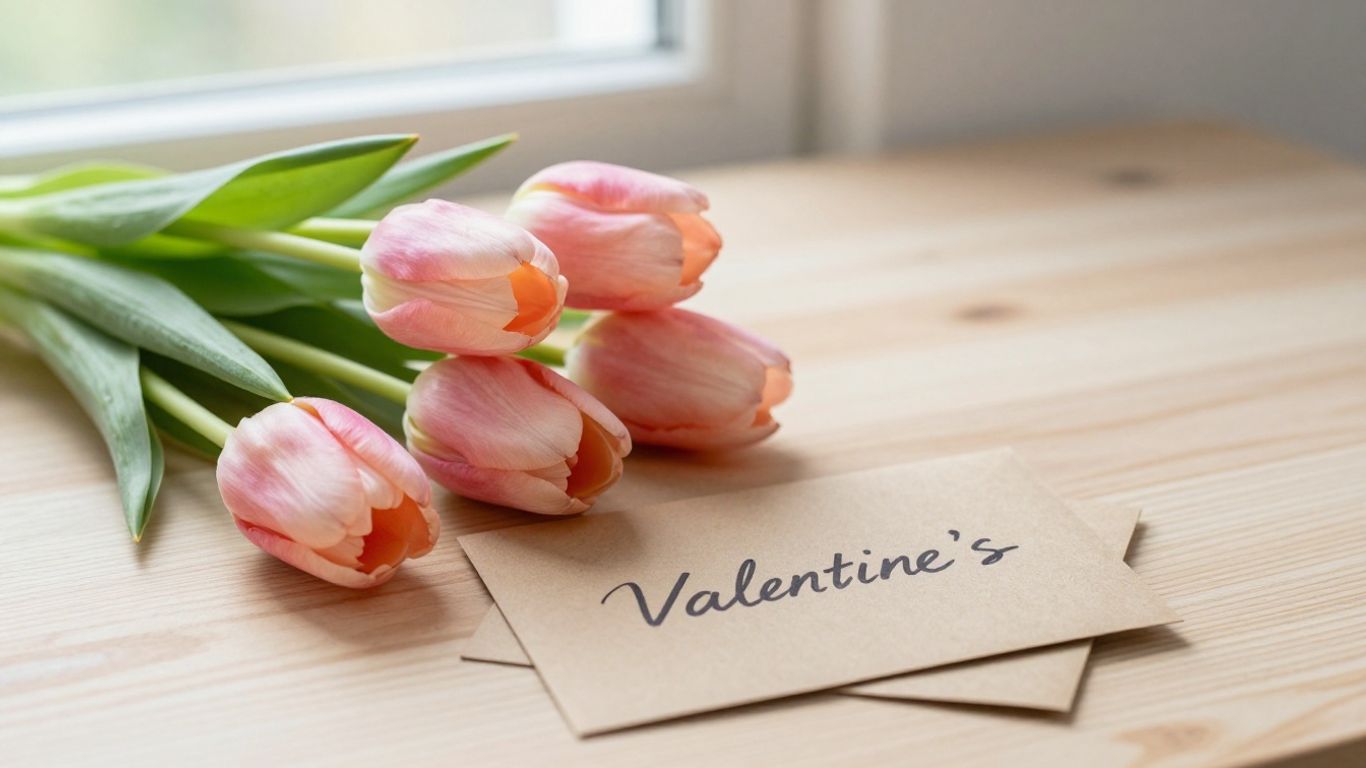
Tulips are especially useful when you want the gift to feel bright and affectionate rather than formal. Their clean shape works in simple arrangements, and their colors can shift the mood from playful to quietly romantic. Pink, coral, peach, and white tulips are gentle options for an early relationship.
They also suit people who prefer a less traditional look. A loosely wrapped bunch feels fresh and uncomplicated, while a mixed tulip arrangement can bring more color without becoming overly ornate.
Lilies, daisies, and other approachable choices
Daisies, carnations, ranunculus, alstroemeria, and seasonal field flowers can make a bouquet feel friendly and distinctive. Lilies may be beautiful, but their strong fragrance and pollen can be a concern, so they are best chosen only when you know your partner enjoys them and has no relevant allergies. Ask a florist about lower-fragrance alternatives if you are uncertain.
For more ideas, a flower symbolism guide can help you think through color and variety without treating traditional meanings as a secret code. A bouquet does not need an elaborate explanation to be meaningful; it needs to feel compatible with the recipient.
Flowers and colors with meanings to consider
Color is often the quickest visual signal, particularly in a holiday arrangement. The table below is a useful shorthand, but personal taste should always outrank symbolism.
| Flower or color | Common impression | A gentler way to use it |
|---|---|---|
| Soft pink | Affection and sweetness | Pair with white or greenery |
| Peach or coral | Warmth and enthusiasm | Use in a loose mixed bouquet |
| Red | Passion and strong romance | Choose a small accent or compact bunch |
| White | Freshness and simplicity | Combine with a little color |
| Yellow | Cheer and friendship | Add it when your relationship feels playful |
These associations are only a guide. A bright yellow bouquet may be perfect for someone who loves sunny colors, while a red flower may be entirely casual in a modern mixed arrangement. If you want further inspiration, Valentine’s flower ideas can help compare classic roses with more varied designs.
Select an arrangement that feels thoughtful
The arrangement itself can communicate as much as the flowers. A bouquet that is easy to carry, place, and care for usually feels more considerate than one that requires a special container or dominates a room. Consider where your partner will receive it and what they might do with it afterward.
You do not need to know the names of every flower to make a good choice. Describe the mood, palette, and relationship stage to a florist, then ask for something that feels seasonal and not too formal.
Small bouquets that make a comfortable impression
A compact bouquet is rarely a weak gesture. It can fit on a nightstand, office desk, or small apartment table, and it gives your partner the pleasure of seeing the flowers without creating a storage problem. A few excellent stems, arranged with space and greenery, may look more polished than an overcrowded bundle.
Small also makes sense when you are delivering the flowers in person. Your partner can accept them easily, carry them to dinner, or take them home without planning around the gift.
Mixed arrangements versus single-flower bouquets
A single-flower bouquet looks clean and deliberate. Tulips in one color or a few branches of a seasonal bloom can suit someone with a minimalist style. Mixed arrangements feel more relaxed and can include several colors, textures, and shapes, which makes them helpful when you do not yet know your partner’s favorite flower.
The choice comes down to personality as much as symbolism. A simple single-flower design can feel quietly confident, while a mixed bouquet can seem warm, lively, and less ceremonious.
Seasonal flowers for a personal, understated touch
Seasonal flowers often look as though they belong to the moment rather than being selected from a standard holiday script. They may also give the florist more flexibility to create something fresh within your budget. Ask what is looking best that week and describe the colors your partner tends to wear or keep at home.
This approach can lead to a more individual bouquet. Instead of ordering “the Valentine’s arrangement,” you are choosing a palette and texture that reflect a real observation about the person.
Potted plants and alternatives to traditional bouquets
A small flowering plant can be a good alternative for someone who enjoys gardening or prefers gifts that last longer. Choose a plant only if your partner is likely to enjoy caring for it; longevity is not a benefit if it becomes another chore. A simple vase of greenery, dried flowers, or one unusual stem can work for someone who likes understated décor.
Other alternatives can be just as personal. A personalized song may suit a partner who enjoys music and shared memories, although it is a considerably more intimate gesture than a small bouquet. For a new relationship, keep the presentation casual and make sure the gift reflects an interest you already share.
Get the color, size, and presentation right
A thoughtful bouquet does not need to be large, expensive, or wrapped in layers of decoration. Color affects the first impression, size affects the emotional volume, and presentation affects how easy the gift is to receive. Think about all three together rather than choosing one dramatic feature.
Soft colors for a sweet and subtle message
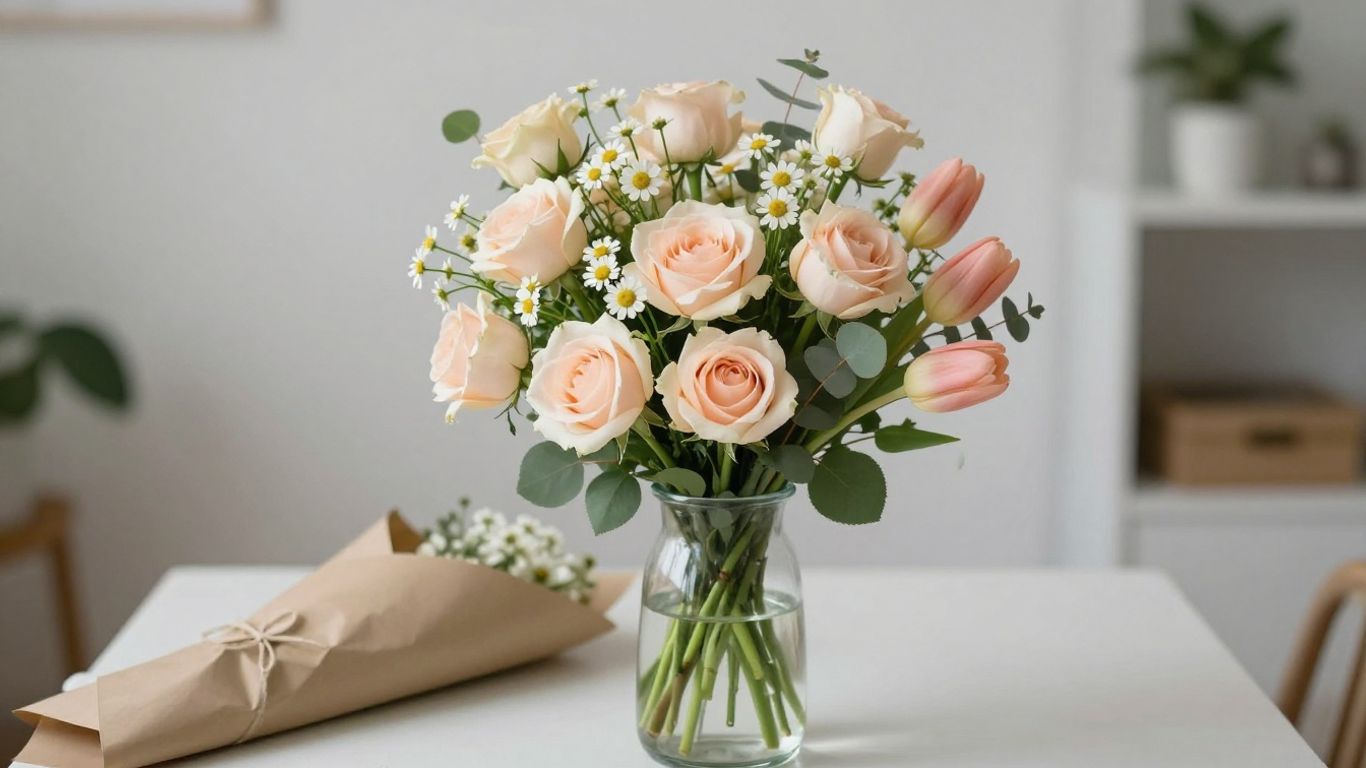
Blush, peach, lavender, pale yellow, and white can create a gentle Valentine’s Day palette. These colors work well when you want to show affection while keeping the tone open-ended. Greenery and natural wrapping can make them feel relaxed rather than overly delicate.
Soft colors are not limited to one kind of relationship. They can be romantic, friendly, or simply beautiful, which gives both people room to enjoy the gesture without decoding it too seriously.
When red flowers feel appropriate
Red flowers make sense when you already share an openly romantic connection or when your partner has clearly expressed a love for bold, traditional Valentine’s Day styling. They can also work as one color among several instead of filling the entire bouquet.
If you are early in the relationship, consider red tulips, a few red ranunculus, or red accents in a mixed arrangement. That keeps the palette confident without making the bouquet feel like a formal announcement.
Bouquet size and what it communicates
Size should follow the setting. A compact hand-tied bouquet is easy for a first Valentine’s Day, while a medium arrangement may suit a partner you have been seeing for several months and know well. Very large bouquets are best reserved for occasions where you already understand that grand gestures are welcome.
Use this quick checklist before ordering:
- Can your partner carry or place the bouquet easily?
- Does the size fit their home, office, or planned date?
- Does it look generous without seeming performative?
- Will the flowers last long enough to be enjoyed?
If you can answer yes to most of these questions, the bouquet is probably proportionate. The aim is not to make the largest impression possible; it is to make a comfortable, lasting one.
Choosing a vase, wrapping, or hand-tied arrangement
A vase is convenient if delivery is going straight to a home, but it can be awkward if your partner is receiving the flowers at work or meeting you elsewhere. Kraft paper, tissue, or a simple hand-tied design is easier to transport and often feels more casual. Ask the florist whether the arrangement includes water or needs to be placed in it quickly.
Presentation should also match your partner’s taste. Natural textures suit a relaxed style, while a clean glass vase may work better for someone who prefers modern décor.
Set a thoughtful budget and delivery plan
A new relationship does not require a financial performance. Set a budget that feels comfortable before you browse, then choose the best flowers available within it rather than stretching for a larger arrangement. A clear plan also reduces the chance of a rushed, disappointing delivery on a busy holiday.
Flowers are perishable, so logistics matter. The right bouquet arriving at the wrong place or time can become stressful for both of you.
How much to spend on flowers for a new partner
There is no universal correct amount. A modest bouquet can be entirely appropriate for early dating, while a somewhat fuller arrangement may make sense after several months together. Your budget should account for the flowers, delivery, card, and any vase or add-on, not just the headline price.
Avoid spending more to compensate for uncertainty. If you are unsure what feels right, a smaller arrangement with a sincere note is usually safer than an expensive display that may create pressure.
Ordering from a local florist or online service
A local florist may be useful when you want to discuss color, substitutions, fragrance, or the size of the finished bouquet. An online service can be convenient when you need a broad delivery window or are sending flowers to another city. Either way, read the description carefully and look for a clear delivery policy.
A same-day flower delivery guide may be helpful if plans change, though ordering earlier generally gives you more choice. You can also ask about a florist’s ability to accommodate allergies or avoid strongly scented blooms.
Timing delivery around work, home, or date plans
Do not send flowers to a workplace unless you know your partner would enjoy that kind of attention. Home delivery may be more private, but confirm that someone can receive the arrangement and that the address is current. If you are giving the bouquet in person, bring it early enough that it does not interfere with the rest of the evening.
A delivery window is better than a vague promise. Tell your partner only what they need to know, and avoid making them wait around all day for a surprise.
Checking freshness, substitutions, and delivery details
Before placing the order, ask how recently the flowers are expected to be prepared and what happens if a particular variety is unavailable. Substitutions should preserve the overall color, size, and mood rather than simply replacing one flower with something unrelated. Confirm the card wording, recipient phone number, and delivery instructions.
If you are comparing unrelated online advice, even a DBS checks guide or insurance credentialing guide belongs to a completely different kind of practical planning; do not let broad search results distract you from the flower details that affect this gift. A competitive intelligence report is likewise not relevant to choosing a bouquet, despite the way search pages can mix unrelated recommendations. Keep your order focused on freshness, timing, and fit.
Add a personal touch without creating pressure
The flowers are only the opening gesture. A few well-chosen words can make an ordinary bouquet feel connected to your relationship, while an overly serious note can change its entire meaning. Aim for warmth, specificity, and enough lightness that your partner does not feel required to answer with an equally grand response.
Personalization should come from something real: an inside joke, a shared meal, a favorite color, or a small detail they mentioned in passing. It does not need to be elaborate to be memorable.
Writing a short Valentine’s Day card
Keep the card to one or two sentences. Mention what you have enjoyed about seeing them, wish them a happy Valentine’s Day, or refer to a plan you are both looking forward to. Avoid language that assumes a future you have not discussed.
A note such as “Happy Valentine’s Day—I hope these brighten your week. I’m looking forward to dinner tonight” feels affectionate and grounded. Handwriting adds warmth, but a neat typed message is fine if that better suits your style.
Pairing flowers with a simple gift or date
Flowers can stand alone, especially early on. If you add something, choose a small item connected to your partner’s preferences: a pastry from a favorite bakery, a book by an author they mentioned, or a plan for an easy afternoon together. The combination should feel like an invitation to share time, not a collection of obligations.
For a more practical alternative, you might share a simple meal or choose a small experience. Keep the cost and emotional intensity close to the scale of the bouquet.
Avoiding overly intense language and grand gestures
Skip declarations that sound borrowed from a much longer relationship. Public displays, surprise workplace performances, or gifts that imply an engagement-level commitment can be uncomfortable when you are still learning each other. Even if the gesture is well meant, it may leave your partner wondering how to respond.
A useful test is to imagine receiving the same gift yourself. Would you feel pleased and free to respond naturally, or would you feel that a specific reaction was expected? Choose the version that leaves more breathing room.
Asking about flower preferences and allergies discreetly
You can learn a great deal through ordinary conversation. Ask whether they keep plants at home, comment on flowers you pass together, or notice what colors appear in their clothing and décor. If you have a mutual friend who knows their preferences, a quiet question may prevent an avoidable mistake.
Allergies deserve special care, particularly with fragrant flowers and pollen-heavy varieties. When in doubt, ask the florist for lower-fragrance options and tell your partner what the arrangement contains if there is any possible concern. Thoughtfulness includes making sure the gift can actually be enjoyed.
Conclusion
The right Valentine’s Day bouquet for a new relationship is not the most expensive or dramatic one. It is the arrangement that fits your shared pace, reflects something you have noticed, and arrives with no demand attached. Choose a manageable size, a welcoming color palette, and a short honest note, then let the gesture be exactly what it is: a simple way to say you care.
Frequently Asked Questions
What flowers are best for a new relationship on Valentine’s Day?
Small bouquets of tulips, daisies, seasonal flowers, or mixed arrangements are usually comfortable choices. They can feel romantic without carrying the intensity of a large traditional rose arrangement.
Are roses too intense for a first Valentine’s Day?
Not necessarily. A few pink, peach, or white roses, or roses mixed with other flowers, can feel gentle. A large display of deep red roses sends a stronger message and may not suit very early dating.
How much should I spend on flowers for a new partner?
Spend an amount that feels comfortable and proportionate to the relationship. A modest bouquet with a thoughtful card is often more appropriate than an expensive arrangement chosen to make an impression.
Should I send flowers to my partner’s workplace?
Only if you know they would enjoy public attention and can receive the flowers easily. Home delivery or giving them the bouquet in person is usually more private and flexible.
What color flowers are safest for a new relationship?
Soft pink, peach, coral, white, and mixed seasonal colors tend to feel warm without being overly intense. Personal preference matters more than traditional symbolism, so use what you know about your partner.
What should I write in a Valentine’s Day flower card?
Write one or two warm, specific sentences. Mention that you have enjoyed getting to know them or that you are looking forward to your next plan together, without making exaggerated promises.
What if my partner does not like cut flowers?
Respect that preference and choose another small gesture, such as a plant, favorite treat, shared meal, or simple date. The thought behind the gift matters more than following a holiday tradition.