
Key Takeaways
The most meaningful funeral flowers are chosen with the person, not just the occasion, in mind. A thoughtful tribute can be traditional, highly personal, or somewhere comfortably between the two.
- Begin with the person’s favourite flowers, colours, places, and memories.
- Consider flower meanings, while remembering that symbolism changes across cultures.
- Match the arrangement to the service, venue, season, and family’s preferences.
- Add a sincere message or small personal detail when it feels appropriate.
- Confirm delivery, budget, and presentation details before placing the order.
Start with the life and personality of the person you are remembering
Choosing funeral flowers begins with remembering who the person was in ordinary life. Their habits, sense of humour, favourite places, and familiar comforts can guide the tribute more naturally than a list of formal rules. If you are searching for funeral flowers that honour a beautiful life, let the arrangement feel like a reflection of that life rather than a generic gesture of sympathy.
Reflect on their favourite flowers, colours, and places
Think about the flowers they kept at home, grew in the garden, or enjoyed seeing on walks. A grandmother who loved roses might be remembered with soft pink blooms, while someone who always wore blue may be honoured with flowers in cool, calming shades. Even a connection to a beach, meadow, or woodland can suggest a gentle colour palette and seasonal texture.
You do not need to recreate an entire garden. One familiar flower, repeated thoughtfully through an arrangement, can be enough to make it feel unmistakably theirs. The detail matters because it gives mourners something recognisable to hold on to.
Consider their passions, hobbies, and cultural heritage
Their interests may point towards the shape, colour, or surrounding details of a tribute. A keen gardener might inspire a loose, seasonal arrangement; a music lover could be remembered with a ribbon in a meaningful colour; and someone with strong cultural or religious roots may have established customs that should guide the choice.
Ask a close relative or friend if you are unsure. They may know that the person disliked formal flowers, preferred wild blooms, or had a tradition the wider group would want to respect. Small conversations often reveal the most useful direction.
Choose between a traditional or personal floral tribute
Traditional choices offer reassurance when emotions are raw. White lilies, roses, carnations, and restrained wreaths can create a peaceful, familiar setting, especially when you do not know the family’s preferences well. A personal tribute, meanwhile, may use brighter colours, unusual flowers, or a design connected to the person’s work and interests.
There is no need to choose between dignity and individuality. A classic arrangement can include one distinctive flower or a quiet personal colour, allowing the tribute to feel respectful without becoming impersonal.
Understand the meaning behind popular funeral flowers
Flower symbolism can help you put feelings into a visual form, but it should be treated as guidance rather than a fixed dictionary. Colour, arrangement, faith, family history, and local custom all affect how a tribute is received. For a broader overview of funeral flower meanings, it can help to compare several traditions before making a final choice.
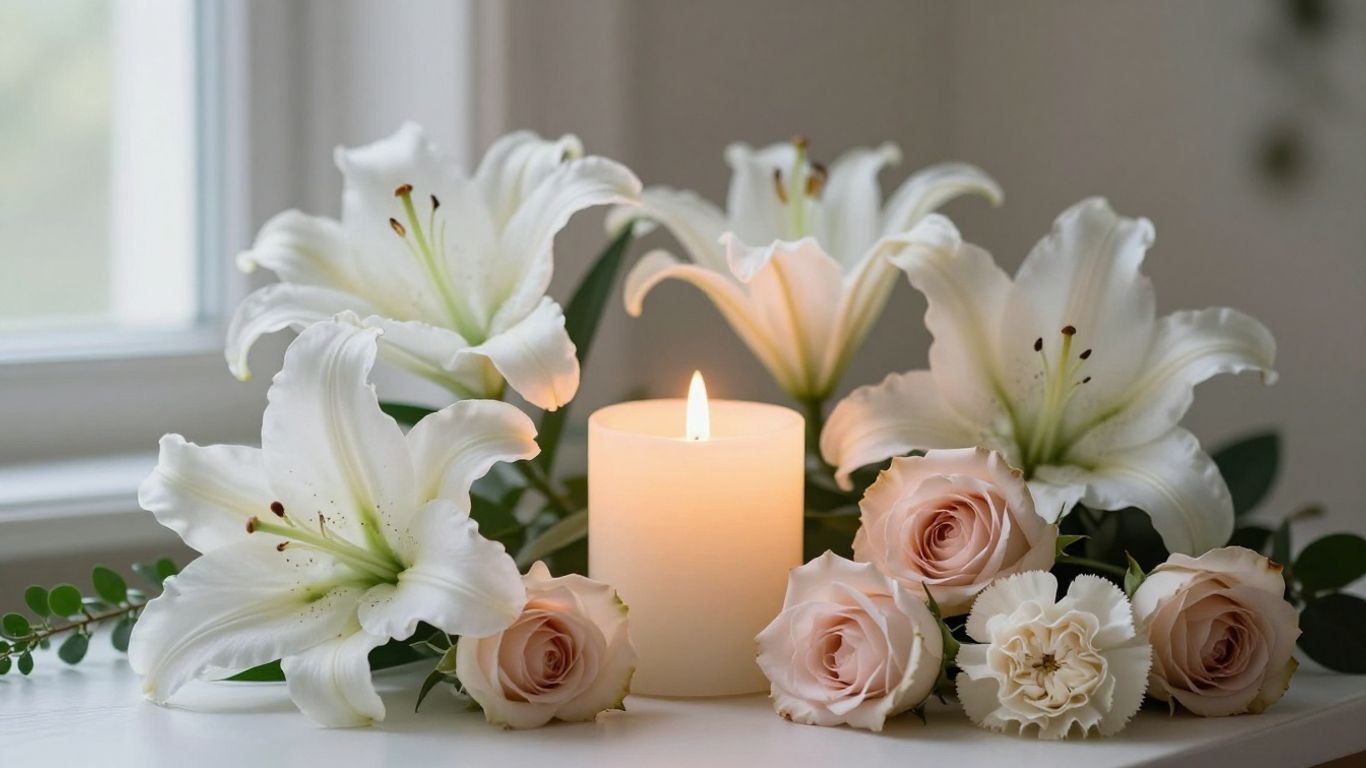
Lilies, roses, and carnations
Lilies are often associated with peace, innocence, and the soul, which makes them a familiar choice for religious or traditional services. Roses can express love, respect, friendship, or remembrance depending on their colour and the relationship with the person who died. Carnations are valued for their fragrance and lasting presence, and they can be used alone or woven through a larger tribute.
Rather than selecting a flower solely because of its commonly quoted meaning, consider whether its appearance feels right for the person. A favourite rose in an unexpected shade may say more than a theoretically perfect bloom.
Chrysanthemums, orchids, and irises
Chrysanthemums carry especially varied meanings. In some European and Asian traditions they are closely linked with mourning, while elsewhere they may suggest renewal or the continuing cycle of life. Orchids bring a graceful, delicate appearance and can suit someone remembered for elegance, warmth, or a lasting bond. Irises offer sculptural form and rich colour, giving a tribute a little more character.
These flowers work well when you want something thoughtful without making the arrangement feel overly formal. Their shapes can also add visual depth beside rounder blooms such as roses and carnations.
Sunflowers, daisies, and seasonal flowers
Sunflowers and daisies can be fitting for a person whose presence was cheerful, generous, or full of energy. Seasonal flowers often feel especially honest because they connect the service with the time of year and may echo what was growing around the person’s home. Their natural variation can make an arrangement feel warm rather than overly polished.
If you choose bright flowers, balance them with softer foliage or a quieter base colour when the service calls for restraint. The aim is not to avoid colour, but to make it feel intentional and connected to the person.
When flower meanings vary by culture and tradition
A flower that conveys comfort in one community may carry a different association in another. This is particularly true for chrysanthemums, colours, and arrangements used at gravesides or religious ceremonies. If the family has cultural or faith traditions, ask what is customary before relying on a general online meaning.
A useful starting point is this: symbolism should support the family’s understanding, not compete with it. When in doubt, gentle colours, familiar flowers, and a sincere card are usually safer than an elaborate message that may be misread. You can also review cultural funeral flower traditions for another perspective before speaking with the florist.
Choose a floral arrangement that tells their story
The form of an arrangement changes how it is seen and where it can be placed. A large tribute may suit a casket or a spacious chapel, while a smaller bouquet may be better for a home gathering or a family altar. Think about the emotional presence you want the flowers to have, as well as the practical space available.
Casket sprays and full-length floral tributes
A casket spray rests across the casket and is often selected by immediate family. It can be full and formal, loosely gathered, or built around a few flowers with strong personal meaning. Full-length tributes usually need careful coordination with the funeral home, since their size and placement affect the room and the movement around the service.
If you are not part of the immediate family, ask whether this type of arrangement has already been chosen. A standing spray, basket, or smaller bouquet may complement the main tribute without competing with it.
Wreaths, crosses, and symbolic designs
Wreaths are circular and naturally suited to a message of continuity, while crosses may be appropriate for a Christian service or a family with a strong religious connection. Other symbolic designs can reflect a profession, hobby, animal, or object that was central to the person’s life.
The design should remain recognisable from a distance and manageable for the venue. A simple shape with carefully chosen flowers often feels more dignified than a crowded display with too many competing details.
Bouquets, baskets, and vase arrangements
Bouquets and baskets are flexible choices for sending condolences when you cannot attend. They can be placed at a funeral home, taken home by the family, or used later at a memorial gathering. Vase arrangements may be especially useful when the family would appreciate flowers they can continue to enjoy after the service.
Ask whether the recipient has a suitable place for the arrangement. A low basket is easier to move than a tall display, and a potted plant may last longer if the family has the energy and space to care for it.
Personalised shapes and tribute displays
A personalised shape can be powerful when it genuinely reflects the person. A gardener might be remembered with a floral watering can, while a sailor could inspire a restrained nautical detail. Photographs, tools, sports colours, or meaningful objects can sit near the flowers without being embedded in them.
Before ordering something highly specific, check with the family. The most personal tribute is not always the most elaborate one; it is the one that feels emotionally true and comfortable for those closest to the loss.
Select flowers that suit the service and setting
Flowers should belong to the setting as well as to the person. A quiet arrangement that feels right in a chapel may look lost in a large outdoor space, while a tall display may obstruct sightlines at a small funeral home. The venue, ceremony style, season, and expected number of arrangements all deserve consideration.
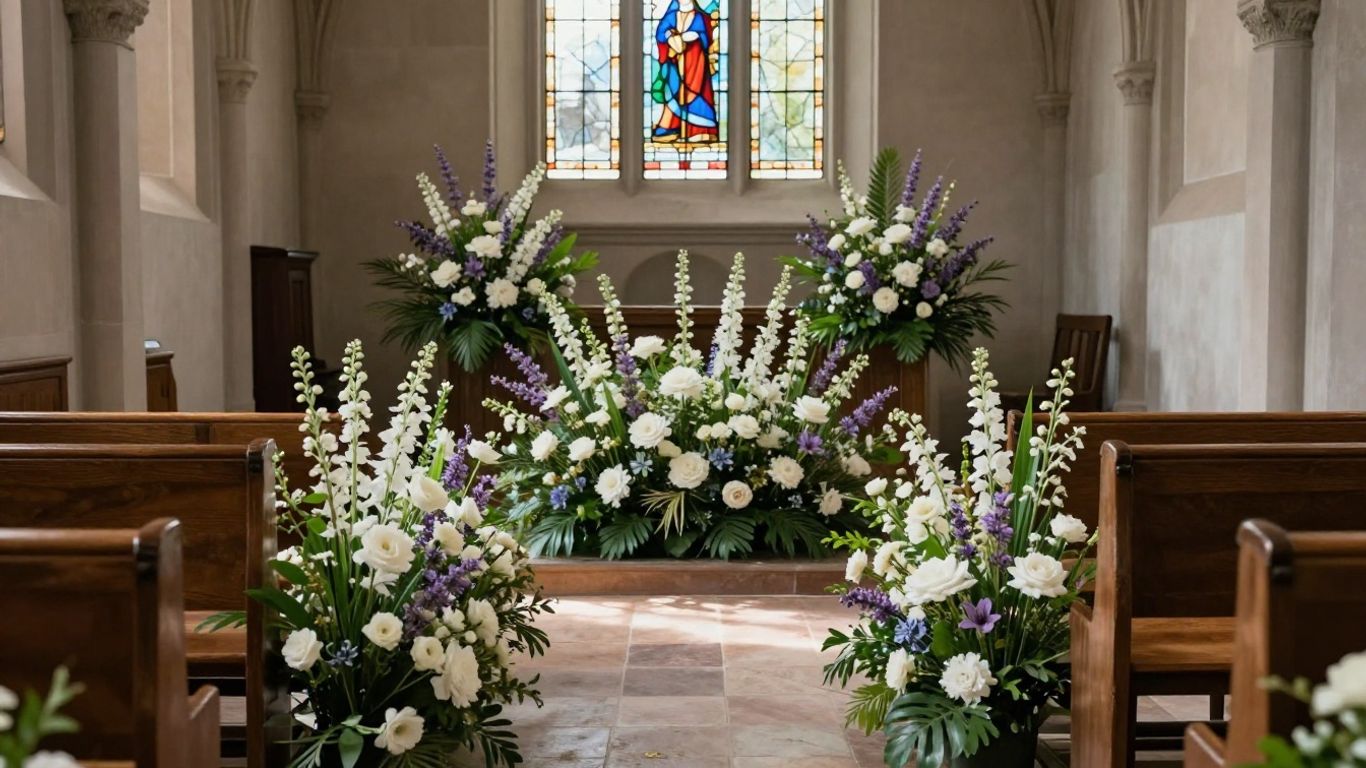
Matching flowers to a religious or secular ceremony
Religious services may have established expectations about colours, symbols, or where flowers can be placed. Secular ceremonies often allow a wider range of personal expression, though the family may still prefer a calm and cohesive look. If there is a celebrant or religious leader involved, they can clarify any restrictions.
Use the ceremony as a guide, not a limit on affection. A traditional service can still include a favourite bloom, and a secular memorial can still be understated and formal if that best reflects the person.
Choosing arrangements for a funeral home, church, or graveside service
A funeral home may have designated areas for sprays, baskets, and cards. Churches can have narrow aisles, fixed furnishings, or rules about floral displays. Graveside arrangements need to withstand weather and should not create a maintenance burden for the family or cemetery staff.
Before delivery, check the venue’s opening hours and ask where the flowers should be left. A florist who knows the location may also advise on height, water requirements, and the safest way to position the tribute.
Coordinating colours with the service or memorial theme
Colour can quietly connect several floral pieces. White and cream create a serene foundation, while blue, lavender, blush, or warm yellow can reflect a favourite room, garden, team, or landscape. A single accent colour is often enough to make the tribute feel considered.
For quick reference, these combinations can help you discuss the mood with a florist:
| Colour approach | Feeling it may create | Suitable personal connection | Arrangement note |
|---|---|---|---|
| White and green | Peaceful and restrained | Faith, simplicity, nature | Works well in formal settings |
| Soft pink and cream | Tender and affectionate | Appreciation, gentleness | Keeps a personal tribute understated |
| Blue and lavender | Calm and reflective | Water, sky, favourite clothing | Adds colour without feeling loud |
| Yellow and white | Warm and life-affirming | Friendship, sunshine, gardens | Balance bright blooms with foliage |
These are possibilities, not rules. The family’s taste should carry more weight than a colour chart, particularly when a vivid shade was part of the person’s identity.
Considering the season and flower availability
Seasonal flowers can be fresher, more natural-looking, and easier for a florist to source. They also give the tribute a sense of place and time. If a particular flower is unavailable, a florist can often suggest a similar shape or colour rather than forcing an unsuitable substitute.
Allow some flexibility in the request. Asking for a palette and feeling instead of one rigid flower list usually produces a more harmonious arrangement.
Add meaningful details to make the tribute personal
Flowers communicate quietly, while a small accompanying detail can make the gesture feel direct and intimate. A card, ribbon, photograph, or familiar object may give mourners a point of connection during a difficult day. Keep the additions purposeful so the flowers remain the central tribute.
Including a sympathy message with the flowers
A short message is often better than trying to explain everything. Mention a quality you admired, a memory you will keep, or the support you are offering the family. If you need inspiration, these sympathy messages for funeral flowers can help you find a sincere starting point without copying a phrase that does not sound like you.
Write in your natural voice. “I will always remember her kindness” may be more comforting than a polished sentence that feels distant or formal.
Incorporating photographs, ribbons, or keepsakes
A framed photograph can bring warmth to a display, especially at a celebration of life. Ribbons may carry a name, a meaningful colour, or a simple phrase, while a small keepsake can connect the flowers to a hobby or treasured place. These details work best when they are easy to see and safe to handle.
Check with the venue before adding anything. Some locations may not allow loose objects, open flames, or items that could damage furniture or grounds.
Using flowers from the person’s garden or community
Flowers from a garden can be deeply moving because they carry the texture and memory of home. A few stems from a neighbour’s garden or a community plot may be included if they can be cut and transported safely. Their imperfections are part of their charm.
Handle garden flowers gently and tell the florist where they came from. They may be able to condition the stems and place them where they will remain visible without shortening the arrangement’s life.
Balancing personal expression with the family’s wishes
The closest relatives may already have a plan for the service, including the preferred flowers, colours, and number of tributes. Your role may be to add a small arrangement or a card that complements what they have chosen. Respecting those wishes is itself a form of care.
When several people are contributing, a shared arrangement can prevent the room from becoming crowded. It also gives everyone a chance to include a memory while keeping the overall presentation calm.
Plan the purchase, delivery, and presentation
Once the emotional choice is made, a few practical decisions will help the tribute arrive smoothly. A florist needs the service date, venue, contact details, preferred size, colour direction, and any restrictions. Planning early gives you more options, though a last-minute order may still be possible depending on the season and local supply.
Working with a florist on a custom arrangement
Bring the florist a clear sense of the person rather than only a flower name. Explain the relationship, the service setting, the mood you want, and any flowers or colours to avoid. A good conversation can turn a broad idea into a balanced design that suits the occasion.
Ask to see a written summary of the order, including size, flower preferences, container or stand, card wording, and delivery location. For context, guides on creative web design agencies, servant leadership, and wedding transportation all concern a different subject, but they share one useful planning lesson: clear expectations prevent avoidable surprises. Keep the funeral arrangement conversation focused on the family and the service.
Checking delivery timing and service requirements
Give the florist the exact service time, but ask for delivery well before guests arrive whenever possible. Confirm whether flowers should go to the funeral home, church, cemetery, or a family address, and provide a contact person who can answer questions. If the venue has a receiving window, include it in the order.
A simple delivery checklist can keep the details together:
- Confirm the full venue name and street address.
- Share the service date, start time, and receiving window.
- Check whether a stand, vase, or water container is included.
- Confirm the card message and sender names.
Reviewing these points before payment gives the florist useful information and gives you peace of mind. It also reduces the chance that a beautiful arrangement arrives at the wrong place or time.
Setting a suitable budget without losing meaning
A meaningful tribute does not need to be the largest display in the room. Tell the florist your budget at the beginning so they can suggest the best balance of flowers, foliage, size, and presentation. A compact bouquet with one deeply personal flower may be more affecting than an expensive arrangement chosen without thought.
If several people want to contribute, pooling funds can support a larger family arrangement. Alternatively, separate smaller bouquets may allow each person to express a distinct relationship with the deceased.
Considering sustainable and lasting alternatives
Seasonal flowers, locally available stems, reusable containers, and potted plants may reduce waste while still providing beauty. A living plant can become a long-term memorial if the family has a suitable garden or indoor space. Dried flowers may also be appropriate, though they should match the family’s taste and the setting.
Ask the florist about compostable mechanics, responsible sourcing, and what happens to stands or containers after the service. The best alternative is one the family can genuinely keep, use, or care for rather than another obligation.
When researching unrelated household planning topics, you may encounter real estate marketing or Spot Pet Insurance, but neither belongs in a funeral flower decision. For this tribute, stay with information that relates directly to the person, the ceremony, and the family’s needs.
Conclusion
The right funeral flowers do not follow one perfect formula. They take shape from a person’s favourite things, the family’s traditions, the service setting, and the small details that make a life recognisable. Choose with care, speak honestly with the florist, and let the tribute offer a quiet, unmistakable reminder of how deeply that person was loved.
Frequently Asked Questions
What flowers are most traditional for a funeral?
Lilies, roses, carnations, chrysanthemums, and orchids are among the flowers often chosen for funeral arrangements. The best choice depends on the person, family customs, service style, and local traditions.
Are bright flowers appropriate for a funeral?
Yes, when they reflect the person or the family’s wishes. Bright flowers can bring warmth to a celebration of life, while softer flowers may suit a more formal or reflective ceremony.
Should I send flowers to the funeral or the family’s home?
Send them to the service venue when you want them included in the ceremony, or to the family’s home when a private gesture of support feels more suitable. Confirm the preferred address and delivery timing first.
What arrangement is best for someone who cannot attend?
A bouquet, basket, or vase arrangement is usually practical because it can be delivered with a personal card. Choose a size the family can comfortably place and care for after the service.
Can I include flowers from the deceased person’s garden?
You can, provided the flowers are healthy, available in sufficient quantity, and acceptable to the family and florist. Garden flowers may be especially meaningful because they connect the tribute with home.
What should I write on a funeral flower card?
Keep the message brief and sincere. Express sympathy, name a quality or memory you will carry forward, and offer support to the family if that feels natural.
How far in advance should funeral flowers be ordered?
Ordering as soon as the service details are known gives the florist more time to source preferred flowers and coordinate delivery. For short notice, call directly and provide the exact venue and service information.