
Key Takeaways
Sympathy flowers can offer comfort, remembrance, and a quiet sense of presence when conversation feels impossible.
- Choose flowers and colors that suit the relationship and the family’s preferences.
- Consider whether the arrangement belongs at home, at a service, or in a memorial setting.
- Personal details can make a tribute feel sincere without making it overwhelming.
- Check cultural customs, delivery instructions, and service deadlines before ordering.
- A simple, thoughtfully written card often matters as much as the flowers.
Understanding the message behind sympathy flowers
Flowers cannot remove grief, but they can make a difficult room feel less empty. Their color, shape, and fragrance offer a gentle way to say that someone is remembered and that the people left behind are not alone. The best choice is rarely the most elaborate one; it is the one that feels attentive to the person and the family.
How flowers express comfort, love, and remembrance
A floral tribute speaks through presence rather than explanation. Soft white blooms may create a feeling of peace, while warm pinks can suggest affection and gratitude. When words feel out of reach, a quiet gesture matters because it gives the grieving person something tangible to receive and care for.
The arrangement can also honor a particular memory. A familiar scent, a favorite garden flower, or a color associated with the loved one may bring comfort in an unexpectedly personal way. This is why sympathy flowers that speak when words cannot often feel more meaningful than a carefully polished message.
The difference between sympathy and funeral flowers
Sympathy flowers are generally sent to comfort the family, often at their home or workplace. Funeral flowers are more closely connected to the ceremony and may include casket sprays, standing sprays, wreaths, or other large displays selected for a service or visitation.
There is overlap between the two, and the family’s instructions should guide the decision. A small vase arrangement can be appropriate in either setting, while a large tribute may be best coordinated through the funeral home or the family’s chosen florist.
When a floral tribute feels more appropriate than a gift
Flowers are often a considerate choice when you want to acknowledge a loss without asking the family to respond. Unlike a meal or household gift, a bouquet does not require a particular use, conversation, or decision at a moment when ordinary tasks may already feel difficult.
A plant, vase arrangement, or modest bouquet can also be suitable when you did not know the deceased well but want to support someone who is grieving. If the family has requested donations instead of flowers, respect that request and consider sending a card or making the suggested contribution.
Matching the arrangement to the family’s preferences and beliefs
Before ordering, consider whether the family has shared preferences about flowers, colors, donations, or religious customs. Some traditions welcome abundant floral displays, while others favor simplicity or limit flowers during certain observances.
When you are unsure, ask a close relative, the funeral home, or the place of worship. A respectful question is better than guessing, especially when a particular flower or color may carry a meaning that differs across cultures.
Choosing flowers by meaning and symbolism
Flower symbolism can help narrow a wide range of choices, but it should remain a guide rather than a strict rule. Personal associations usually matter more than a dictionary definition. A bloom that reminds the family of a garden, anniversary, or favorite season may carry more warmth than a traditionally chosen flower with no personal connection.
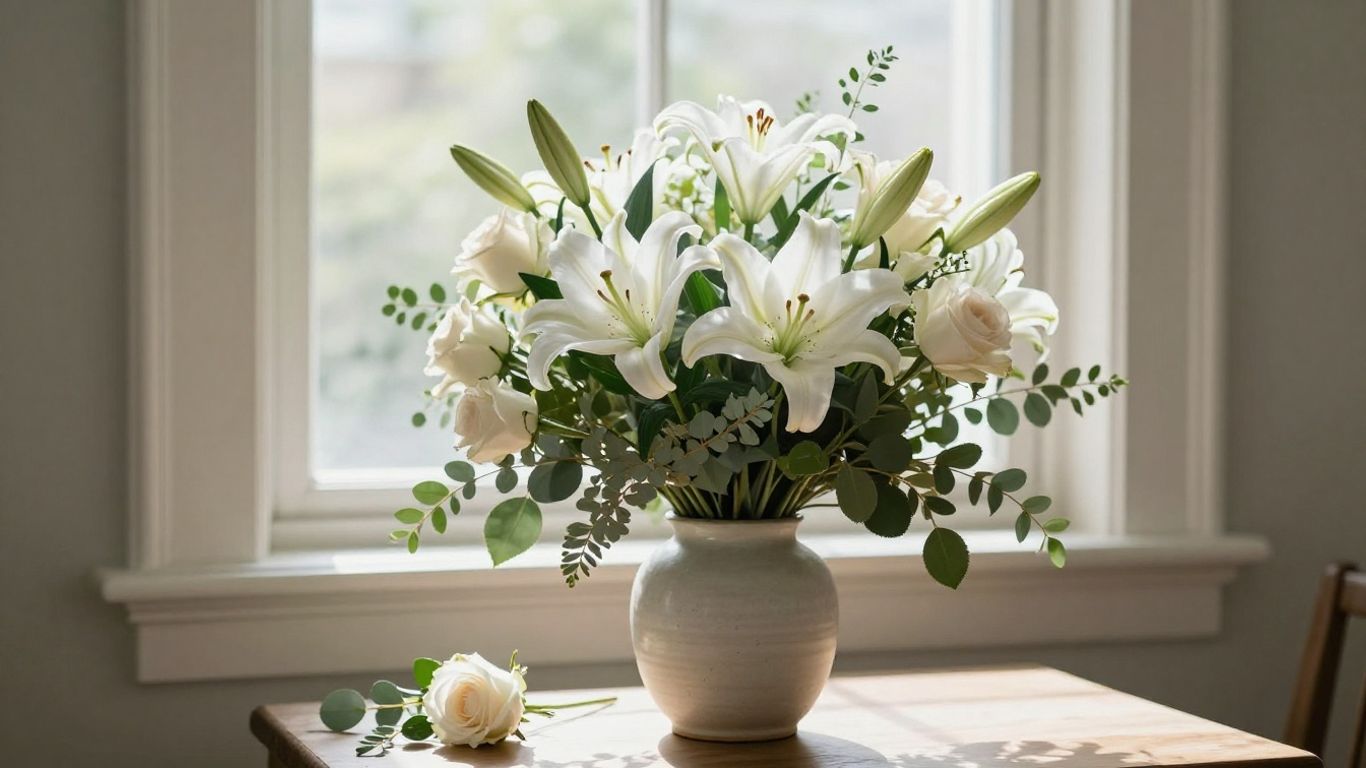
Lilies for peace, renewal, and spiritual comfort
Lilies are frequently chosen for their graceful shape and calm appearance. White lilies can suggest peace, purity, and spiritual comfort, while their open blooms bring a sense of lightness to a solemn occasion.
Their fragrance can be powerful, however, so consider the setting and the recipient’s sensitivities. A less strongly scented lily arrangement may be more suitable for a small home or shared indoor space.
Roses for love, respect, and lasting memories
Roses can communicate affection, admiration, and respect without feeling overly formal. White roses often create a reverent impression, pink roses may express tenderness and gratitude, and yellow roses can honor a close friendship.
The number and color of roses can also affect the feeling of an arrangement. A few carefully placed stems may suit an intimate gesture, while mixed roses and greenery can create a fuller tribute for a service or gathering.
Carnations, chrysanthemums, and their cultural meanings
Carnations are valued for their lasting freshness and are often associated with admiration, devotion, and enduring love. Chrysanthemums can convey honor and remembrance, though their meaning varies considerably by country and culture.
That variation is a reason to avoid relying on symbolism alone. A florist who understands local customs can help you select a combination that feels appropriate rather than unintentionally sending a confusing message.
Seasonal blooms that add warmth and personal significance
Seasonal flowers often look especially natural and may connect the tribute to a favorite time of year. Spring tulips, summer hydrangeas, autumn chrysanthemums, or winter evergreens can bring a familiar sense of place and time to the arrangement.
A seasonal design does not have to be casual. The florist can pair local blooms with restrained greenery and a calm palette, creating something that feels both personal and dignified. For broader inspiration, this sympathy flower guide offers another way to think about floral meaning and comfort.
Selecting the right sympathy arrangement
The right format depends on where the flowers will go, how much space is available, and how close you are to the family. A home arrangement is usually intimate and manageable, while a service display is designed to be seen from a distance. When in doubt, prioritize ease, appropriateness, and the family’s instructions over size.
When to choose a vase arrangement for the home
A vase arrangement is a thoughtful choice when flowers are being sent directly to the family. It arrives ready to display and can add gentle color to a living room, kitchen, or entryway without requiring immediate assembly.
Choose a moderate size if the household may be receiving many deliveries. A compact arrangement is easier to place, move, and water, and it can remain visible without dominating the room.
Why standing sprays and wreaths suit memorial services
Standing sprays and wreaths are designed for a larger, public setting. Their height and shape allow them to be visible near a lectern, entrance, or display area, while a wreath’s circular form can create a feeling of continuity and remembrance.
These arrangements are best coordinated with the funeral home or service venue. Confirm the delivery window, the recipient’s name, and whether the family has selected particular colors or forms before placing the order.
How plants offer a lasting expression of support
A green plant can be a gentle alternative to cut flowers, especially for someone who enjoys gardening or wants a living reminder at home. Peace lilies, flowering plants, and hardy foliage plants can remain after bouquets fade, although every plant still needs suitable light and care.
Avoid presenting a plant as a responsibility the recipient must manage. A low-maintenance choice, paired with simple care instructions, is kinder than an elaborate specimen that needs constant attention.
Choosing flowers for a close family member, friend, or coworker
Your relationship can guide both the scale and the tone. A close family member may appreciate a deeply personal arrangement, a friend may welcome familiar colors or flowers, and a coworker may be better served by a tasteful, moderate design sent from an individual or group.
If several coworkers are contributing, one coordinated arrangement may feel more considerate than multiple deliveries. The card can name the group clearly so the family understands who is offering support.
Personalizing a meaningful floral tribute
Personalization does not require novelty or extravagance. Often, one recognizable detail is enough to make a tribute feel connected to the person who died. The goal is to create warmth while keeping the arrangement comfortable for the family to receive and display.
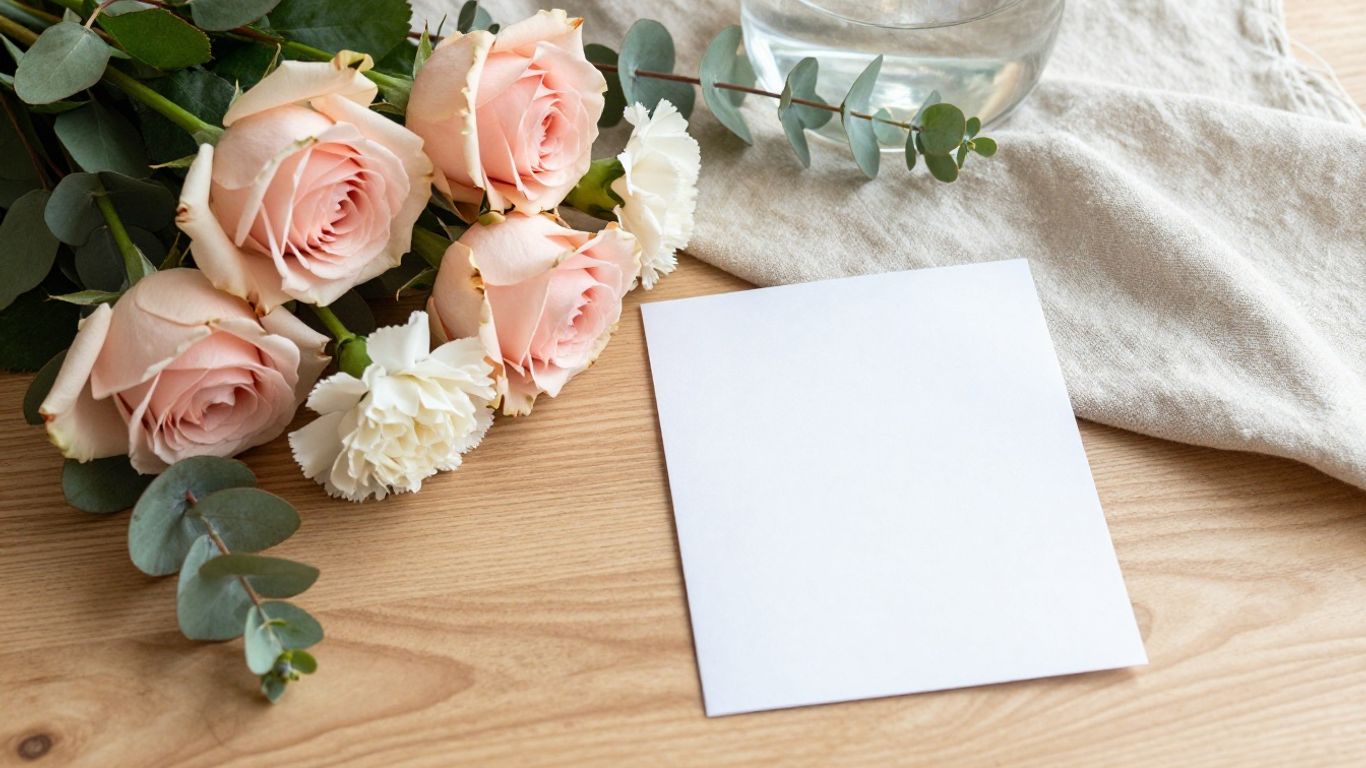
Incorporating the loved one’s favorite flowers and colors
If you know the loved one’s favorite flower, begin there. A favorite color can guide the palette, too, whether it appears as the main bloom, a smaller accent, or a ribbon detail.
You do not need to force every preference into one arrangement. One or two meaningful choices usually look more harmonious than a collection of unrelated colors and flowers.
Adding details that reflect hobbies, places, or memories
A tribute may quietly recall a rose garden, a seaside home, a beloved hiking trail, or a talent for arranging flowers. Subtle details such as natural greenery, a particular seasonal bloom, or a soft coastal palette can evoke those memories without turning the display into a theme.
Speak with the florist about what you remember. A good description of the person can be more useful than simply requesting a specific arrangement style.
Writing a card message when words feel difficult
A card does not need to explain grief or offer certainty. It can simply acknowledge the loss, name the person, and offer your presence. “I am thinking of you and remembering David’s kindness” is often more comforting than a long message filled with general advice.
If you are sending flowers from far away, say so plainly and add one practical offer if you can keep it. “I wish I could be there; I’m available to help with errands next week” gives the family a clear form of support.
Balancing personal expression with respectful presentation
Personal details should support the tribute, not compete with it. Keep unusual containers, bright combinations, or decorative additions restrained unless you are certain they would bring the family genuine pleasure.
A florist can help translate a vivid memory into a polished arrangement. The most successful tribute often has one clear point of connection and enough simplicity for the flowers themselves to remain the focus.
Sympathy flower etiquette and timing
Good etiquette is mostly about reducing the family’s practical burden. Confirm where flowers should go, whether the service accepts deliveries, and whether there are requests for donations or specific arrangements. A small amount of planning helps your gesture arrive as comfort rather than another problem to solve.
Where to send flowers before, during, or after the service
Flowers sent before the service can be delivered to the family’s home or the funeral home, depending on the instructions. Service flowers should be addressed precisely and ordered early enough for the florist to meet the venue’s receiving schedule.
Sending flowers after the service can be especially thoughtful because public support often decreases once the ceremony is over. A home delivery a week or two later can remind the family that they are still being remembered.
What to consider when sending flowers to a family’s home
Ask whether someone will be home and whether the building has delivery restrictions. An arrangement left outside in extreme heat, cold, or direct sun may not remain fresh, and a large bouquet can be difficult for someone to bring indoors.
Include the recipient’s full name, address, apartment or unit number, and a phone number when appropriate. If the family is traveling, a delayed delivery may be more useful than one that arrives while the home is empty.
Observing religious, cultural, and memorial-service customs
Customs may influence flower types, colors, timing, and whether flowers are welcome at all. Some families prefer white flowers, some favor bright colors as a celebration of life, and others request charitable donations instead of floral tributes.
When the family has not provided guidance, use a neutral arrangement and ask someone close to them. This condolence card guidance can also help when you are trying to pair flowers with a sensitive written message.
Avoiding common mistakes with color, size, and delivery timing
A few checks can prevent an otherwise kind gesture from becoming awkward. Before ordering, review these practical points:
- Confirm the recipient, delivery address, and preferred delivery date.
- Ask whether the venue accepts standing sprays, wreaths, or vase arrangements.
- Choose a size that suits the home or service rather than the price alone.
- Avoid strong fragrance if allergies or shared indoor spaces may be a concern.
These details are simple, but they show consideration. If you need examples of traditional service arrangements, funeral flower designs can provide useful visual context without replacing the family’s preferences.
Planning a thoughtful sympathy flower order
Ordering flowers can feel surprisingly difficult when emotions are raw. A clear budget, a reliable delivery plan, and a little knowledge of the recipient’s circumstances make the process calmer. Take a few minutes to gather the details before comparing arrangements.
Setting a budget without compromising sincerity
Sincerity is not measured by the height of a spray or the number of stems. A modest bouquet with a personal card can be deeply meaningful, especially when it arrives at the right time and reflects a genuine relationship.
If friends or coworkers are contributing, agree on a budget and one point of contact. This keeps the order consistent and prevents the family from receiving several nearly identical arrangements.
Working with a local florist or ordering online
A local florist can often advise on seasonal availability, cultural customs, venue rules, and delivery routes. Online ordering may be convenient when you are sending flowers from another city, but read the delivery terms carefully and confirm whether the pictured arrangement may vary.
When researching any order, keep the focus on the recipient rather than on unrelated shopping or marketing material. For example, LEDSone UK Ltd, مسارتك, follow-up email apps, home-services web advice, and SMS marketing tips concern other kinds of projects and should not distract from a careful sympathy order.
Checking delivery details and service-date deadlines
Funeral homes and memorial venues may have narrow receiving hours, particularly on the day of a service. Confirm the exact service date, venue address, family or deceased person’s name, and any reference information the florist needs.
Order earlier than you think if the design includes particular flowers or colors. If the service is imminent, ask the florist what is available locally rather than choosing an arrangement that may not be possible to source in time.
Choosing flowers that remain fresh and easy to care for
Freshness depends on the flowers, the temperature, the water, and the recipient’s ability to tend them. Vase arrangements should arrive with clean water and straightforward instructions, while plants should include basic guidance about light and watering.
If the recipient is moving between family gatherings or traveling after the service, choose a smaller, durable design. A tribute that remains beautiful without demanding much attention is often the most considerate choice.
Conclusion
The most meaningful sympathy flowers are not necessarily the largest or most traditional. They are chosen with attention to the family, the setting, the season, and the memory you want to honor. When words cannot carry everything you feel, a carefully selected arrangement and a sincere card can offer a quiet, lasting sign of care.
Frequently Asked Questions
What are the most appropriate sympathy flowers?
Lilies, roses, carnations, chrysanthemums, and seasonal flowers are all common choices. The most appropriate option depends on the family’s preferences, cultural customs, the setting, and your relationship with them.
Should sympathy flowers be sent to the home or funeral home?
Send them wherever the family or funeral home requests. Home deliveries are generally personal and manageable, while larger arrangements for a service should be coordinated with the venue.
Is it acceptable to send flowers after the funeral?
Yes. Flowers sent after the service can offer comfort when visits and messages begin to slow down. A modest arrangement a week or two later can be a thoughtful reminder of continued support.
What color flowers are best for condolences?
White, cream, soft pink, lavender, and muted green are commonly viewed as calm and respectful. Bright colors can also be appropriate when they reflect the loved one’s personality or the family’s wishes.
Are plants a good sympathy gift?
Plants can be appropriate for someone who enjoys caring for them and has a suitable place at home. Choose a manageable, low-maintenance plant and include clear care instructions.
What should I write on a sympathy flower card?
Keep the message simple and sincere. Express your condolences, mention the person by name if appropriate, share a brief memory, or offer specific support without expecting the family to respond.
How much should I spend on sympathy flowers?
Spend what feels comfortable and appropriate to the relationship. A smaller arrangement with thoughtful timing and a personal message can be just as meaningful as an expensive display.