
Key Takeaways
A no-reason bouquet can say a great deal without making a grand occasion out of the moment.
- Choose flowers according to the relationship and feeling you want to express.
- Let the recipient’s colors, tastes, and everyday life guide the arrangement.
- Use a short, sincere note instead of an elaborate explanation.
- Check delivery timing, substitutions, freshness policies, and address details.
- Keep the surprise warm and personal, without making the recipient feel obliged to respond.
Why thinking of you flowers make a thoughtful gift
Thinking of you flowers for no reason at all arrive without the expectations attached to a birthday, anniversary, or milestone. They tell someone that they crossed your mind during an ordinary day. That small interruption to the routine is often what makes the gesture feel so genuine. The bouquet does not need to be extravagant; it needs to feel chosen.
The emotional meaning behind an unexpected bouquet
An unexpected bouquet can make a person feel remembered at precisely the moment they need a lift. It turns an invisible thought into something they can see, smell, and enjoy for several days. Unlike a gift tied to a calendar date, it says the recipient is worth celebrating simply because they are part of your life.
The message can be tender without being heavy. A bright bunch may bring energy to a difficult week, while a quieter arrangement can offer comfort without asking the recipient to explain what they are feeling.
How spontaneous flowers strengthen personal connections
Spontaneous gifts create small points of connection between visits and conversations. They are especially meaningful when distance, busy schedules, or separate routines make regular contact difficult. A bouquet can reopen a conversation naturally: “I saw these and thought of you” is an easy, honest beginning.
The gesture also shows attention. Remembering a favorite color or a flower someone once mentioned makes the delivery feel less like a generic purchase and more like evidence that you listen.
When “just because” feels more meaningful than a special occasion
Special occasions come with familiar rituals, so the recipient may expect flowers before they arrive. A just-because delivery has a different emotional texture. It celebrates the person rather than an achievement, date, or obligation, which can make the affection behind it feel more direct.
Guidance on the meaning of just because flowers can be useful when you want the bouquet to communicate affection without tying it to a particular event. The simplest message may be the most powerful: you do not have to accomplish anything to deserve a thoughtful surprise.
Who may appreciate an unprompted floral gesture
Almost anyone can appreciate flowers when the choice suits the relationship. Send them to a partner during a normal week, a friend who has been carrying too much, a parent you miss, or a colleague who helped make a demanding project easier. They can also be a gentle way to stay close to someone who lives far away.
Before ordering, consider whether the recipient enjoys flowers and whether pets, allergies, or limited space affect the choice. Thoughtfulness includes making the gift comfortable to receive.
How to choose flowers that match the message
Flower choice should begin with the feeling, not a strict dictionary of meanings. Romance, gratitude, encouragement, and sympathy can all call for different shapes, colors, and levels of formality. Think about what you want the recipient to feel when the arrangement arrives, then choose blooms that support that feeling.
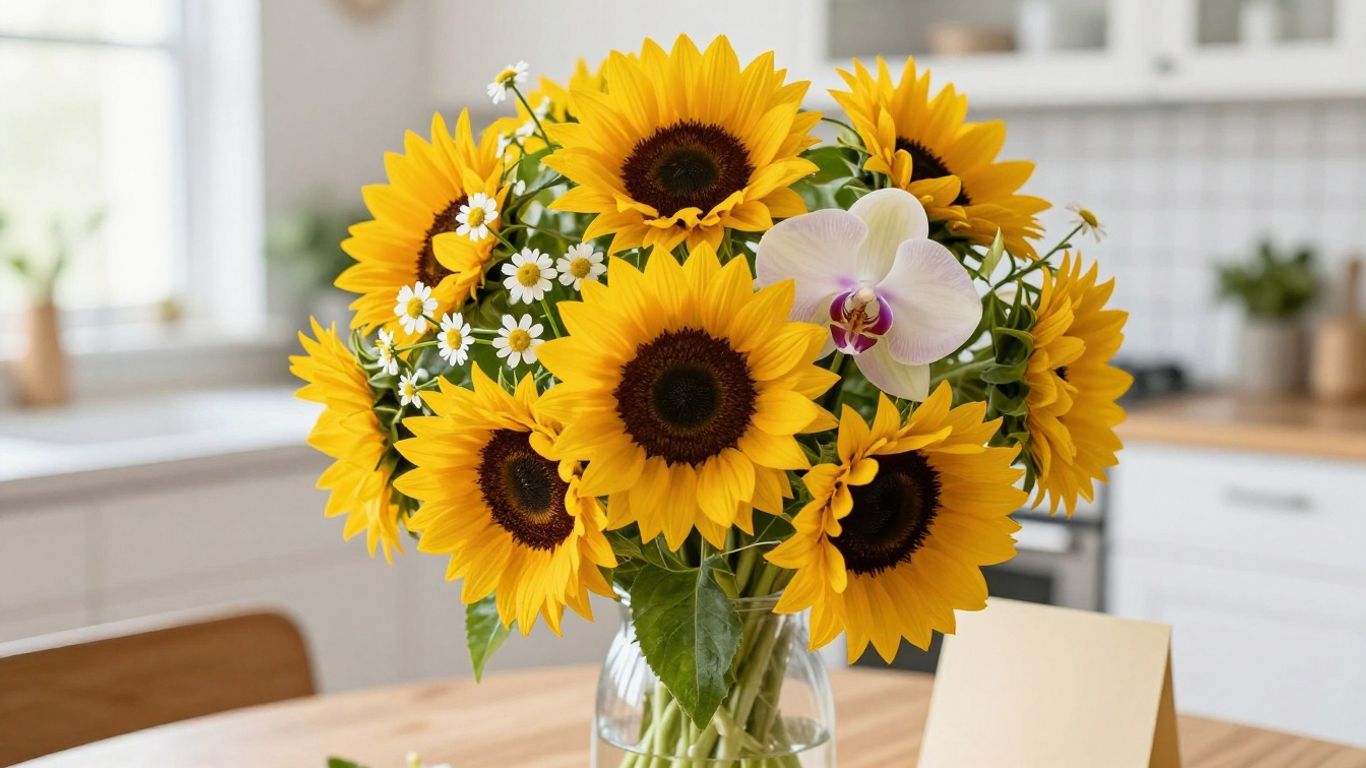
A useful thinking of you flower arrangement may include orchids, sunflowers, lilies, or other seasonal blooms, but the most fitting option is usually the one that feels recognizable to the person receiving it.
Flowers for romance, friendship, family, and support
Romantic flowers can be lush and elegant, with roses or orchids creating a more intimate impression. For a friend, a loose mixed bouquet, daisies, or cheerful sunflowers usually feels warm without becoming overly formal. Family members may enjoy familiar flowers in colors connected to home, memories, or a shared tradition.
For support, choose flowers that feel calm and caring rather than dramatic. A modest arrangement can communicate presence without suggesting that the recipient needs to perform gratitude or immediately discuss a difficult situation.
Color meanings and the mood they create
Color is often the first thing someone notices, so it has a strong effect on the mood of a bouquet. Red can feel passionate, yellow lively, pink affectionate, white peaceful, and blue or lavender more restful. These associations are flexible, though; personal preference matters more than a universal code.
If you are unsure, combine colors that reflect the recipient’s personality. A favorite shade can make even a simple arrangement feel distinctly personal, while softer neutrals may be better for a quiet gesture of care.
Seasonal blooms versus classic year-round favorites
Seasonal flowers often look especially fresh and natural because they are being grown and displayed at their strongest time of year. They can also give the bouquet a sense of place and moment. Classic blooms, meanwhile, are dependable when you already know the recipient loves roses, lilies, carnations, or another familiar flower.
Substitutions are sometimes necessary with online orders, so decide whether the exact flower or the overall color and mood matters more. A flexible approach usually leads to a better result than insisting on one unavailable stem.
How the recipient’s personality should guide your choice
A minimalist may prefer a small vase arrangement with a few distinctive stems, while someone who loves color may enjoy a full, lively mix. Consider their home, work setting, maintenance habits, and tolerance for fragrance. Someone with a busy schedule might appreciate a hardy plant or a compact bouquet more than a delicate arrangement that needs constant attention.
The best choice feels like it belongs to them, not like a display of the sender’s taste. When in doubt, use a familiar favorite and let the florist build around it.
The best flower arrangements for different situations
There is no single perfect thinking-of-you bouquet. The right arrangement depends on the emotional temperature of the moment and the practical setting where it will be received. A large romantic bouquet may be wonderful at home but awkward at a small office desk, while a compact vase can feel just as generous when it is chosen with care.
Cheerful mixed bouquets for a simple pick-me-up
Mixed bouquets are a reliable choice when you want to brighten an ordinary day. Their varied colors and textures create movement, and they do not force one narrow interpretation of the gesture. Choose a lively mix for someone who enjoys spontaneity, or a more restrained palette for a recipient with quieter taste.
A small note can make the intention clear: “No big reason—just hoping this makes today a little brighter.” That keeps the bouquet friendly and easy to receive.
Elegant roses for a romantic surprise
Roses work well when the relationship is romantic and you want the flowers to feel intentional. Red roses are openly passionate, while blush, peach, or white roses can create a softer expression. If the relationship is not romantic, choose another flower or a clearly casual color palette to avoid confusion.
The number and presentation matter less than the context. A single-color bouquet can look polished, but a mixed arrangement may feel more relaxed for a spontaneous delivery.
Bright sunflowers and daisies for encouragement
Sunflowers and daisies bring an unmistakably sunny quality to a room. They are a natural fit for a friend facing a stressful week, a student preparing for exams, or anyone who could use a visible reminder that someone is rooting for them.
For broad inspiration, cheerful sunflower bouquets are one option among arrangements that also include roses, lilies, and carnations. Keep the card focused on encouragement rather than advice; flowers can offer companionship without trying to solve the problem.
Soft pastel flowers for comfort and care
Pastel pinks, creams, lavender, and pale blues tend to create a gentler atmosphere. They suit a quiet check-in, a recovery period, or a message of sympathy when a large, vivid bouquet might feel too forceful. Rounded blooms and light foliage can make the arrangement feel restful.
Comfort flowers do not need to explain the situation. A simple “I’m here, and I’m thinking of you” often gives the recipient more room than a long message filled with assurances.
Low-maintenance plants as a lasting alternative
A small plant can be a thoughtful alternative when the recipient likes greenery or travels frequently. It lasts longer than cut flowers and can become part of a desk, kitchen, or windowsill. Succulents, certain foliage plants, and compact blooming plants are practical choices, provided the recipient has suitable light.
Ask yourself whether caring for a plant would feel enjoyable or like another responsibility. The lasting option is only better when it fits the person’s daily life.
How to personalize a no-reason flower delivery
Personalization does not require an elaborate gift or a long explanation. One remembered detail—a favorite color, a shared joke, or a flower from a meaningful place—can carry more weight than a costly add-on. The goal is to make the delivery feel like it came from you, rather than from a checkout menu.
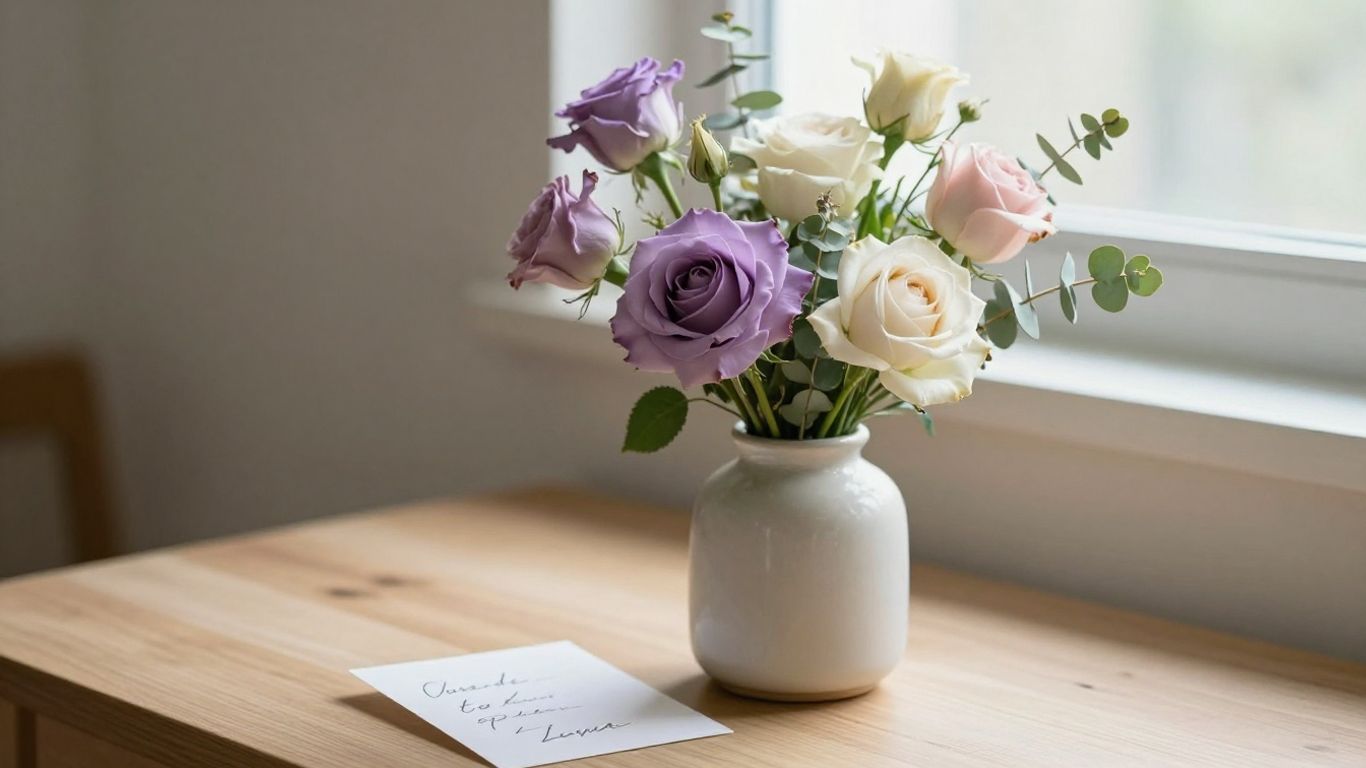
A personalized delivery works best when the flowers and the message tell the same story. A specific detail matters because it gives the recipient a reason to feel seen.
Writing a heartfelt note without overexplaining
Keep the note conversational and direct. Mention what brought the person to mind, or simply tell them you hope the flowers add something good to their day. You do not need to justify the delivery or describe every feeling behind it.
Try a line such as, “You crossed my mind this morning, and I wanted to send a little color your way.” For someone going through a hard time, “No need to reply—I’m here whenever you need me” can remove pressure.
Adding the recipient’s favorite flower or color
A favorite flower instantly gives the bouquet a personal anchor. If you do not know the exact flower, a preferred color, scent, or general style can guide the florist. You might choose bright and loose for an expressive friend, or clean whites and greens for someone who favors simple interiors.
If the favorite is unavailable, keep the defining quality rather than forcing an exact substitute. Matching the spirit of the preference is often enough.
Choosing a vase, gift, or treat to complement the bouquet
A useful vase can extend the pleasure of the flowers, especially if the recipient does not already have one. A small treat, tea, or locally made item may also complement the gesture, but it should not compete with the bouquet. When sending to someone with dietary restrictions or allergies, a vase is the safer addition.
Think about convenience, too. A ready-to-display arrangement saves the recipient work, while a wrapped bouquet gives them the pleasure of arranging it themselves.
Timing delivery to create a genuine surprise
Timing can turn a pleasant gift into a memorable interruption. A delivery during a demanding afternoon may provide a welcome pause, while a morning arrival can set a lighter tone for the day. If the recipient works from home or travels often, confirm that someone can receive the flowers.
Same-day delivery is useful for a prompt gesture, but scheduled delivery may be kinder when you know the recipient’s routine. The best surprise is one that arrives at a moment when it can actually be enjoyed.
What to consider when ordering flowers online
Online ordering is convenient, but a few quiet checks can prevent disappointment. Look beyond the product photograph and read the details about size, delivery, substitutions, and care. A little preparation helps the finished bouquet feel intentional rather than rushed.
Selecting a reputable local florist or delivery service
Choose a service that clearly explains who designs and delivers the flowers, how orders are handled, and what happens if a stem is unavailable. Local florist delivery may offer a more regional, seasonal feel, while a larger service may provide broader ordering options. Reviews can help, but pay particular attention to recent comments about freshness and communication.
For a service centered on personalized arrangements and flowers for different relationships, thoughtful flower choices may be useful when the situation calls for more than a generic bouquet. Match the service to the sensitivity of the message.
Comparing same-day, next-day, and scheduled delivery
Same-day delivery suits an immediate check-in, but cutoff times, delivery areas, and available designs vary. Next-day delivery may offer a broader selection, while scheduled delivery gives you control over a birthday-free surprise or a date connected to a personal memory.
Before paying, confirm the recipient’s local time and the service’s delivery window. A vague promise of speed is less helpful than a clearly stated window you can plan around.
Checking bouquet size, flower substitutions, and freshness policies
Photographs can make an arrangement appear larger than it is, so check dimensions and the number of stems when those details are available. Read the substitution policy carefully: florists may replace a flower with one of similar value, color, or overall style. Also look for guidance on what to do if the flowers arrive damaged or fail to open properly.
These details do not make the gift less romantic. They simply let you choose with realistic expectations and respond quickly if something goes wrong.
Avoiding delivery issues with accurate recipient details
Use the recipient’s full name, correct address, apartment or suite number, and a phone number when requested. Include building access instructions and note whether the delivery should go to a reception desk. For workplaces, add the department or floor if it will help the courier find the right person.
Double-check the card message before submitting the order. A small typo in a private note is awkward; a wrong address can prevent the surprise from arriving at all.
How to send flowers thoughtfully and appropriately
A flower delivery should make the recipient feel cared for, not watched or indebted. Consider the relationship, the setting, and the person’s comfort before choosing something dramatic. Thoughtfulness is partly about the bouquet and partly about leaving room for the recipient to receive it in their own way.
Keeping the gesture personal without creating pressure
Avoid language that demands a response, an explanation, or a particular emotional reaction. “I hope these make you smile” is lighter than “I need to know you got them.” If the relationship is new or uncertain, choose a modest arrangement and a friendly note.
A no-reason gift is strongest when it offers affection freely. It should feel like a kindness, not a test.
Choosing the right arrangement for workplace delivery
For an office, select a compact, low-fragrance arrangement that can sit neatly on a desk or shared counter. Bright mixed flowers can be welcoming, while a simple plant may be easier to keep during a busy week. Avoid oversized designs that make the recipient feel conspicuous unless you know they would enjoy the attention.
Include the recipient’s department and delivery instructions, and consider sending early enough that the flowers do not arrive after the office closes.
Sending flowers when someone needs encouragement or support
When someone is ill, grieving, overwhelmed, or recovering, the message should be gentle and free of forced optimism. Choose calming colors, easy-care flowers, or a plant if that suits their circumstances. If fragrance could be a concern, ask about sensitivities or select a low-scent arrangement.
A service such as personalized flower delivery can fit a range of relationships, from a friend or partner to a loved one who lives far away. Whatever you send, let the note acknowledge the person rather than trying to tidy up a difficult experience.
Following up after delivery to share the sentiment behind the gift
A brief follow-up can complete the gesture. You might call later, send a message, or simply say that you hope the flowers arrived safely. If the bouquet was inspired by a memory, sharing that detail gives the recipient a glimpse of the thought behind it.
Do not treat the follow-up as a request for praise. Let the flowers stand as a small expression of care, whether or not the recipient has the energy to respond right away.
Conclusion
The most meaningful no-reason flowers are chosen with the recipient in mind and sent without expectation. Whether you select a bright mixed bouquet, a favorite bloom, or a lasting plant, pair it with a simple note and practical delivery details. A small surprise can make an ordinary day feel quietly special.
Frequently Asked Questions
What are good flowers to send for no reason?
Mixed bouquets, sunflowers, daisies, roses, lilies, and orchids can all work well. Choose according to the recipient’s preferences, your relationship, and the mood you want to create.
What should I write on a thinking-of-you flower card?
Keep it short and sincere. You might say, “You crossed my mind today, so I wanted to send something bright,” or “No reason—just hoping these make you smile.”
Are roses too romantic for a friend?
They can be, especially in deep red. If you want to send roses to a friend, consider yellow, peach, pink, or a mixed arrangement and make the friendly intention clear in the note.
Which flowers are best for encouragement?
Sunflowers and daisies create a cheerful impression, while bright mixed bouquets can also lift the mood. Choose colors and flowers the recipient already enjoys when possible.
Should I send flowers to someone at work?
Yes, if the recipient is comfortable with workplace deliveries. Choose a compact, low-fragrance arrangement and provide accurate department, floor, and reception details.
Is same-day delivery necessary for a spontaneous gift?
No. Same-day delivery is useful when you want to reach someone quickly, but next-day or scheduled delivery may offer better selection and more convenient timing.
How can I make a flower delivery feel more personal?
Include a favorite flower or color, refer to a shared memory, and choose a vase or small add-on that suits the recipient. Personal details matter more than the size or price of the arrangement.