
Key Takeaways
The best new baby flowers to welcome a little miracle feel warm, personal, and easy to live with. Let the family’s style, safety needs, and the setting guide the final choice.
- Choose blooms for their feeling as much as their appearance.
- Use color to create a soft, cheerful, modern, or timeless mood.
- Check flower safety, fragrance, pollen, and placement around babies and pets.
- Match the arrangement’s size and container to the occasion.
- Add a message or keepsake detail that makes the gift personal.
Choose flowers that reflect the joy of a new arrival
A new baby marks a tender beginning, and flowers can express happiness without needing a grand gesture. Start with the emotion you want the arrangement to convey, then choose blooms and colors that make that feeling visible. The most thoughtful bouquet is usually one that feels joyful but still suits the parents’ home and routine.
Meaningful blooms for celebrating new beginnings
Tulips, daisies, and alstroemeria all bring a sense of freshness to a new-baby arrangement. Tulips have a clean, hopeful shape, daisies feel innocent and sunny, and alstroemeria can add texture while lasting well in a vase. If you want inspiration from a florist’s baby-arrival suggestions, Evergreen Flowers highlights roses, orchids, and Gerbera daisies for this kind of celebration.
Flowers that symbolize love, hope, and happiness
Pink roses can suggest affection, while orchids bring an elegant sense of strength and beauty. Hydrangeas are generous and full, making them a natural choice when you want to express gratitude and heartfelt feeling. Meanings are helpful, but they do not have to dictate the entire design; a flower the family already loves may carry more significance than a traditional symbol.
Classic choices for welcoming a baby boy or girl
For a classic presentation, consider roses, carnations, daisies, or lilies in a carefully balanced palette. Soft pinks and blush tones remain familiar for a baby girl, while pale blue can be paired with white, cream, or green for a baby boy. If the family has not shared a color preference, a mixed arrangement keeps the gesture celebratory without making assumptions.
Gender-neutral arrangements with timeless appeal
White roses, yellow tulips, peach carnations, and green foliage create a welcoming design for any new arrival. A rounded bouquet feels gentle, while airy stems and simple greenery give the arrangement a more contemporary character. A thoughtful balance matters more than choosing the trendiest flower: combine one focal bloom, one supporting flower, and foliage that lets the colors breathe.
Select the right colors and floral style
Color changes the whole personality of a bouquet, even when the flowers stay the same. Pastels create quiet softness, saturated hues bring energy, and whites with greens feel polished. Think about where the arrangement will be seen, since a hospital room, nursery, and dining table each call for a slightly different scale and mood.
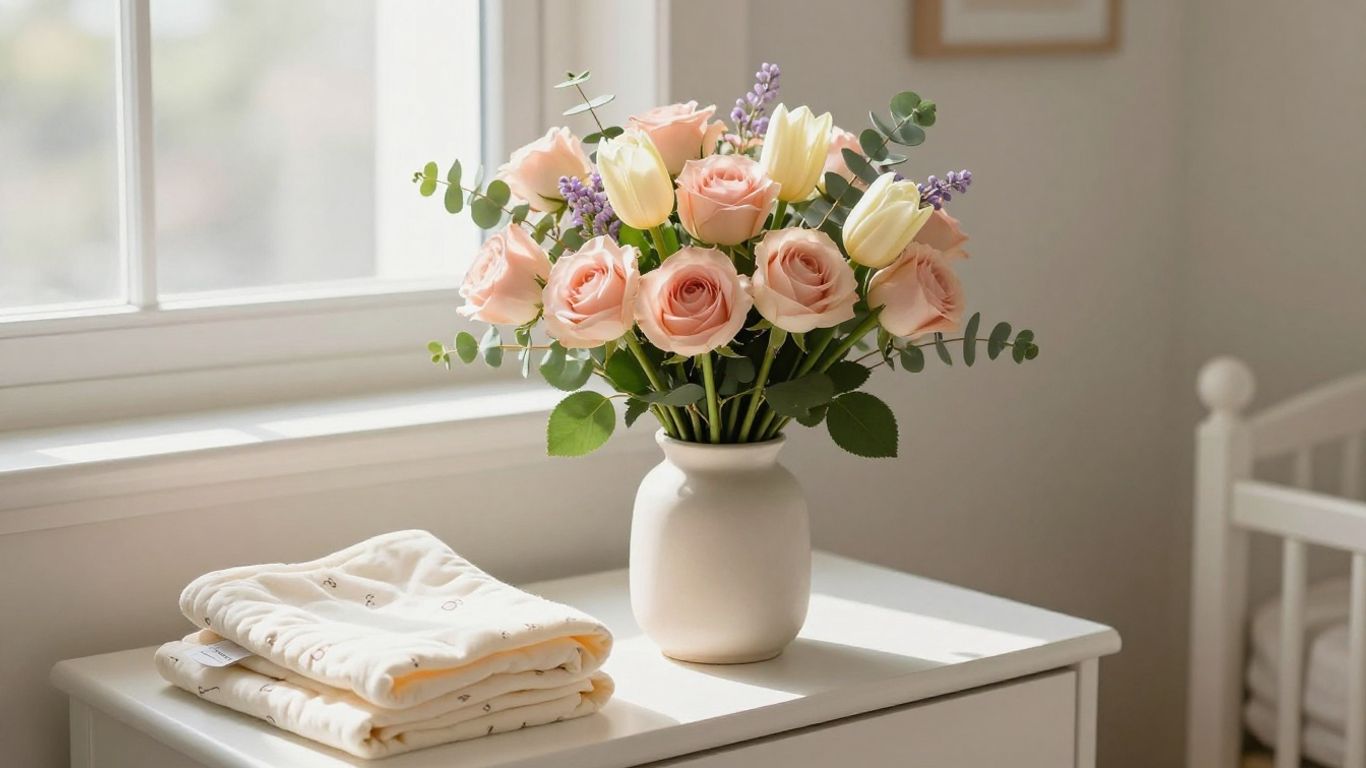
Soft pastels for a gentle nursery-inspired look
Blush, lavender, pale yellow, mint, and powder blue work beautifully when the gift should feel calm and delicate. Pairing two or three muted shades keeps the design from looking overly busy. A small amount of white space between the blooms can make the bouquet feel lighter and more like a nursery accent than a formal centerpiece.
Bright blooms for a cheerful welcome
Gerbera daisies, sunflowers, yellow roses, and lively tulips can bring immediate warmth to a celebration. Bright flowers are especially fitting for a shower or welcome party, where the arrangement needs to hold its own among food, gifts, and conversation. Keep the foliage simple so the color remains the main event rather than becoming visual clutter.
Elegant whites and greens for a modern arrangement
White roses, lisianthus, orchids, and eucalyptus offer a clean palette with plenty of texture. This combination suits parents who prefer neutral interiors or understated décor. A ceramic vase, glass cylinder, or low basket can reinforce the modern feeling without making the gift seem too formal.
Coordinating flowers with the family’s personal style
Look for clues in the parents’ home, clothing, or everyday taste if you know them well. Someone drawn to natural materials may prefer a loose, garden-style bouquet, while a minimalist may appreciate a compact arrangement with fewer varieties. When you are unsure, ask the florist for a flexible palette and describe the room where the flowers will be placed.
Prioritize baby- and pet-safe flower choices
Flowers brought into a home with a newborn should be beautiful without creating extra worry. Safety involves more than the bloom itself: fragrance, pollen, water, containers, and placement all deserve attention. If pets live in the home, confirm the safety of every flower with a veterinarian or a trusted animal-safety reference before ordering.
Non-toxic blooms for homes with curious pets
Some commonly gifted flowers can be harmful to cats, dogs, or other animals, so do not rely on appearance alone. Ask for the botanical names of the proposed blooms and explain that the arrangement will share space with pets. A florist can help you avoid questionable varieties, but the recipient should still keep the finished bouquet away from chewing or knocking distance.
Fragrance considerations for newborns and parents
Strongly scented flowers may be uncomfortable in a small room, especially during the early days when parents are tired or sensitive to smells. Choose lightly scented or unscented blooms when sending flowers to a hospital or nursery. This also makes the bouquet easier to enjoy for visitors with allergies or fragrance sensitivities.
Avoiding pollen-heavy flowers and loose floral materials
Flowers that shed heavily can leave pollen on nearby surfaces and may be less suitable for a nursery. Ask for blooms with contained pollen and avoid arrangements decorated with loose glitter, dried grasses, tiny berries, or detachable ornaments. The cleaner the design, the easier it is to maintain around a baby.
Choosing a safe location for the arrangement
A bouquet should sit on a stable, elevated surface away from the crib, changing table, and pet feeding area. Use a sturdy container that will not tip easily, and keep scissors, floral picks, and stagnant vase water out of reach. These small choices preserve the beauty of the gift while reducing avoidable hazards.
Match the arrangement to the occasion
The same flowers can feel completely different depending on where and when they arrive. A hospital bouquet should be compact and manageable, while a shower centerpiece can be broader and more expressive. Before ordering, confirm the delivery address, visiting rules, available table space, and whether the family is already receiving several arrangements.
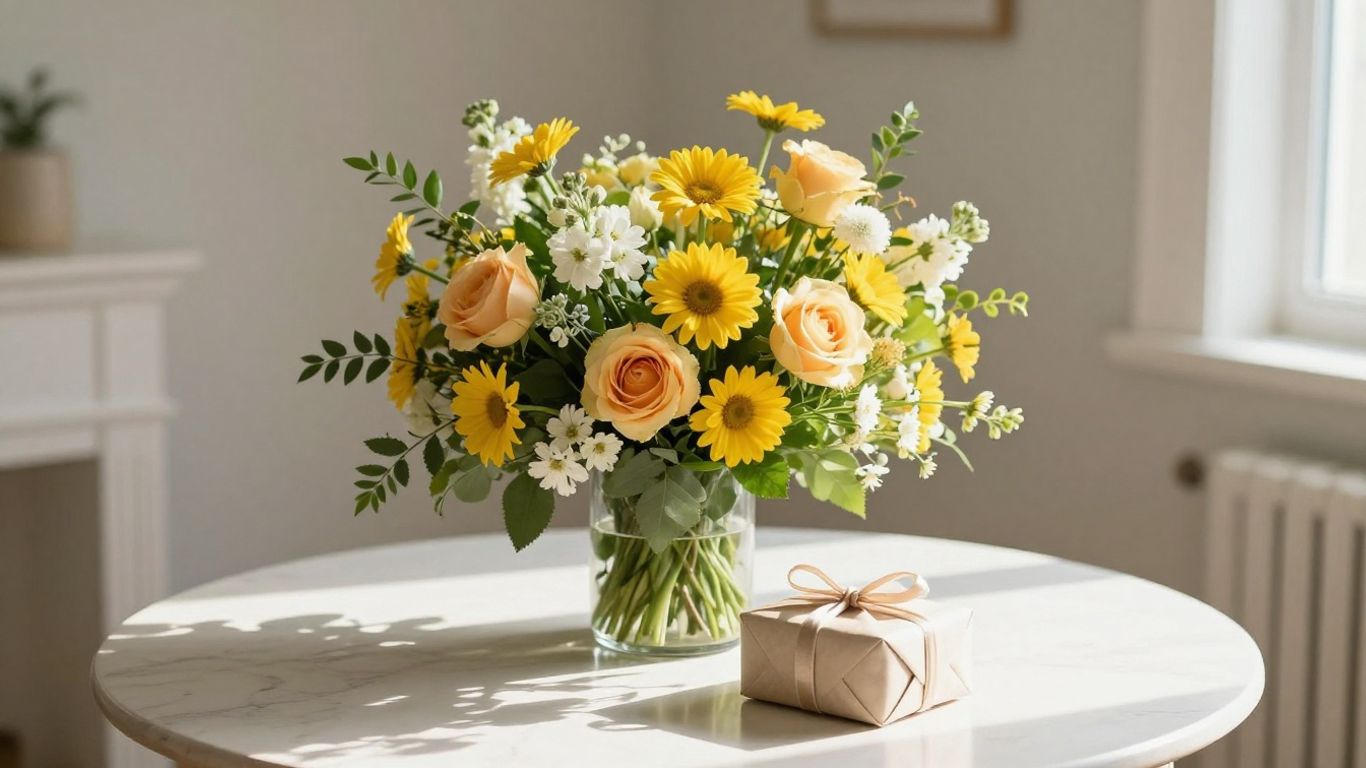
Hospital-friendly bouquets for a first visit
Choose a modest bouquet in a lightweight vase or a container the recipient can carry easily. Low-pollen flowers and a gentle fragrance are considerate in shared rooms, and a design that does not spread widely will be less likely to interfere with bedside space. Always check whether the hospital permits flowers in the patient’s unit before arranging delivery.
Centerpieces for a baby shower or welcome party
A shower allows for more color and scale, particularly when flowers will be displayed on a buffet or gift table. Low centerpieces keep sightlines open, while several small arrangements can be moved around as the event changes. Coordinate the flowers with the invitation colors or table linens, but leave enough contrast for the blooms to remain visible.
Keepsake arrangements for the nursery
For a nursery gift, choose a design that can transition into the home after the first few days. A simple vase, woven basket, or long-lasting arrangement may be more useful than a dramatic bouquet that needs constant attention. Keep any keepsake container stable, washable, and appropriate for a high shelf or another safe location.
Small designs for thoughtful doorstep delivery
A petite arrangement can be ideal when the parents are settling in and the delivery needs to fit beside the door. Include care instructions and select flowers that tolerate a short wait if the family cannot answer immediately. East Main Gardens discusses long-lasting alstroemeria alongside cheerful daisies and carnations, a useful direction when durability matters.
Personalize new baby flowers with meaningful details
Personal touches turn a pretty delivery into a memory. They do not need to be elaborate; a carefully chosen color, a familiar flower, or a few sincere words can be enough. Keep the design comfortable for the family rather than adding details that make the arrangement difficult to place or care for.
Adding the baby’s name or birth announcement
If the parents have announced the baby’s name, a small card or discreet ribbon can make the gift feel wonderfully specific. Include the birth date only when you know it is correct, and avoid adding details the family has chosen to keep private. A simple name card is often more tasteful than a crowded arrangement filled with decorations.
Pairing flowers with a handwritten message
A handwritten note gives the flowers their voice. Try a short message that celebrates the parents as well as the baby, such as a warm wish for rest, health, and happy first moments together. Avoid assuming how the birth went or offering advice; kindness is most welcome when it leaves room for the family’s own experience.
Including a favorite flower or family tradition
A grandmother’s favorite rose, flowers from a wedding bouquet, or a seasonal bloom connected to the family can add a layer of quiet meaning. If you do not know the family tradition, ask a relative or close friend rather than guessing. Wes’ Flowers points to Gerbera daisies, orchids, and hydrangeas as options connected with joy, strength, and gratitude.
Choosing a vase, basket, or keepsake container
The container should match both the flowers and the recipient’s practical needs. A glass vase feels classic, a basket feels relaxed, and a reusable ceramic vessel may become part of the home. Avoid tall, unstable shapes for busy rooms, and consider whether the parents have an easy place to store or reuse the container.
Make the flowers practical, beautiful, and long-lasting
A thoughtful arrangement should arrive in good condition and remain enjoyable after the first day. Freshness depends on the flower variety, preparation, delivery timing, and care once the bouquet reaches its destination. A little planning can protect the gift from becoming one more task during an already full week.
Selecting blooms that stay fresh during delivery
Ask for flowers that are well suited to the expected travel time and season. Sturdy stems, fresh foliage, and partly opened buds often provide a better delivery experience than blooms already at full maturity. For guidance on seasonal choices, Rimmon Heights Florist includes Gerberas, hydrangeas, and alstroemerias among its new-baby suggestions.
Caring for a bouquet after it arrives
Trim the stems at an angle, place the flowers in clean water, and remove any leaves that would sit below the waterline. Keep the arrangement away from direct sun, heating vents, and ripening fruit, then refresh the water regularly. If the bouquet arrives in floral foam, follow the care instructions and add water gently rather than lifting the stems.
A short care card is especially helpful for new parents who may not have time to search for instructions. These simple steps usually make more difference than adding extra decoration to the original design.
Balancing flower quality with your budget
You can create a generous-looking gift at many price points by adjusting the size, flower varieties, and container. A smaller arrangement of excellent blooms may feel more refined than a large design filled with too many competing elements. Decide whether delivery, a keepsake vase, and a note are included in your budget before choosing the final size.
Ordering from a reliable local florist or online service
Read the delivery details carefully, provide a complete address, and mention any hospital restrictions or pet concerns before checkout. A reliable seller should make it clear what substitutions may occur and how the flowers will be prepared for travel. When timing is sensitive, confirm the delivery window rather than assuming a bouquet will arrive at a particular hour.
Conclusion
The right new baby flowers to welcome a little miracle are not defined by one bloom or color. They are chosen with affection, shaped around the family’s style and setting, and finished with practical care and a personal note. Whether the arrangement is soft and neutral, bright and celebratory, or quietly modern, its greatest beauty is the welcome behind it.
Frequently Asked Questions
What flowers are best for welcoming a new baby?
Roses, daisies, tulips, carnations, alstroemeria, orchids, and hydrangeas can all work well, depending on the desired color, style, fragrance, and care needs.
Should baby flowers be pink or blue?
Not necessarily. Pink and blue are familiar choices, but white, yellow, peach, lavender, and green create appealing arrangements that feel personal and inclusive.
Are flowers safe to bring around a newborn?
Choose low-fragrance, low-pollen designs and keep flowers away from the crib and changing area. Ask the florist about the blooms and follow the family’s preferences.
What flowers should pet owners avoid?
Because risks vary by animal and flower, verify every variety with a veterinarian or an established animal-safety resource before sending an arrangement.
Are flowers appropriate for a hospital room?
Often they are, but hospital policies differ. Confirm that flowers are permitted, then choose a compact bouquet that does not take up much bedside space.
How can I make a baby bouquet more personal?
Add the baby’s name if the family has shared it, include a sincere handwritten message, or choose a flower connected to a family memory or favorite tradition.
How long should new baby flowers last?
Many bouquets last about a week with clean water, trimmed stems, and a cool location, though longevity depends on the flower varieties and how fresh they were at delivery.