
Key Takeaways
Flowers can offer a gentle way to acknowledge change, grief, or distance when the right words are hard to find. The most thoughtful choice is usually the one that respects the person and the moment.
- Flower meanings differ across cultures, families, and individual experience.
- A favorite bloom can feel more personal than a traditional symbol.
- Choose an arrangement that suits the kind of goodbye and its setting.
- A short, sincere message can make even a modest bouquet meaningful.
- You do not need to make a perfect choice for your gesture to matter.
What flowers can express during a difficult goodbye
A goodbye may bring grief, relief, gratitude, or several feelings at once. Flowers cannot resolve those feelings, but they can make room for them and offer a visible sign of care. The phrase flowers that honour difficult goodbyes describes less a set of rules than a thoughtful way to meet a tender moment.
How blooms can offer comfort when words feel inadequate
When conversation feels difficult, a bouquet can say, “I’m thinking of you,” without asking the recipient to respond. Its presence may soften a room or give someone a small, familiar thing to tend. The gesture works best when it is offered without pressure: a quiet expression of care, not a demand to feel better.
Sometimes comfort is practical as well as symbolic. A small bunch that fits on a bedside table may be easier to receive than an elaborate arrangement. If you are sending flowers to someone grieving at home, a cup of tea may also be welcome; this herbal tea guide offers ideas for choosing a soothing drink.
Why flower meanings vary across cultures and traditions
Flower symbolism is not universal. A color or bloom associated with mourning in one tradition may carry a different meaning in another, and family customs can matter more than a general guide. Even within the same community, people may have very different feelings about formal funeral flowers.
It can help to ask a family member, check the service details, or follow the recipient’s own preferences rather than assuming one flower has a fixed message. Guides to flowers associated with farewell can offer inspiration, but their meanings are a starting point, not a rulebook. When uncertain, choose with respect and keep the message simple.
How to choose symbolism that feels personal rather than prescribed
Start with the person, not a list of traditional meanings. Think about the flowers they kept at home, a garden they loved, or colors that make you think of them. A bloom with a small shared memory behind it can feel more honest than one selected because a chart says it means farewell.
If a relationship is changing, care can also mean holding your own boundaries while wishing someone well. A reflection on loving deeply may offer a useful perspective when affection and separation are both part of the goodbye. Let the flowers acknowledge what is true, without asking them to say more than you mean.
Flowers associated with farewell, remembrance, and hope
Some flowers are often chosen for remembrance, while others feel right because of their color, fragrance, or personal history. Their meanings can shift from one place and family to another, so it is fine to treat symbolism as a suggestion. The most fitting choice is one that feels kind in the circumstances.
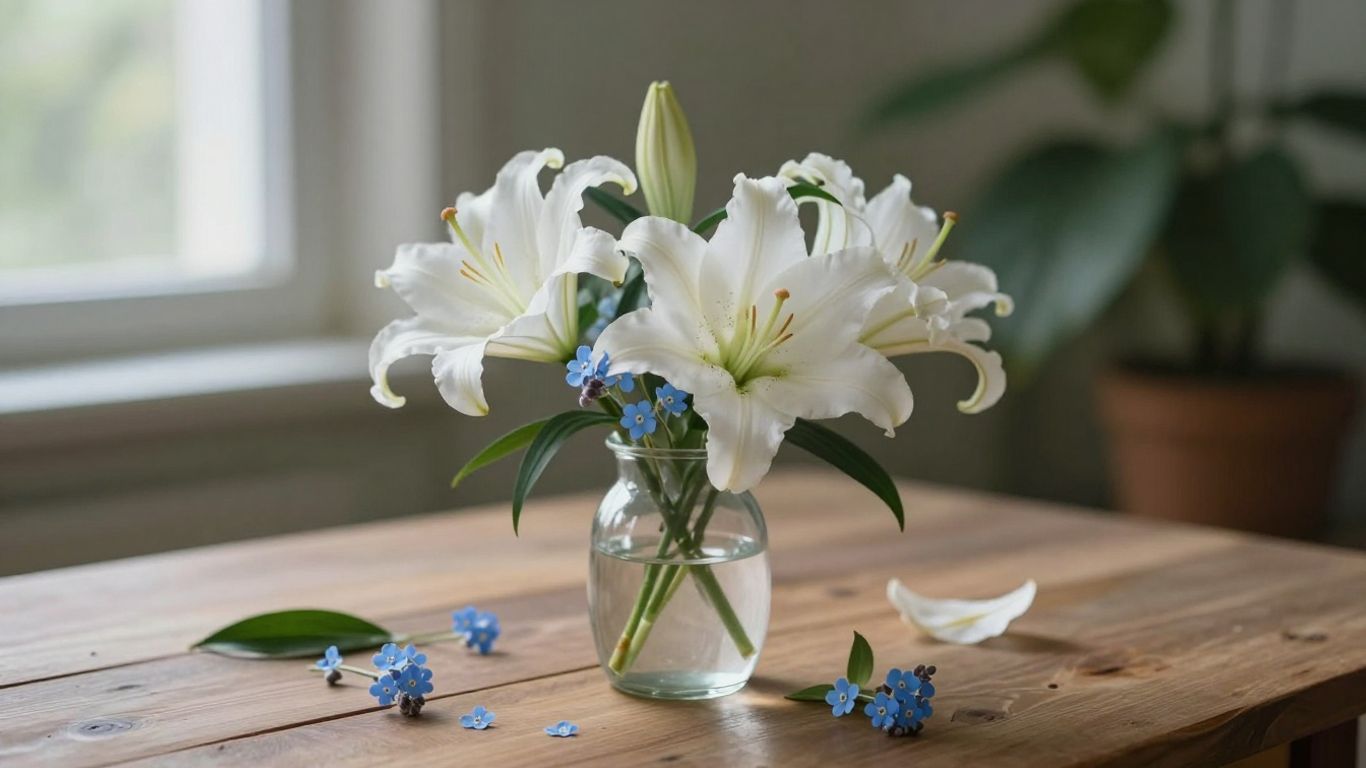
Lilies and their connection to remembrance and renewal
Lilies are a familiar choice for memorials and moments of loss. Their graceful shape and pale varieties can create a calm, contemplative feeling, while some people connect them with renewal or the continuation of life. Those associations may be comforting, but they are not universal, and a different flower may better suit the person being remembered.
Consider the setting as well as the symbolism. A fragrant lily may be lovely in a spacious service venue, but a less scented arrangement may be more considerate in a small room or shared home. The bloom’s meaning matters less than whether it feels appropriate to the people receiving it.
Forget-me-nots and their message of lasting connection
Forget-me-nots are small flowers often associated with memory and enduring connection. Their modest size can make them a thoughtful detail in a bouquet or a simple choice on their own. They may suit a goodbye where the message is not “move on,” but rather “you remain part of my life.”
If you are unsure which meanings are familiar to the recipient, it can be helpful to compare several options while keeping their preferences in view. A guide to farewell flowers can provide ideas, though no single interpretation needs to determine your choice. A personal note can explain the meaning you have in mind.
Roses, chrysanthemums, and other blooms with varied meanings
Roses can convey affection, gratitude, or respect, depending on their color and the relationship. Chrysanthemums are used in some places for remembrance and in others for more everyday occasions, while carnations and other long-lasting blooms may be chosen for their availability or familiar look. Because meanings vary, decide what you want the flowers to feel like before settling on a particular variety.
A quick comparison can help you focus on tone instead of searching for one universally correct flower. These associations are broad impressions, not guarantees about how every recipient will interpret them.
| Bloom | Common association | A thoughtful consideration |
|---|---|---|
| Lily | Remembrance or renewal | Fragrance and venue size |
| Forget-me-not | Memory and connection | A delicate accent or small bunch |
| Rose | Affection, gratitude, or respect | Color and relationship |
| Chrysanthemum | Remembrance in some traditions | Local and family customs |
Use the table as a prompt for reflection, then choose what feels right for the person and setting. If the family has shared a preference, that matters more than a general association.
When a favorite flower matters more than traditional symbolism
A favorite flower can carry a memory that no symbolic guide could supply: a beloved garden, a regular market purchase, or a vase that was always full at home. That personal connection often makes the gesture feel sincere, even if the flower is not traditionally associated with farewell. It is perfectly reasonable to choose a bloom simply because the person loved it.
If you are selecting flowers for a graveside visit, a graveside tribute guide may offer further ideas about keeping the gesture fitting. The person’s own tastes still come first, and a familiar favorite can be enough.
Choosing flowers for the kind of goodbye you’re facing
A goodbye after a death is different from a breakup, a move, or a retirement. Each asks for a different tone, and the same bouquet may feel comforting in one situation but too formal or emotionally complicated in another. Start by considering what the gesture should acknowledge, then make the choice from there.
Selecting a tribute for someone who has died
For a memorial or funeral, flowers can honor the person and offer support to those who are grieving. If you knew the person well, a familiar favorite or a color connected to them may feel especially personal. If you did not, a restrained arrangement and a sincere message are thoughtful choices.
A service notice may specify where flowers should be sent, or whether the family prefers donations or another form of remembrance. Follow those wishes where possible. The aim is to support the people closest to the loss, not to make the tribute more elaborate than they want.
Sending flowers after a breakup or relationship change
After a breakup, flowers can be tender, but they can also create confusion if the relationship has ended clearly. Before sending them, consider whether contact is welcome and whether the gesture could feel like pressure. Sometimes a brief message—or no message—is kinder than a bouquet.
If flowers feel appropriate, keep the arrangement modest and the note direct. Avoid language that suggests reconciliation unless that is genuinely mutual. A goodbye can recognize what mattered while still respecting the space both people may need.
Marking a move, retirement, or other major life transition
For a move, retirement, or new chapter, flowers can express gratitude and good wishes without turning the moment into a memorial. Bright colors or a relaxed arrangement may feel more celebratory than formal sympathy flowers. Consider whether the recipient will have room to enjoy them, especially if they are travelling or packing.
A transition often brings plenty of practical planning alongside the emotional part. Someone preparing for a new home might appreciate a long-distance moving guide as a separate resource. And if a departing colleague is beginning professional drone work, drone certification and training may be relevant to that next step.
Considering what the recipient would find comforting
The recipient’s preferences are a better guide than assumptions about what people “usually” send. Some people love scented flowers; others find strong fragrance overwhelming. Some welcome a large display, while others would rather receive a small bunch they can arrange themselves.
When choosing a separate farewell gift as well, let the person’s actual interests guide that decision too. For example, Tesla gift ideas may suit someone who owns and enjoys a Tesla, but a personal note or flowers alone may be more fitting. Keep the gesture in proportion to your relationship and what you know they would welcome.
Matching a floral tribute to the setting
The same arrangement can feel right in one place and awkward in another. A funeral home, hospital room, workplace, and private home each have different practical limits, from available space to scent and delivery access. Think about how the flowers will arrive and who will need to care for them.
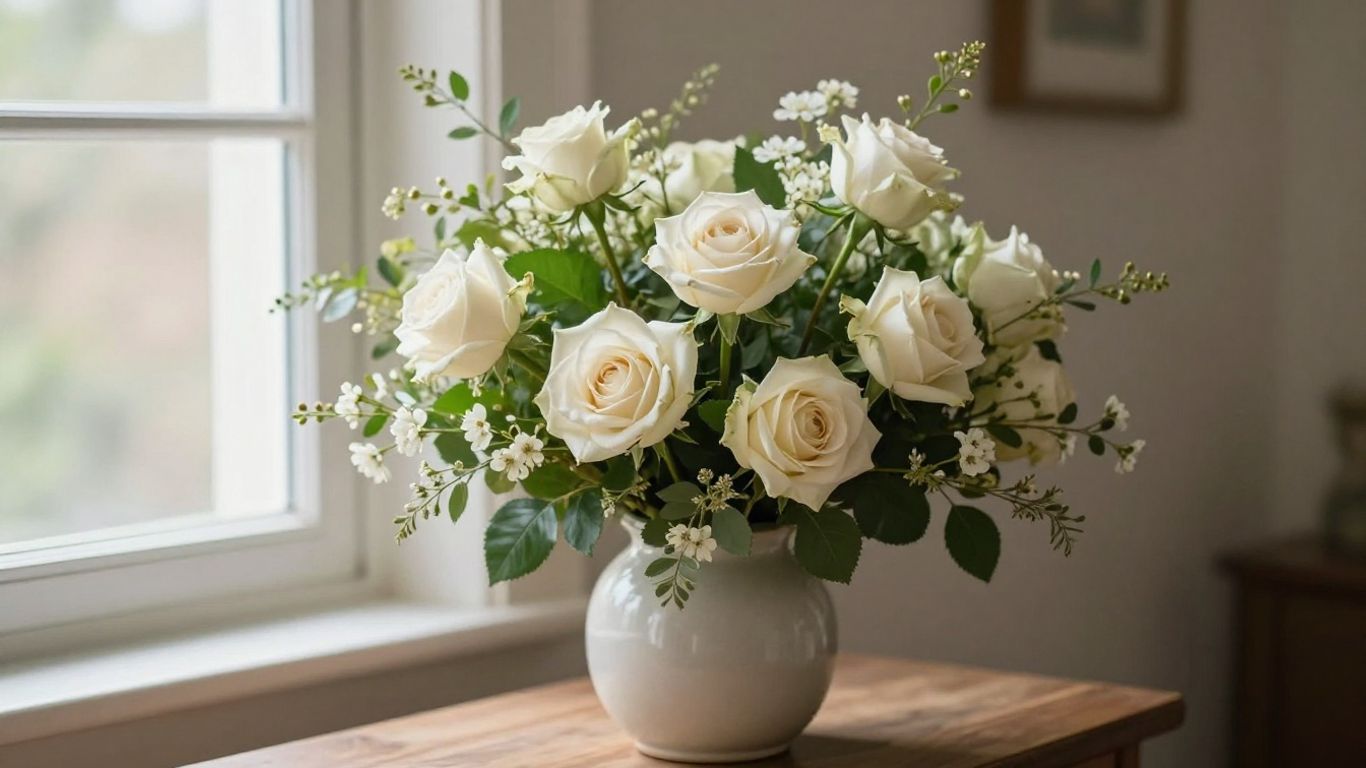
Choosing flowers for a funeral or memorial service
Before ordering for a service, check whether the family or venue has shared delivery instructions. Some services welcome flowers, while others request donations or prefer a smaller number of tributes. A standing arrangement may suit a larger space, whereas a compact bouquet can be easier to place at a small gathering.
If you are attending rather than sending flowers, you might choose a simple bunch to bring or follow the family’s stated wishes. There is no need to compete with other arrangements. A sincere gesture is enough.
Sending an arrangement to a home, workplace, or hospital
At home, a vase-ready arrangement can be helpful when someone is tired or grieving. At a workplace, a smaller display may be easier to manage and less likely to draw unwanted attention. In a hospital, check whether flowers are allowed before arranging delivery; some wards or patient situations may have restrictions.
Consider the recipient’s day, not only the delivery date. A bouquet delivered when someone is away or managing visitors may become one more task. A quick check with a relative or colleague can make the gesture easier to receive.
Picking a suitable scale, style, and level of formality
Scale can communicate care without overwhelming the recipient. A small, loose arrangement often feels personal at home, while a more formal tribute may suit a public service. Choose a style that fits your relationship and the space rather than assuming that a larger display carries more meaning.
It may also help to consider the recipient’s practical situation: whether they have a vase, counter space, or time to trim stems. A neat, manageable arrangement can be more comforting than something that demands attention. The thoughtful detail is choosing with their circumstances in mind.
Checking venue rules and family or cultural preferences
When in doubt, ask. The funeral director, venue, family, or hospital staff may be able to clarify delivery rules and preferences. This is especially helpful when customs differ or the family has requested a particular way of remembering someone.
A brief question is not an intrusion if it prevents an unwanted delivery. If you cannot confirm the details, choose a modest option or send a card instead. Respect for the family’s wishes is part of the tribute.
Personalizing an arrangement with care
Personal touches can make flowers feel connected to a person rather than chosen from a catalogue. That does not mean adding lots of decoration: a familiar color, a favorite flower, or a few honest words may be all that is needed. A thoughtful choice can stay simple.
Adding colors, keepsakes, or meaningful details
A ribbon in a favorite color or a small detail linked to a shared memory can make an arrangement feel individual. If you include a keepsake, make sure it is safe and appropriate for the setting, and do not attach anything the recipient would need to return or manage. The flowers themselves can remain the focus.
When you are choosing a personal detail, a short list can keep the decision grounded in what you know about the person:
- A flower they grew or kept at home
- A color they often wore or chose
- A small memory that feels warm rather than private
- A simple ribbon or wrapping in a familiar style
Pick just one detail if that is enough. A personal touch should make the arrangement feel more genuine, not add pressure to make it perfect.
Pairing flowers with a short, sincere message
A card can give the flowers a clear, human voice. You do not need a polished phrase; a sentence that says what you mean is usually better than a grand statement. For a loss, you might share a kind memory or simply say that you are thinking of the family.
For a transition, mention what you will miss or wish the person well in what comes next. Keep the note honest and avoid promises you may not be able to keep. A few sincere words can make even a small bouquet feel considered.
Working with a florist on a tribute that reflects a person
A florist can help translate a few preferences into an arrangement, especially if you know the person’s favorite color or flower but not the names of varieties. You can explain the occasion, setting, budget, and any fragrance or size concerns. You do not need to arrive with a complete design in mind.
Share what matters most and let the florist suggest available options. If the exact bloom is out of season, a similar color or shape may capture the feeling without pretending to be the same flower. Clear preferences make the process easier for everyone.
Choosing seasonal or locally available blooms
Seasonal flowers can be a practical way to find fresh, suitable options. Availability varies with location and time of year, so a florist may suggest alternatives if a particular bloom is difficult to source. Being flexible can also make it easier to keep the arrangement within budget.
A local selection may feel natural to the setting, but there is no need to attach a grand meaning to where a flower was grown. Choose what looks and feels right, and ask how to care for it if the recipient will be responsible for the arrangement.
Caring for yourself while making the choice
Choosing flowers during grief or stress can feel surprisingly demanding. You may be trying to honor someone, support a family, or find a way to mark a change while your own feelings are unsettled. Give yourself permission to make a kind, workable choice rather than searching for a perfect one.
Keeping the decision manageable during grief or stress
A few simple questions can narrow the options: What is the occasion? Where will the flowers go? What did the person like? If you do not know the answer to one of them, choose a modest, neutral arrangement and move on. You are allowed to keep the decision small.
It can help to ask someone you trust to choose with you or to handle the practical details. You do not need to explain every feeling behind the gesture. The flowers are one way of showing care, not a measure of how much you cared.
Setting a budget without losing the personal meaning
Meaning does not depend on price. A small bunch of favorite flowers, a single stem, or a handwritten card alongside a modest arrangement can express real care. Decide what you are comfortable spending before looking at options, so the moment does not turn into a comparison of sizes.
If cost is a concern, ask a florist what is in season or what can be made simply. The important thing is not to spend beyond your means. A thoughtful gesture should not leave you with an added burden.
Knowing when a simple gesture may be enough
Sometimes a card, a personal message, or a quiet visit is more fitting than flowers. If the recipient has limited space, allergies, or a stated preference for no floral gifts, respect that. Choosing not to send flowers can itself be an act of attention.
You can also send a small arrangement later, when the first rush of messages has passed, if that would feel welcome. There is no single correct timing. Let your care take a form that suits the person and the moment.
Conclusion
Flowers can help mark a difficult goodbye, but their meaning comes from the care behind the choice, not from finding a perfect symbol. Consider the person, the setting, and what they would welcome; then let a simple, sincere gesture be enough.
Frequently Asked Questions
What flowers are appropriate for a difficult goodbye?
There is no single required flower. Choose a bloom the person liked, one that feels suitable to the occasion, or a simple arrangement in a style the recipient would welcome.
Do certain flowers always symbolize farewell?
No. Meanings differ across cultures, families, and individuals. Treat traditional associations as possible inspiration rather than fixed rules.
Are lilies suitable for a memorial?
Lilies are commonly chosen for remembrance, but consider fragrance, venue guidance, and the family’s preferences before sending them.
Can I send flowers after a breakup?
Only if contact and the gesture would be welcome. A modest arrangement and clear message may be appropriate, but respecting someone’s request for space matters more.
What should I write on a farewell flower card?
Write a short, sincere message suited to the relationship. A warm memory, a simple expression of sympathy, or good wishes for a new chapter can be enough.
Should I send flowers to a funeral or to the family’s home?
Follow the family’s instructions and the venue’s delivery rules. If no preference is stated, asking a family member or funeral director can help you choose.
Is a small bouquet enough for a meaningful goodbye?
Yes. A favorite flower, a single stem, or a small arrangement can be deeply thoughtful. Meaning comes from the attention behind the gesture, not its size or cost.