
Key Takeaways
Calming flowers are less about a perfect recipe and more about choosing scents, colors, and shapes that feel comfortable to you.
- Lavender, jasmine, and roses offer familiar fragrances, though scent strength varies.
- Peonies, ranunculus, and baby’s breath bring softness through shape and texture.
- Match flower size and scent to the room and the people who use it.
- A few well-spaced stems in a simple vase can feel more restful than a crowded display.
- Check for sensitivities, keep flowers away from pets when needed, and refresh the water regularly.
What makes a flower feel calming
There is no single flower that settles everyone. A scent may feel comforting to one person and overpowering to another, while a softly colored bloom can simply make a room easier to look at. The flowers that feel like a deep breath are often the ones that suit your senses, your space, and your own associations.
Fragrance and its effect on mood
A flower’s scent can change the feeling of a room before you have really stopped to look at it. Some people enjoy a noticeable fragrance; others prefer something faint or none at all. Start with a small arrangement and notice whether the scent feels pleasant after a few minutes, rather than choosing by reputation alone.
A familiar, gentle aroma can become a small cue to pause. That idea sits alongside a simple reminder to pause and smell the flowers: there is no need to turn it into a ritual if simply noticing the scent is enough.
Color, shape, and visual softness
Pale colors and rounded, layered petals can make an arrangement feel quiet, while strong contrasts and spiky silhouettes tend to draw the eye. Neither is wrong; the question is how much visual energy you want in the room. A discussion of color psychology and mood explores a related idea through clothing, where color choices can affect how a person feels.
Softness can come from the outline as much as the hue: loosely gathered stems look different from a tight, formal bunch. You might also choose a few muted shades and let their variation do the work, rather than relying on a single flat color.
The role of personal memories and associations
Flowers carry private histories. Roses might recall a garden, a celebration, or someone’s kitchen table; lavender may bring back a drawer sachet or a summer walk. Those memories can matter more than any general claim about what a bloom is supposed to make you feel.
If a scent or flower brings up an unwanted association, it is fine to choose another one. In a different setting, guidance on emotional safety in mediation also recognizes the value of pauses and attentive responses; at home, a quiet moment with flowers can be much simpler, and entirely your own.
Blooms known for soothing scents
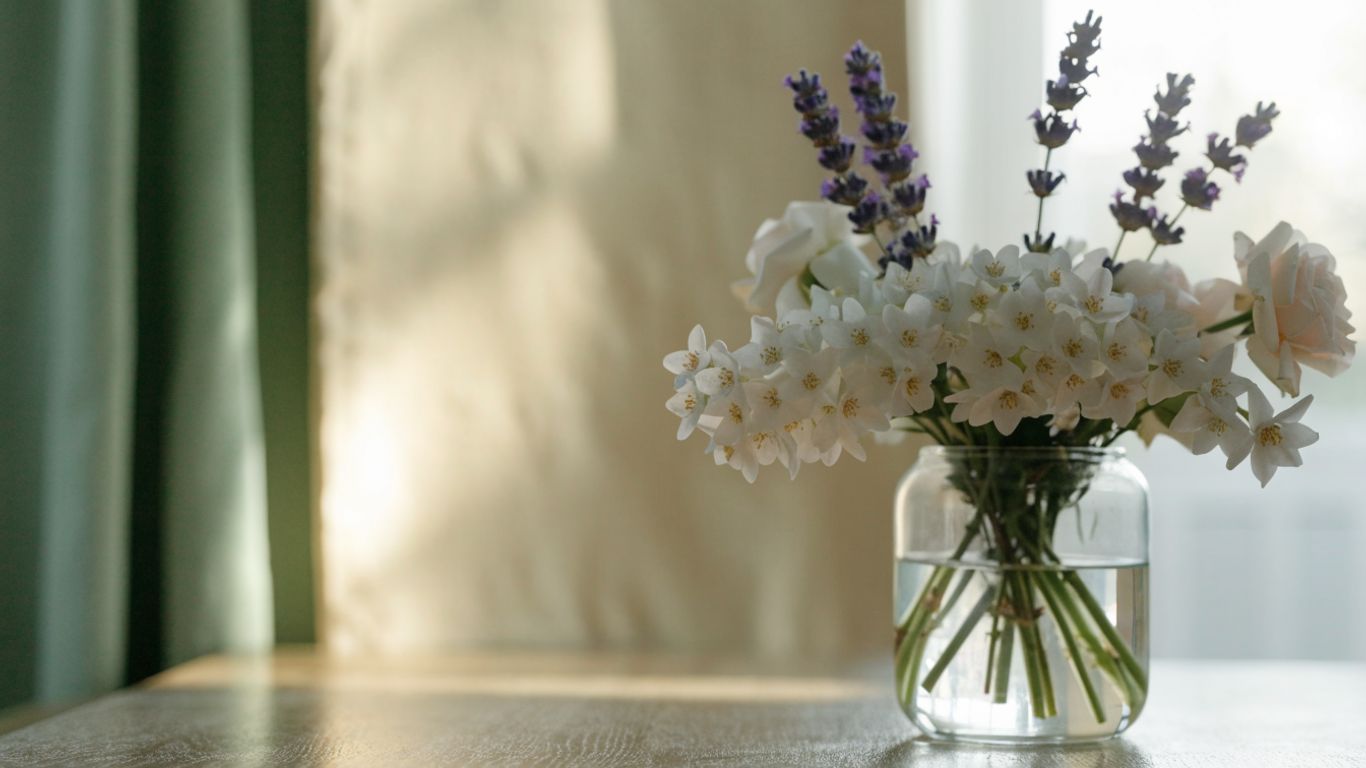
A fragrant bouquet can be a lovely choice when the people sharing the room enjoy scent. Lavender, jasmine, and roses are familiar options, but their aroma can vary by variety, freshness, and how many stems you bring indoors. Think of the following as starting points, not guarantees.
Lavender for a gentle herbal aroma
Lavender has a recognizable herbal scent that can feel clean and restful in a small arrangement. A few stems on a bedside table or near a reading chair may be enough; bunching a large amount together can make the aroma much more noticeable. If you are unsure, begin with fewer stems and move them farther away if the fragrance feels too strong.
Jasmine for a soft, sweet fragrance
Jasmine is often chosen for its sweet floral scent, which can be quite present in an enclosed room. Give it a little space rather than placing it right beside a pillow, desk, or dining spot. Some people enjoy that closeness; others may find a lighter touch more comfortable.
Roses for a familiar floral scent
Roses bring a classic fragrance, though not every variety smells equally strong. Their scent can also sit comfortably alongside the familiar shape of the bloom, which makes them an easy choice for a mixed bouquet. For a cooler, composed palette, a dried floral arrangement in blues and greens offers another visual direction, though dried stems have a different look and feel from fresh flowers.
Flowers that bring a sense of calm without strong fragrance
A calming arrangement does not have to fill the room with perfume. If you prefer a quieter sensory experience, look for flowers whose appeal comes mainly from their shape, color, and texture. Ask the florist about the particular stems available, since fragrance can vary even among flowers of the same kind.
Peonies for full, soft petals
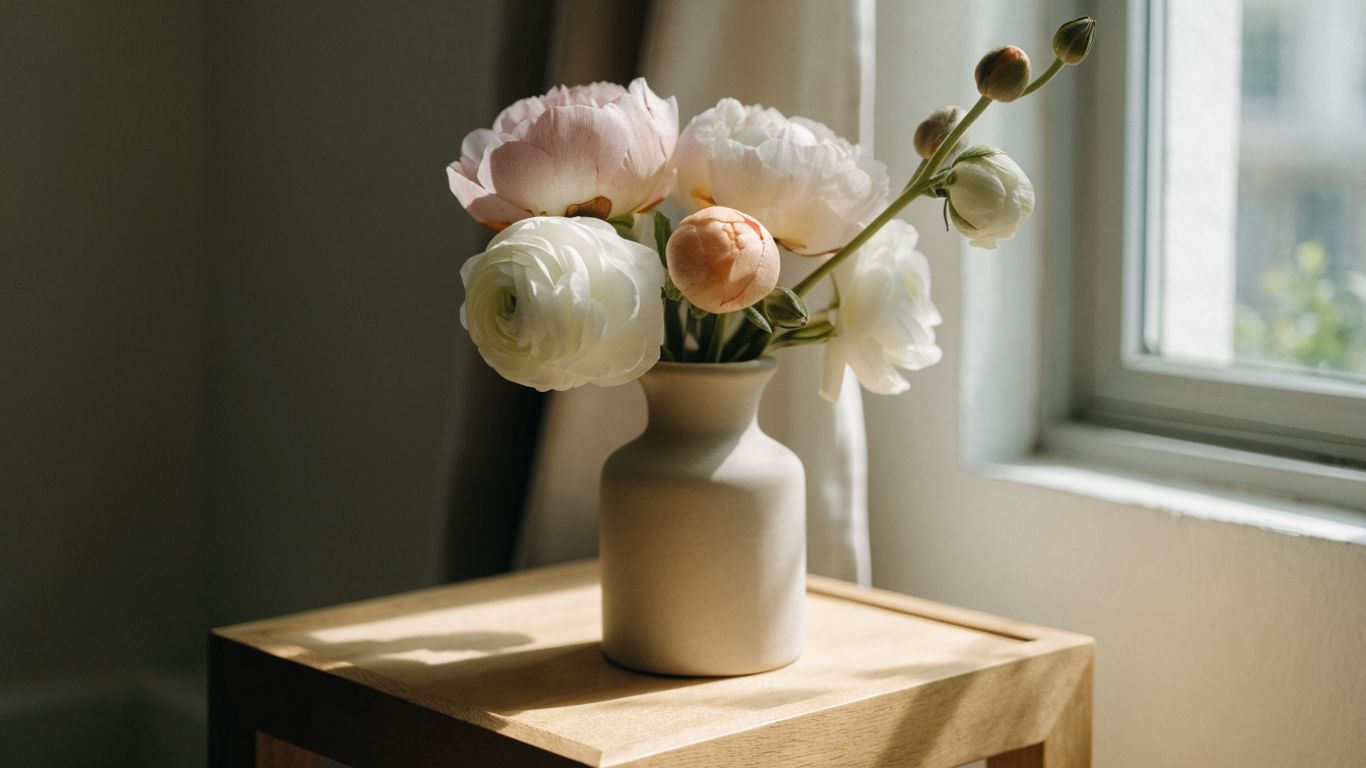
Peonies have generous, rounded blooms and layers of petals that create a soft, abundant look. A single stem can make a statement in a small vase, while several blooms feel more lush. If fragrance is a concern, check the specific variety rather than assuming every peony will be scent-free.
Ranunculus for layered, rounded blooms
Ranunculus have tightly layered petals and a tidy, rounded shape. Their stems can bring a delicate, almost sculptural quality to a bouquet without needing a strong fragrance to hold attention. They pair well with simple greenery, especially when you want the flowers themselves to remain the main detail.
Baby’s breath for a light, airy look
Baby’s breath adds a cloudlike layer of small flowers around larger blooms, or can stand on its own in a loose bunch. Its airy shape works nicely when a dense bouquet would feel like too much. For garden context, baby’s breath growing and care covers its needs as a sun-loving perennial as well as its use in bouquets.
How to choose flowers for your space
The right bouquet depends on where it will sit and who spends time nearby. Consider the scale of the room, how much light reaches the flowers, and whether a noticeable scent will suit the space. A small arrangement can be enough to soften a corner without asking the room to revolve around it.
Match the bloom to the room’s light and size
A broad dining table can hold a fuller arrangement, while a narrow bedside surface usually benefits from a compact vase. Flowers also last differently depending on their conditions, so keep them away from harsh direct sun and heat where possible. This quick comparison can help you picture the scale before you buy.
| Room or spot | A useful direction | What to keep in mind |
|---|---|---|
| Bedside table | A few compact stems | Leave space for daily essentials |
| Dining table | A low, open arrangement | Keep sightlines clear across the table |
| Entryway | A medium vase with defined shape | Choose a spot that is not in the way |
| Small desk | One or two light stems | Avoid crowding the work surface |
Use the table as a starting point, not a rulebook. If flowers obstruct a view or make a surface feel busy, reduce the number of stems or try a smaller vase. Outdoor settings have their own practical choices, such as pairing a patio display with weather-resistant outdoor furniture, but the same principle applies: leave enough room to use the space comfortably.
Consider scent strength in shared spaces
In a shared room, a mild scent—or no noticeable scent—is often the most considerate choice. Place fragrant blooms where people can enjoy them without sitting right beside them, and ask before bringing a strongly scented bouquet into a workplace or common area. A retail space has other considerations too: for example, liquor store advertising addresses signage and rules, while flowers in a shared setting call for attention to scent and foot traffic.
Choose seasonal stems for freshness and value
Seasonal flowers are often easier to find fresh, and choosing what is readily available can help keep a bouquet within budget. Ask what looks good that week, then build around one or two favorite stems instead of insisting on a particular imported variety. Budget questions differ across categories; for instance, ABA therapy cost factors in Missouri concern a very different kind of household planning, but the broad reminder is that costs depend on the choices and circumstances involved.
Simple ways to arrange calming flowers
A restful arrangement usually has a little breathing room. You do not need special tools or elaborate design rules; begin with a clean vase, a few stems you like, and a willingness to trim as you go. The aim is a display that feels settled in its place, rather than one that looks crowded or overly controlled.
Keep the palette soft and cohesive
Choose a small family of colors, such as cream, pale pink, and green, or lavender, white, and soft blue. A limited palette gives different flower shapes a chance to work together without competing for attention. If you like brighter color, one vivid stem among quieter shades can feel more intentional than a mix of many unrelated hues.
Give each stem room to breathe
Start with the largest blooms, then add smaller flowers and greenery where the arrangement needs balance. Leave a little open space between some stems so that each shape remains visible. If you want a gentle prompt to slow down while arranging, a flower breathing exercise for kids uses a handmade flower and lavender-scented oil as part of a mindful activity.
For a simple arrangement, try this small sequence:
- Trim stems to different heights so the bouquet has a relaxed outline.
- Remove leaves that would sit below the waterline.
- Add a few stems at a time, turning the vase as you work.
- Stop when the flowers look balanced from the side you will see most often.
The last step matters: there is no prize for using every stem. If the bouquet still feels busy, take one or two flowers out and place them in a second, smaller vase.
Use a vase that complements the arrangement
A vase can quietly shape the whole display. A narrow neck helps hold a few stems upright; a wider opening gives a loose arrangement room to spread. Clear glass keeps attention on the stems, while ceramic adds a more substantial shape of its own.
Choose a vessel that feels steady and suits the surface it will sit on. A low vase is often practical on a table where people need to see across it, while a taller vessel can anchor a console or an otherwise empty corner.
How to enjoy flowers while being mindful of sensitivities
Flowers are meant to make a space more pleasant, not less comfortable. If someone in the home has allergies or scent sensitivities, take their preferences seriously and keep arrangements easy to move. A little care at the start can help everyone enjoy the display.
Check for pollen and fragrance concerns
Ask about the flowers before bringing them home, and pay attention to how you feel around them. If pollen is a concern, choose blooms with less exposed pollen or remove anthers only when it is practical and safe to do so. A florist can help identify options, but individual sensitivities differ, so let your own experience guide you.
Keep flowers away from pets when needed
Some flowers and greenery can be unsafe for pets, and animals may chew plants even when they are placed out of the way. Check whether each stem is suitable for your household before arranging it, and use a secure location if needed. When in doubt, skip the uncertain plant or ask a veterinarian for guidance.
Refresh water and remove fading blooms
Change the vase water regularly and remove leaves that have dropped into it. Take out fading flowers as they appear, since one tired stem can change the look of the whole bunch. A quick rinse of the vase between refills keeps the arrangement feeling fresh and gives you a moment to notice what is still thriving.
Conclusion
A calming bouquet does not have to be grand or perfectly arranged. Choose flowers whose scent, color, and shape feel comfortable to you, give them a suitable place to sit, and let a few stems be enough. Sometimes a small vase on an ordinary day is all the pause you need.
Frequently Asked Questions
Which flowers are often considered calming?
Lavender, jasmine, and roses are known for their recognizable scents, while peonies, ranunculus, and baby’s breath offer softness through shape and texture. Personal preference matters as much as the flower itself.
Are there calming flowers with little fragrance?
Peonies, ranunculus, and baby’s breath are often chosen for their appearance rather than a strong scent. Fragrance can vary, so ask about the specific stems before buying.
What flower scent is best for a bedroom?
Choose a fragrance you already enjoy, and start with just a few stems. If scent affects your sleep or causes discomfort, keep the flowers in another room or choose blooms with little noticeable fragrance.
How can I make a bouquet feel less busy?
Use a restrained color palette, leave open space between some stems, and remove flowers that make the arrangement feel crowded. A simple vase can help the bouquet feel composed.
Where should I place flowers in a small room?
Try a compact vase on a surface that does not need to hold many other items. Keep the arrangement away from harsh heat and direct sun, and make sure it does not block a walkway or view.
How often should I change flower water?
Refresh the water regularly, and sooner if it looks cloudy or contains fallen leaves. Trim away fading parts and rinse the vase as needed to keep the display fresh.
What should I consider if someone at home has sensitivities?
Ask about scent and pollen concerns, begin with a small arrangement, and move it if anyone feels uncomfortable. Also check that the chosen flowers are safe around household pets.