
Key Takeaways
Flowers can offer a gentle way to say that someone remains in your thoughts. The meaning is most convincing when it fits the person, the relationship, and the moment.
- Forget-me-nots are closely associated with memory and lasting connection.
- Flower meanings differ across cultures and personal experience.
- A familiar bloom or color may feel more meaningful than a traditional choice.
- Consider the occasion and the recipient’s preferences before sending flowers.
- A short, personal note makes your intention clear.
What flowers can say about remembrance
Flowers can carry a quiet message when it is hard to find the right words. They may express love, loyalty, grief, or a wish to remain connected, without requiring a long explanation. The phrase flowers that say you are not forgotten can mean different things depending on who is sending them and why.
The difference between remembrance and sympathy
Sympathy flowers usually acknowledge someone’s grief and offer comfort in the present. Remembrance flowers can do that too, but they may also mark a continuing bond: a birthday, an anniversary, or an ordinary day when someone is especially missed. A small arrangement sent long after a funeral can say, in effect, that the person’s loss has not slipped from your mind.
How flower symbolism varies by culture
There is no universal dictionary for flowers. Traditions, religious practices, family customs, and even local availability can shape what a particular bloom suggests. Victorian flower meanings are one historical reference point; an old-fashioned flower meaning chart can be interesting to browse, but it should not be treated as a rulebook for every recipient. Cultural traditions also live in everyday rituals, from heritage beauty practices to tiffin customs, and a person’s own background may matter more than a general symbolism guide.
Why personal memories can matter more than tradition
A flower from a remembered garden or a color someone always wore may carry a more intimate message than a bloom chosen from a symbolic list. Those personal details can make a gesture feel recognizably theirs, rather than simply proper. A shared memory gives the flowers a voice: you might choose a familiar stem and add a note about where you first saw it together.
Flowers commonly associated with remembrance
Some flowers have long-standing associations with memory, devotion, or mourning, although their meanings are never fixed. The best choice is one that feels gentle and appropriate to the person being remembered. If you want a little visual inspiration, imagine small blooms gathered simply rather than arranged to make a grand statement.
Forget-me-nots and lasting connection
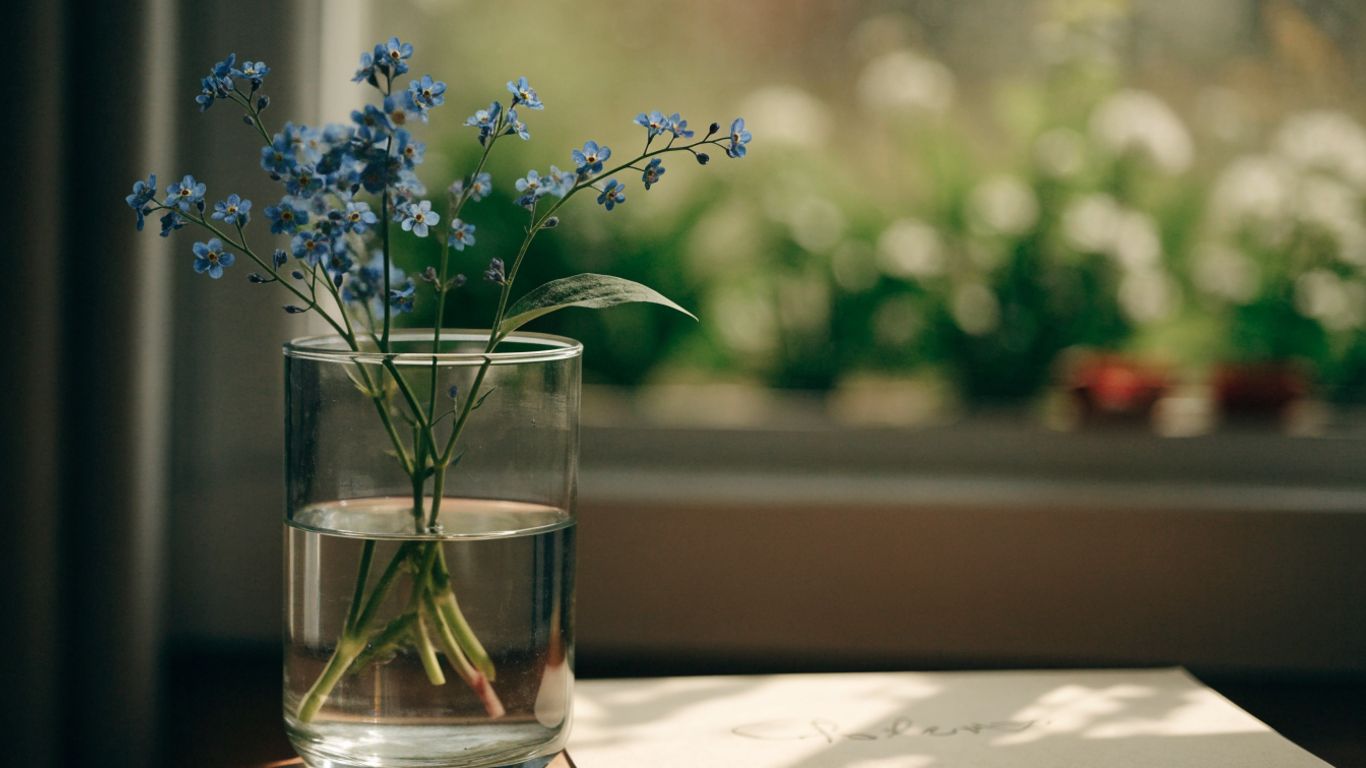
Forget-me-nots are perhaps the most direct floral expression of “remember me.” Their name itself sounds like a request to keep someone in mind, and their small blue blossoms can suit a modest, personal tribute. A deeper look at forget-me-not symbolism traces the flower’s associations with memory and connection; for a gift, its meaning may be especially clear when paired with a note in your own words.
Rosemary and the idea of keeping someone in mind
Rosemary has a long association with remembrance in some traditions, and its aromatic leaves make it feel different from a delicate cut flower. A small sprig may be a thoughtful addition to a larger arrangement or a plant that can be kept nearby. Meanings vary, so it is worth considering whether the recipient enjoys herbs and whether the scent would be welcome.
Chrysanthemums and memorial traditions
Chrysanthemums are used in memorial settings in some places, while elsewhere they may be associated with celebration or other occasions. The meaning can shift with local customs and even with the specific color. If you are choosing them for someone whose background you do not know well, a little care with context can prevent a well-meant gesture from feeling out of place.
Lilies and remembrance after a loss
Lilies are often chosen for services and tributes after a death, where their calm, formal appearance may feel fitting. They can also be strongly scented, so consider the setting and whether the recipient is sensitive to fragrance. A simple bouquet, or a few stems among other flowers the person loved, can keep the gesture personal rather than overly ceremonial.
Choosing flowers for the relationship
The relationship helps determine whether a remembrance gift should feel intimate, friendly, or quietly respectful. A close friend may appreciate an informal bunch, while a former mentor might prefer something understated. Think about how the person would have felt receiving flowers, not only about what the sender wants to express.
A thoughtful choice for a friend
For a friend, a familiar and unpretentious arrangement can communicate care without making the moment feel formal. Choose something that recalls a shared place, a favorite color, or a small detail from your friendship. A note can make the connection plain: you are thinking of them, and there is no need for them to respond or host you.
A meaningful gesture for a partner
For a partner, flowers can refer to a shared history as much as to romance. You might choose a bloom from an important date, or a simple arrangement in a color they love. Some wildflowers have been connected with love in folklore; a guide to romantic wildflower traditions can offer ideas, but the story you share together is likely to be the more meaningful one.
Flowers for a family member or mentor
A family member or mentor may value a gesture that feels warm without asking them to perform a particular emotion. Consider their home, their preferences, and whether they would enjoy cut flowers or something they can tend. Flowers associated with friendship, gratitude, and grief may provide a starting point, but a familiar favorite is often the clearest choice.
Matching flowers to the occasion
The occasion shapes the tone of the gift: a funeral tribute is different from a note sent on an ordinary Tuesday. Consider whether the flowers will be displayed at home, at a service, or outdoors, and whether the recipient has the space and energy to care for them. A thoughtful arrangement does not need to be large to be memorable.
Remembering someone who has died
After a death, flowers can offer a tangible expression of care, whether they are sent to a service or directly to someone grieving. Ask about the family’s wishes, especially if there is a preferred charity, a request for no flowers, or a specific tradition to follow. Some families also preserve stories and photographs in other ways, such as through memorial pages linked by headstone QR codes; flowers can sit alongside those lasting records without needing to carry the whole message.
Reconnecting with someone you miss
When you miss someone who is still part of your life, a bouquet can be a gentle invitation to reconnect. Choose a relaxed arrangement rather than one that implies a serious occasion, and make it clear that there is no pressure attached. If flowers are not their thing, a message or a small plant may be more welcome.
Marking an anniversary or significant date
An anniversary can bring up feelings that are difficult to predict, even when it is a date everyone knows is coming. Flowers in a familiar color or a bloom associated with a shared memory can acknowledge the day without trying to define how the person should feel. If relatives are gathering for a meal as well, hospitality news and trends are a separate source of industry context, not a guide to choosing the flowers.
Using color and arrangement to express your message
Color and scale affect how an arrangement feels before anyone reads its card. A vivid bunch may feel cheerful and personal; pale, simple stems may seem quieter. Symbolism can help you narrow the choices, but the recipient’s taste and the setting should have the final say.
Blue flowers for loyalty and remembrance
Blue flowers, including forget-me-nots, are often used to suggest loyalty, tenderness, or remembrance. Their soft color can suit a calm, personal tribute, but not every blue bloom carries the same meaning in every tradition. If blue was someone’s favorite color, that personal association may be all the explanation the arrangement needs.
White flowers for peace and reflection
White flowers may feel peaceful, restrained, or ceremonial, depending on the setting and local customs. If you are unsure, a mixed arrangement can soften a strongly formal impression. The table below is a starting point for thinking about color and tone, not a promise that every person will read the flowers in the same way.
| Color or choice | Possible impression | A thoughtful consideration |
|---|---|---|
| Blue blooms | Loyalty or remembrance | A favorite color can make the choice personal |
| White blooms | Quiet reflection | Check whether white flowers suit local customs |
| Soft mixed colors | Warmth and tenderness | Choose shades the recipient enjoys |
| A familiar favorite | Personal connection | Add a note explaining the memory |
Use these associations lightly. A recipient’s preferences and the purpose of the gesture matter more than matching a color to a single prescribed meaning.
A single stem, bouquet, or planted flowers
The size and form of the gift can say as much as the flower itself. A single stem may feel intimate and understated, while a bouquet is more visible and suited to a gathering. A living plant can last beyond the moment, but only if the recipient has room and interest to care for it.
Sending a considerate remembrance gift
A kind gesture should feel supportive, not like one more task for someone already carrying a lot. Before arranging delivery, think about timing, the recipient’s circumstances, and whether flowers are welcome at their home or workplace. A small amount of practical care can make the sentiment easier to receive.
Include a personal note to make your meaning clear
A short note helps explain why you chose the flowers and what you hope they convey. You do not need a perfect phrase; plain, specific words are often the most comforting. If you are stuck, these simple approaches can help you begin:
- Mention a small memory you still carry.
- Say that you are thinking of them today.
- Name the flower or color and why it reminded you of them.
- Offer company without asking for an immediate answer.
Keep the wording true to your relationship. A few honest lines are enough, and the recipient can take them in at their own pace.
Check cultural and religious preferences
A little sensitivity matters when flowers are being sent across cultural or religious traditions. Some communities have specific customs around color, flower type, or whether flowers are appropriate at all. If you are uncertain, ask someone close to the recipient or choose a modest gesture that leaves room for their preferences.
Choose delivery or a lasting plant based on the recipient’s needs
Delivery can be helpful when distance makes a visit difficult, but check that someone will be available to receive the flowers. A plant may last longer, though it also asks for ongoing care; cut flowers may be easier for someone who does not want another responsibility. If the day also involves unrelated household errands, a garage door survey is a separate practical matter, best kept apart from the personal meaning of the gift.
Conclusion
Flowers cannot remove grief or make distance disappear, but they can give care a visible form. Choose a bloom that suits the person and the moment, then let a simple note explain the part only you can say: they are remembered, and they are not alone.
Frequently Asked Questions
What flowers say “you are not forgotten”?
Forget-me-nots are the most direct choice because their name itself expresses remembrance. A flower tied to a personal memory can be just as meaningful.
Are forget-me-nots suitable for someone who is grieving?
They can be a gentle choice, especially when paired with a note that offers support without expecting a response. Consider the recipient’s preferences and circumstances.
What color flowers are appropriate for remembrance?
Blue and white flowers are often chosen for remembrance, but meanings vary by culture and person. A favorite color may be the most considerate option.
Should I send flowers on an anniversary of a death?
Flowers can be a thoughtful way to acknowledge a difficult date. Keep the gesture simple and avoid assuming how the recipient will feel.
Is it appropriate to send remembrance flowers long after a funeral?
Yes. A small arrangement sent later can show that you still remember the person and care about those who miss them.
Should I choose cut flowers or a plant?
Choose according to the recipient’s space, preferences, and energy for care. Cut flowers are temporary; a plant lasts longer but needs attention.
What should I write on a remembrance flower card?
A brief, sincere message is enough. You might mention a shared memory, say that you are thinking of them, or offer company without pressure.