
Key Takeaways
A considerate bouquet cannot solve loneliness, but it can make a difficult day feel a little less empty. The best choice reflects the recipient’s personality, energy, circumstances, and preferences.
- Choose flowers for the feeling you want to offer, not just their traditional symbolism.
- Warm colors can feel cheerful, while soft shades often feel calmer and quieter.
- A small, easy-care arrangement may be kinder than an elaborate bouquet.
- A personal note usually matters more than the price or size of the flowers.
- Keep checking in, especially when the person may need practical or emotional support beyond a gift.
Understand why flowers can offer comfort
Flowers are a modest way to say that someone has crossed your mind. They bring color and texture into a room, create a small moment of care, and give the recipient something tangible to notice when the day feels flat. The meaning comes less from a fixed floral dictionary than from the attention behind the choice.
The emotional meaning behind a thoughtful gift
A bouquet can acknowledge sadness without asking the recipient to explain it. It may say, “You do not have to carry this moment entirely by yourself,” while leaving room for silence. That makes flowers especially useful when a long conversation would feel tiring or intrusive.
Choose a gesture that fits the relationship. A cheerful handful of daisies may suit a friend who needs ordinary companionship, while a restrained arrangement may be more appropriate after a loss. The thought behind it matters most, particularly when the flowers feel chosen rather than automatic.
How color, scent, and texture influence mood
Color changes the character of a room quickly. Yellow and orange can feel lively, pale blue and lavender can feel restful, and white or green can create a quieter visual field. Scent matters too, but strong fragrance is not comforting for everyone, so a lightly scented or scent-free arrangement may be the safer choice.
Texture adds another layer of interest. Rounded blooms feel soft and familiar, while grasses and airy stems create movement without making the bouquet seem too formal. Think about what the recipient usually keeps around them: bright objects, natural textures, or simple uncluttered details.
Why receiving flowers can create a sense of connection
A delivery interrupts isolation with evidence that someone acted on their care. The recipient may see the bouquet several times a day, and each glance can become a small reminder of a relationship beyond the walls of the room. For someone far from family or adjusting to a new place, even a simple plant can add a welcome sense of presence.
A potted plant as companionship can be especially meaningful when the recipient enjoys tending to living things. Still, flowers do not need to carry a grand message. Their quiet repetition—the arrangement sitting on a table, catching afternoon light—can be enough.
The importance of the gesture beyond the arrangement
The bouquet is only the visible part of the gesture. The timing, note, delivery method, and follow-up often determine whether it feels supportive or burdensome. A friend who is grieving may appreciate flowers delivered privately, while someone exhausted by work may prefer a small arrangement that requires little care.
Loneliness is not always solved by being surrounded by people; sometimes a person needs one gentle sign of reliable attention. Resources on small connections make a similar point: brief, sincere contact can matter when bigger social plans feel out of reach.
Choose flowers that communicate warmth and companionship
There is no universally correct flower for loneliness. Symbolism varies by culture, personal history, and occasion, so use traditional meanings as suggestions rather than rules. Start with what the recipient likes, then consider how the flowers will look and feel in their home.
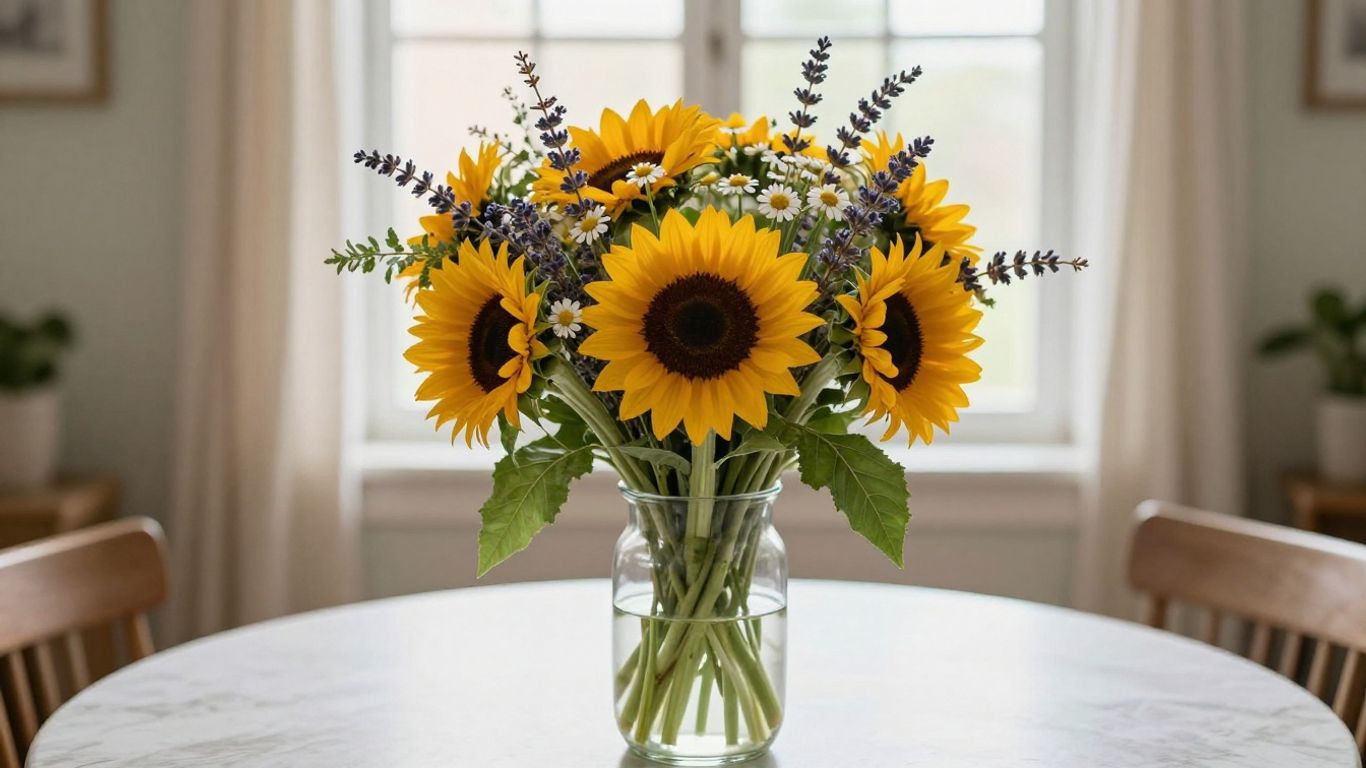
Sunflowers for optimism and emotional brightness
Sunflowers bring height, warmth, and a clear visual lift. Their open faces can make a room feel more awake, which suits a friend who needs encouragement after a difficult week or a loved one settling into a new home.
They can be quite bold, though. If the recipient prefers muted colors or has limited space, choose a smaller arrangement with one or two sunflowers rather than a large, dominant display.
Daisies for simplicity, friendship, and reassurance
Daisies feel uncomplicated and friendly. They work well when your message is companionship rather than romance, and their familiar shape can make the gift feel easygoing instead of ceremonious.
White daisies with green foliage offer a clean, gentle look, while colored varieties add a little playfulness. They are a good choice for a coworker, classmate, or friend whose preferences you know only generally.
Roses for affection, care, and lasting support
Roses can express deep care, but their color and arrangement deserve attention. Pink, peach, yellow, or cream roses often feel warmer and less romantically specific than a dozen red roses. A mixed bouquet can also soften the message.
For someone grieving or feeling isolated, a loose arrangement of a few roses with greenery may feel more natural than a formal, luxurious presentation. The goal is to communicate affection without creating pressure to respond in a particular way.
Lavender for calm and gentle comfort
Lavender has a soft color, a distinctive scent, and an association with restfulness. It can suit someone dealing with stress, homesickness, or a period of quiet recovery. Dried lavender also works when a longer-lasting keepsake feels appropriate.
Because fragrance is personal, ask yourself whether the recipient enjoys scented products. If not, choose lavender for its appearance or select another pale, textured bloom with little aroma.
Seasonal blooms for a personal, natural touch
Seasonal flowers often look more at home in their surroundings and may connect the gift to a particular time of year. Spring tulips, summer zinnias, autumn chrysanthemums, or winter greenery can make the bouquet feel considered rather than generic.
Seasonality also gives you an easy personal angle: mention a shared spring walk, a favorite garden, or the first cool weekend of fall. Those details turn an ordinary delivery into something rooted in the relationship.
Match the bouquet to the person and situation
The same flowers can feel comforting in one situation and awkward in another. Consider what the recipient is facing, how much energy they have, and whether they want attention. A thoughtful bouquet should meet them where they are instead of asking them to perform gratitude.
Flowers for a grieving friend
Choose an arrangement that is calm, tasteful, and easy to place. Soft colors, seasonal greenery, or a modest vase may be preferable to something very bright or celebratory. Avoid language that promises the grief will soon pass.
A note can acknowledge the person and the loss simply: “I’m thinking of you and remembering how loved they were.” If flowers are not suitable for the household, a meal, a practical errand, or a quiet visit may be more helpful.
Flowers for someone living far from home
For homesickness, select something that feels warm and familiar. A bouquet in the recipient’s favorite color, flowers associated with home, or a small plant for a windowsill can create continuity in an unfamiliar place.
You might pair the gift with a shared photograph or a story about home. The best message does not insist that the new place should feel fine; it recognizes that missing people and places is a real part of adjusting.
Flowers for a partner who feels isolated
A partner may appreciate flowers, but they may also need presence, patience, and practical help. Choose a style that reflects your shared life rather than relying on a grand romantic display. A familiar flower from an important occasion can feel particularly personal.
Make the accompanying message open-ended. “I’m here, and we can take tonight slowly” offers support without turning the bouquet into a demand for cheerfulness or closeness.
Flowers for a stressed coworker or student
Keep the arrangement compact and workplace-appropriate. A small jar of daisies, cheerful seasonal stems, or a low-maintenance plant can brighten a desk without taking over the person’s space.
If sending flowers to a student, consider whether they have a suitable vase or enough time to trim stems. A sturdy, simple arrangement is often more useful than one that requires daily attention during an already demanding week.
Flowers for an older adult or someone recovering at home
Choose flowers that are visible, stable, and easy to enjoy from a chair or bed. A low vase may be safer than a tall arrangement, and a delivery with a meal or a short visit can make the gift more practical.
Ask about mobility, allergies, pets, and care preferences before ordering. If the person is tired, offer to change the water or remove the flowers when they fade rather than leaving another task for them.
Select colors and arrangements with intention
Arrangement style communicates almost as much as flower type. A loose, garden-like bouquet feels different from a formal dozen roses, even when both include similar colors. Consider the room, the recipient’s taste, and how much visual energy feels welcome.
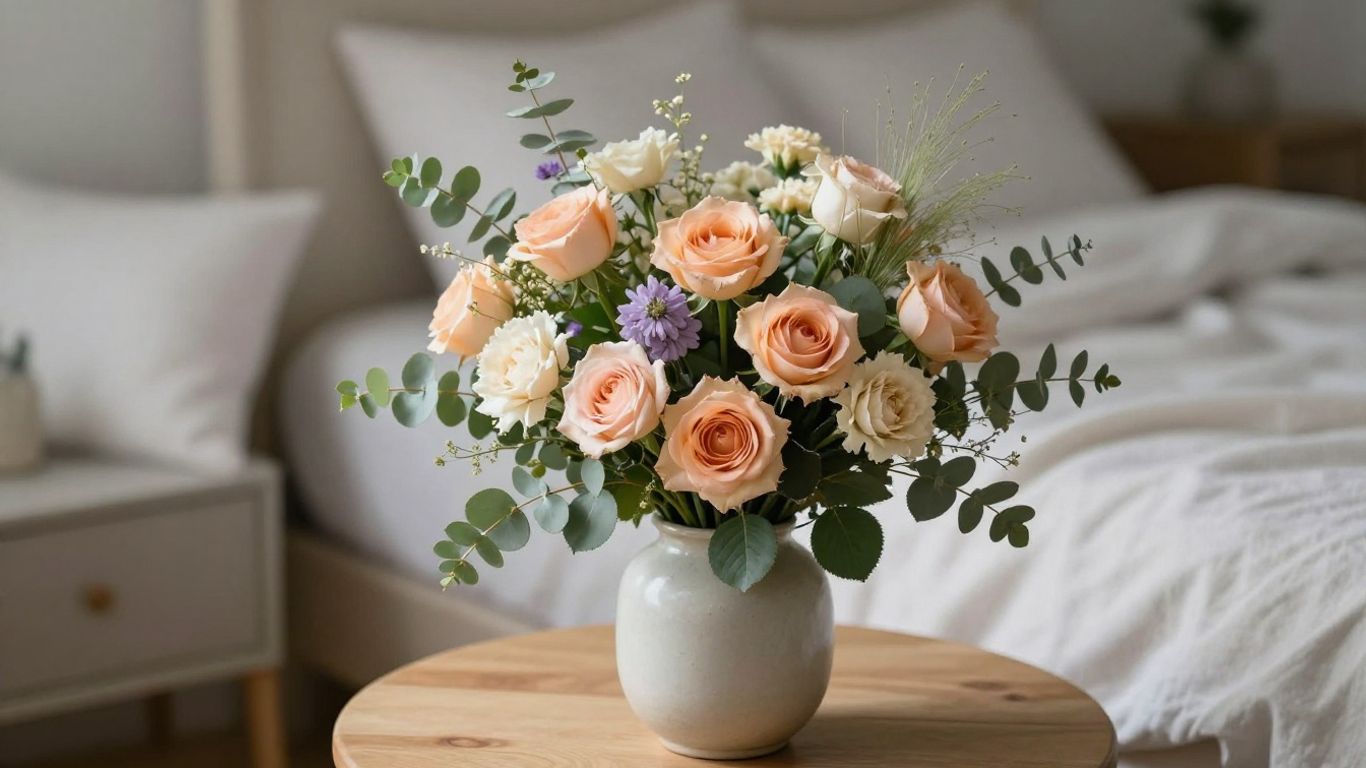
Warm colors that feel cheerful and inviting
Yellow, coral, peach, and orange can bring warmth to a quiet room. They are useful when you want to offer encouragement without writing an overly serious message. Mixed with plenty of green, warm colors can feel natural rather than loud.
Use stronger shades in moderation if the recipient is overwhelmed or recovering. A few bright stems against softer flowers often create energy without making the bouquet seem like a celebration they have to join.
Soft colors for peaceful, understated support
Cream, blush, pale lavender, blue, and soft green create a calmer impression. These shades suit grief, illness, anxiety, and situations where the recipient may not want much attention.
Soft colors are not emotionally empty. They can communicate steadiness and tenderness, especially when paired with a simple note and a delivery that does not require an immediate conversation.
Mixed bouquets that express several emotions
A mixed bouquet can combine affection, optimism, calm, and companionship in one gesture. It is a useful choice when the situation is complicated or when no single flower quite captures what you want to say.
Use the arrangement’s balance to keep the message clear. Too many colors and flower types can look busy, while three or four complementary elements usually feel intentional. A florist can also help avoid combinations that clash in size or scent.
Small arrangements for low-pressure encouragement
A small bouquet is not a lesser gift. It may be the kindest option for someone living in a small room, managing fatigue, or feeling uncomfortable with public displays of emotion. A bud vase or handful of stems can offer beauty without creating work.
When choosing size, consider these practical questions:
- Does the recipient already have a vase or stable surface?
- Will the flowers block a window, television, or bedside table?
- Can they comfortably change the water?
- Would a long-lasting plant be easier to manage?
These details help the flowers remain a pleasure instead of becoming another obligation. A modest arrangement often leaves more room for the person’s actual needs.
When to avoid overly romantic or celebratory designs
Avoid red roses, glitter, balloons, or elaborate presentation when the relationship or occasion could make those details confusing. A grieving friend may not want a festive-looking delivery, and a coworker may feel uncomfortable receiving something intensely personal.
When in doubt, choose natural colors, simple greenery, and a message that names care without exaggeration. Thoughtfulness usually feels more supportive when it leaves the recipient room to interpret the gesture comfortably.
Add a personal message that reduces distance
The card is where a bouquet becomes unmistakably yours. It does not need to be eloquent. One honest sentence can feel more reassuring than a polished paragraph filled with general encouragement.
Short notes that say “I’m thinking of you”
Simple words are often the easiest to receive. Try “You’ve been on my mind today,” “I’m sending a little color your way,” or “No need to reply—I just wanted you to know I care.” These messages make contact without making the recipient manage a conversation.
If you know the person well, add one specific detail. Mention the flower they love, a shared place, or a small moment you hope they remember. Specificity makes a short note feel present and real.
Words that validate feelings without minimizing them
Try to avoid phrases such as “cheer up,” “everything happens for a reason,” or “at least it will get better.” Even when well meant, they can make difficult feelings sound inconvenient or temporary.
Instead, write, “This sounds really hard,” “You do not have to pretend with me,” or “I’m sorry this is such a heavy time.” Validation does not require solving the problem; it shows that you are willing to recognize it.
Messages for checking in without demanding a response
Someone who feels alone may also feel too tired to answer messages. Make that permission explicit: “No pressure to respond,” “I’ll check in again this weekend,” or “I can call, sit quietly, or give you space—whatever helps.”
A promise to follow up is meaningful only if you keep it. If you cannot commit to a particular day, offer a smaller and realistic point of contact instead of making a broad promise.
Personal memories that make the gift more meaningful
A memory gives the recipient something to hold besides the flowers. You might recall a garden you visited together, the color of a friend’s childhood kitchen, or the way someone always stopped to admire flowers on walks.
Keep the memory gentle and avoid using it to redirect the conversation toward yourself. A sentence or two is enough to remind them that the relationship has a history and that they remain present in your thoughts.
When a handwritten card is better than a generic message
A handwritten card works especially well when the relationship is close, the situation is serious, or the recipient may keep the note after the flowers fade. Your handwriting carries a small trace of your presence that a standard printed message cannot.
If handwriting is difficult or delivery is urgent, a typed note can still be personal. What matters is choosing words that sound like you and speak directly to the recipient rather than copying a stock sentiment.
Decide between fresh flowers, potted plants, and dried arrangements
The most comforting option is not always a fresh bouquet. Think about whether the recipient wants a short-lived lift, an ongoing living presence, or something they can keep without much care. Practical fit matters as much as appearance.
Fresh flowers for an immediate emotional lift
Fresh flowers create a noticeable change as soon as they arrive. Their color, scent, and gradual opening can make the next several days feel a little more cared for. They are ideal when you want an immediate gesture after difficult news or during a lonely stretch.
They do require trimming, water changes, and eventual disposal. If the recipient has limited energy, include care instructions or offer to help rather than assuming the maintenance will be easy.
Potted plants for ongoing companionship and care
A potted plant can remain in the room long after a bouquet has faded. For some people, watering and watching new growth creates a gentle routine. The connection between plants and loneliness is often discussed through this sense of ongoing presence.
Choose a plant only when it suits the recipient’s light, space, pets, and interest in care. A plant should not feel like a responsibility disguised as kindness.
Dried flowers for a lasting reminder of support
Dried arrangements can last for months and need little maintenance. They suit someone who enjoys natural decoration or who may find it comforting to keep a visible reminder of the gesture.
Their muted colors and texture feel quieter than fresh flowers. That can be appropriate for remembrance, recovery, or a long-distance friendship, though some people may associate dried blooms with endings, so personal taste matters.
Low-maintenance options for someone with limited energy
When energy is low, simplify everything. Select a stable vase, avoid delicate stems, and make sure the arrangement can be enjoyed without rearranging furniture or lifting a heavy container.
Helpful choices often include:
- A small bouquet already arranged in a water-filled vase.
- A sturdy plant suited to the available light.
- Dried stems that need no watering.
- A compact arrangement paired with a meal or grocery delivery.
The right gift reduces decisions rather than adding them. If you are unsure, ask a trusted family member what would genuinely make the recipient’s day easier.
Allergy, pet safety, and care considerations
Check for allergies before sending strongly scented flowers. If pets share the home, confirm that the chosen plants are safe for them, and avoid assuming that a beautiful arrangement is harmless simply because it is common.
Also consider respiratory sensitivity, accessibility, vase stability, and disposal. A quick question can prevent an otherwise caring gesture from causing discomfort or extra work.
Make the gesture feel genuinely supportive
Flowers are most helpful when they fit into a wider pattern of care. They can open a door, soften a hard day, or remind someone that they are remembered, but they should not be used to avoid a needed conversation. Let the recipient’s wishes guide the gesture.
Choosing delivery timing that suits the recipient
A delivery during work hours may be inconvenient or embarrassing, while an evening arrival may interrupt rest. When possible, ask when the person is usually home and whether they are comfortable receiving deliveries.
For grief or illness, a quiet delivery may be better than a public presentation. A heads-up text can also help: “A small package is arriving tomorrow; no need to answer the door if you are resting.”
Pairing flowers with a meal, book, or practical gift
Flowers can be paired with something that meets an immediate need. A meal, tea, favorite book, grocery card, or offer of a ride may communicate care more clearly than flowers alone.
Keep the combination proportionate. The point is not to overwhelm the recipient with gifts, but to make one part of the week a little easier. Choose something you know they can use rather than adding an object they must store.
Following up after the flowers arrive
Send a brief message a day or two later, but do not ask whether the bouquet is still fresh as though that were the important outcome. Ask how they are doing, offer a specific form of help, or simply say that you are thinking of them again.
A useful follow-up might be, “I’m free Thursday if you would like company, or I can leave dinner at your door.” Specific options are easier to accept than a vague offer to help.
Respecting privacy, boundaries, and personal preferences
Some people love surprise deliveries; others dislike unexpected visitors or public attention. Some prefer cut flowers, while others avoid them for environmental, cultural, religious, or practical reasons. A supportive gesture begins with listening.
If the recipient says no flowers, believe them. You can send a note, make a call, arrange a meal, or respect the request without taking it personally. Care should feel like care to the person receiving it.
Recognizing when flowers should accompany deeper support
Persistent loneliness, severe withdrawal, hopelessness, or an inability to manage daily life may call for more than a bouquet. Stay connected, encourage the person to speak with a trusted professional, and seek urgent help if they may be in immediate danger.
For broader ideas about maintaining contact, a loneliness support guide can offer practical starting points. Other reading may be unrelated but still useful for understanding how people document difficult experiences, such as pain and suffering guidance, or for appreciating the value of patient, reliable progress through precise movement. Even the idea of balanced spaces can be a gentle reminder that a supportive environment should feel clear rather than overwhelming. And when someone needs an absorbing distraction, exploration and planning may suggest the kind of shared activity that fits their interests.
Flowers should never be used as proof that you have done enough. Sometimes the most caring next step is a call, a visit, help with an errand, or staying close while the person finds more support.
Conclusion
Flowers that make someone feel less alone are chosen with attention rather than certainty. Select a bloom, color, size, and delivery style that respects the person’s circumstances, then add a message that sounds like you and follow up when the flowers arrive. A small gesture cannot remove loneliness, but it can make connection visible.
Frequently Asked Questions
What flowers make someone feel less alone?
Sunflowers, daisies, roses in gentle colors, lavender, and seasonal flowers can all feel comforting. The best choice is usually the one that matches the recipient’s taste and your relationship.
Are bright flowers better than soft-colored flowers for loneliness?
Neither is always better. Bright colors can bring energy and optimism, while soft colors may feel calmer and less demanding. Choose according to the person’s mood and preferences.
Should I send flowers to someone who is grieving?
You can, as long as the arrangement is respectful and the recipient is likely to welcome it. A simple bouquet, quiet note, or practical gift may be more appropriate than something elaborate.
What should I write in a card with comforting flowers?
Write something honest and uncomplicated, such as “I’m thinking of you” or “No need to reply; I just wanted you to know I care.” Avoid minimizing the person’s feelings or promising that everything will quickly improve.
Are potted plants better than fresh flowers?
It depends on the recipient. Fresh flowers offer an immediate lift, while a potted plant can provide a longer-lasting presence. Consider available light, energy, allergies, pets, and interest in plant care.
What if the person does not like receiving gifts?
Respect that preference and offer another form of support. A meal, phone call, practical errand, handwritten note, or quiet visit may communicate care without creating the discomfort of a formal gift.
Can flowers help someone who is seriously lonely?
Flowers can remind someone that they are cared for, but they are not a substitute for sustained connection or professional help when needed. Continue checking in and encourage appropriate support if loneliness is persistent or affecting safety and daily life.