
Key Takeaways
A thoughtful bouquet does not need to be grand to feel deeply personal. The right flowers, colors, timing, and note can quietly say that someone has been on your mind.
- Choose blooms according to the relationship and the feeling you want to convey.
- Let color, fragrance, texture, and season guide the mood of the arrangement.
- Personal details make even a modest bouquet feel intentional.
- Consider allergies, pets, delivery timing, and the recipient’s practical needs.
- Fresh flowers that whisper i am thinking of you work best when they feel natural, not overly staged.
Why flowers can express “I am thinking of you”
Flowers arrive as a small interruption to an ordinary day. They bring color into a room, give the hands something beautiful to arrange, and create a moment that would not otherwise have happened. Unlike a message sent quickly between errands, a bouquet has a physical presence that lingers.
The most convincing gestures are usually specific rather than extravagant. A few stems in a favorite color, flowers that recall a shared place, or a cheerful arrangement delivered on an unremarkable Tuesday can carry more feeling than a costly display.
The emotional meaning behind an unexpected bouquet
An unexpected bouquet says, “You crossed my mind when you did not have to.” That is part of its charm. It does not require a birthday, anniversary, recovery, or other official reason; the absence of an occasion can make the gesture feel especially sincere.
The flowers also give the recipient something to experience over several days. They change as they open, scent the room gently, and turn a passing thought into a visible reminder. The surprise creates warmth without demanding an immediate response.
How color, fragrance, and texture shape the message
Color establishes the first impression, while fragrance and texture make the arrangement more intimate. Pale tones tend to feel calm and tender, saturated colors feel lively or passionate, and airy foliage can soften a bouquet that might otherwise seem formal.
Fragrance deserves a little restraint. A strongly scented arrangement may delight one person and overwhelm another, so think about the recipient’s home, work setting, and habits. Texture matters too: rounded petals feel gentle, spiky forms feel energetic, and loose stems create a relaxed, garden-like quality.
Choosing between romantic, friendly, and family-focused gestures
The relationship should guide the arrangement before symbolism does. Red roses may be right for a long-term partner, but they can feel too pointed for a colleague or a new friend. Yellow blooms, mixed seasonal flowers, and soft pinks often leave more room for interpretation.
For family, consider flowers connected to a parent’s garden, a sibling’s favorite color, or a grandparent’s familiar traditions. A friendly gesture can be bright and informal; a romantic one may be more restrained and deliberate. The best choice reflects how you actually speak to each other.
When a simple arrangement says more than a long message
A simple arrangement can be powerful because it does not compete with the feeling behind it. One variety in a clean vase, or a handful of seasonal stems tied with ribbon, may look more considered than a crowded bouquet assembled without a clear mood.
If you are unsure what to write, keep the note equally uncomplicated. A sentence about seeing something that reminded you of the person is enough. The flowers carry the atmosphere, while your words provide the personal reason.
The best flowers for a thoughtful message
There is no universal dictionary for flowers, and meanings shift with culture, memory, and personal taste. Still, familiar associations can help you begin. Think of them as suggestions rather than rules, then adjust the bouquet to suit the person receiving it.
A useful starting point is to explore the secret language of flowers, especially when you want to compare classic meanings without treating them as fixed instructions. The most meaningful bouquet is the one whose symbolism and recipient fit together naturally.
Roses for affection and lasting connection
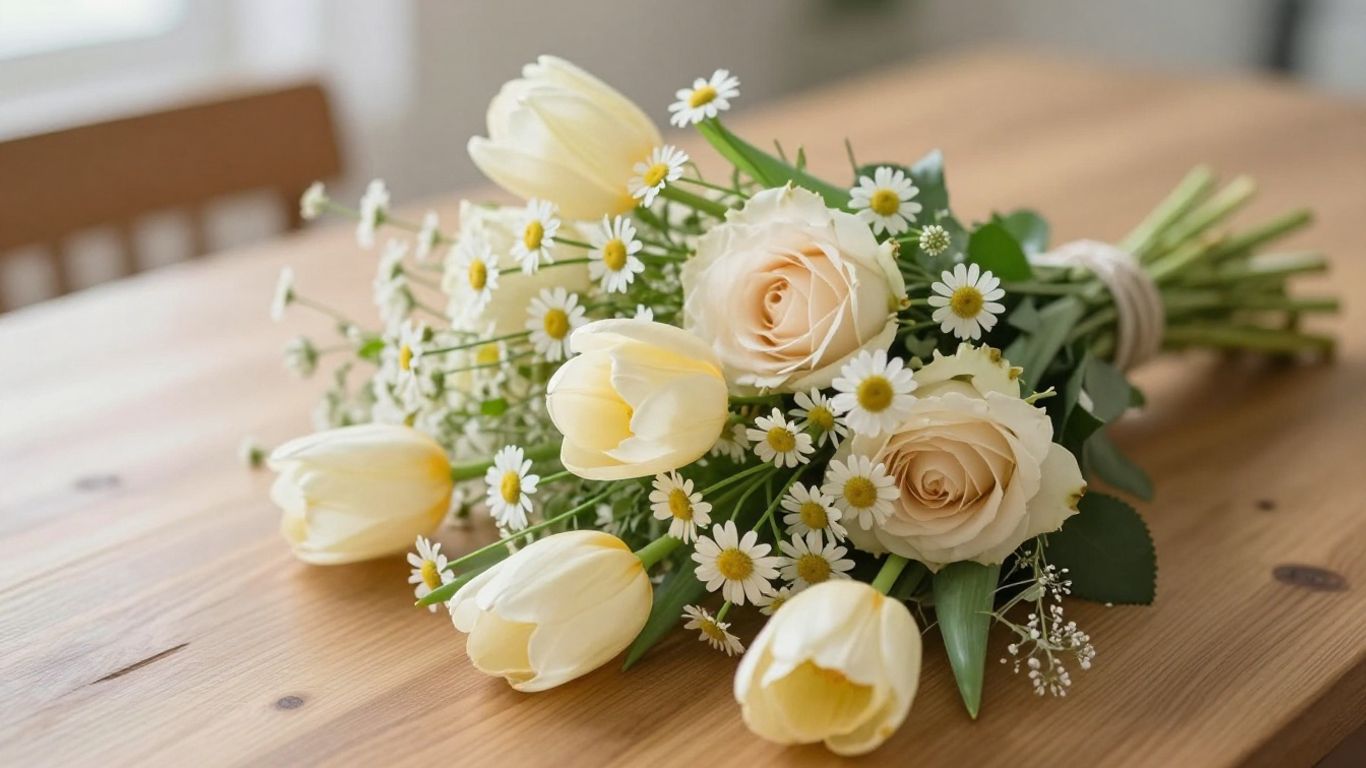
Roses are versatile because their form feels recognizable and their colors offer different moods. Red roses lean romantic, pink roses feel appreciative and affectionate, yellow roses are friendlier, and white roses can suggest calm or sincerity.
For a quiet “thinking of you” gesture, a small mixed-color bunch may be gentler than a dozen red roses. Garden-style roses, with open petals and a less polished shape, can also make the message feel warm rather than ceremonial.
Tulips for warmth, optimism, and genuine care
Tulips have a clean, hopeful shape that suits everyday encouragement. Their upright stems and clear colors bring a room to life, making them a good choice for someone beginning a new chapter or simply needing a bright spot in the week.
Choose a single color for a crisp, modern effect, or combine several shades for a more playful bouquet. Tulips continue to open after they arrive, so the recipient gets to watch the arrangement become fuller and more expressive.
Daisies for cheerful friendship and encouragement
Daisies feel open and unpretentious. Their simple centers and light petals suit a friend who needs cheering up, a sibling celebrating a small success, or anyone who prefers flowers that do not feel too formal.
They pair well with grasses, herbs, and other meadow-like stems. That combination keeps the bouquet friendly and relaxed, particularly when the note is casual: “I hope this makes today a little brighter.”
Lilies for elegance, comfort, and remembrance
Lilies bring height, fragrance, and a composed sense of beauty. They can work in an elegant arrangement for someone you admire, or in a restrained sympathy bouquet when the message needs to be gentle and respectful.
Because some lilies have intense fragrance and their pollen can be messy, ask about preferences before sending them. In a remembrance setting, white or pale varieties often create a peaceful appearance, while a mixed arrangement may feel warmer for everyday comfort.
Seasonal wildflowers for a natural, personal touch
Seasonal wildflowers have an appealing looseness. Their varied heights and imperfect shapes suggest that the bouquet was gathered with the recipient in mind rather than selected from a rigid template.
They are especially useful when you know the person likes gardens, hikes, farmers’ markets, or a particular season. Add one flower you know they love, and the arrangement becomes personal without needing an elaborate explanation.
How to match flowers to the recipient
Start with the recipient, not the catalog. Consider their personality, living space, schedule, and relationship to flowers before choosing a variety. Someone who loves abundant color may welcome a lively mixed bouquet, while a minimalist may prefer three elegant stems in a narrow vase.
It can also help to ask what the gesture should feel like when it is received: affectionate, reassuring, celebratory, or simply companionable. That answer will usually narrow the options more effectively than memorizing symbolism.
Selecting blooms for a partner or romantic interest
For a partner, choose flowers that recall a shared moment or a quality you admire. Red blooms can express passion, but they are not the only romantic option; blush roses, tulips, ranunculus, or seasonal flowers can feel more intimate when they connect to a private memory.
For a newer romantic interest, keep the scale and color palette moderate. A small bouquet says you care without turning a thoughtful surprise into a declaration that the other person may not be ready to answer.
Choosing an arrangement for a friend or family member
Friendship and family bouquets often benefit from movement and color. Yellow, coral, lavender, and mixed seasonal shades can convey affection without suggesting romance. If the person has a favorite flower, that detail matters more than a conventional meaning.
A note can make the relationship clear: mention an inside joke, a recent conversation, or a reason you appreciated them. Flowers become much easier to interpret when the message sounds like you.
Sending flowers to someone who needs comfort
Comfort bouquets should feel calm rather than demanding. Soft colors, gentle shapes, and a manageable arrangement can offer beauty without asking the recipient to host a grand display while they are tired or grieving.
Avoid language that insists everything will be fine. A simple “No need to reply—I’m thinking of you and I’m here” leaves space for their actual feelings. If you want further ideas for discussing emotions with younger family members, books about feelings for kids can offer a useful starting point.
Considering allergies, pets, and personal preferences
Practical care is part of thoughtfulness. Before ordering, check for known allergies, pets that may chew plants, fragrance sensitivities, and whether the recipient has a vase or enough space for a large arrangement.
Keep these questions in mind:
- Does the recipient prefer fragrance-free or lightly scented flowers?
- Are any pets likely to reach the stems or fallen leaves?
- Would a compact bouquet suit their home or workplace better?
- Is there a flower, color, or style they have openly disliked?
A florist can often suggest a safer alternative when you provide this information. Asking discreetly is better than choosing a beautiful bouquet that creates an avoidable problem.
How color and arrangement style change the message
Color is emotional shorthand, but it is never the whole story. The same flower can feel romantic, friendly, serene, or exuberant depending on its shade and what surrounds it. Arrangement shape changes the reading as well: a low, loose bouquet feels informal, while a tall design feels more polished.
Use these choices to create a mood rather than to force a translation. Floral symbolism is most successful when it supports the relationship and the occasion—or the lovely lack of an occasion.
What pink, yellow, white, and red flowers communicate
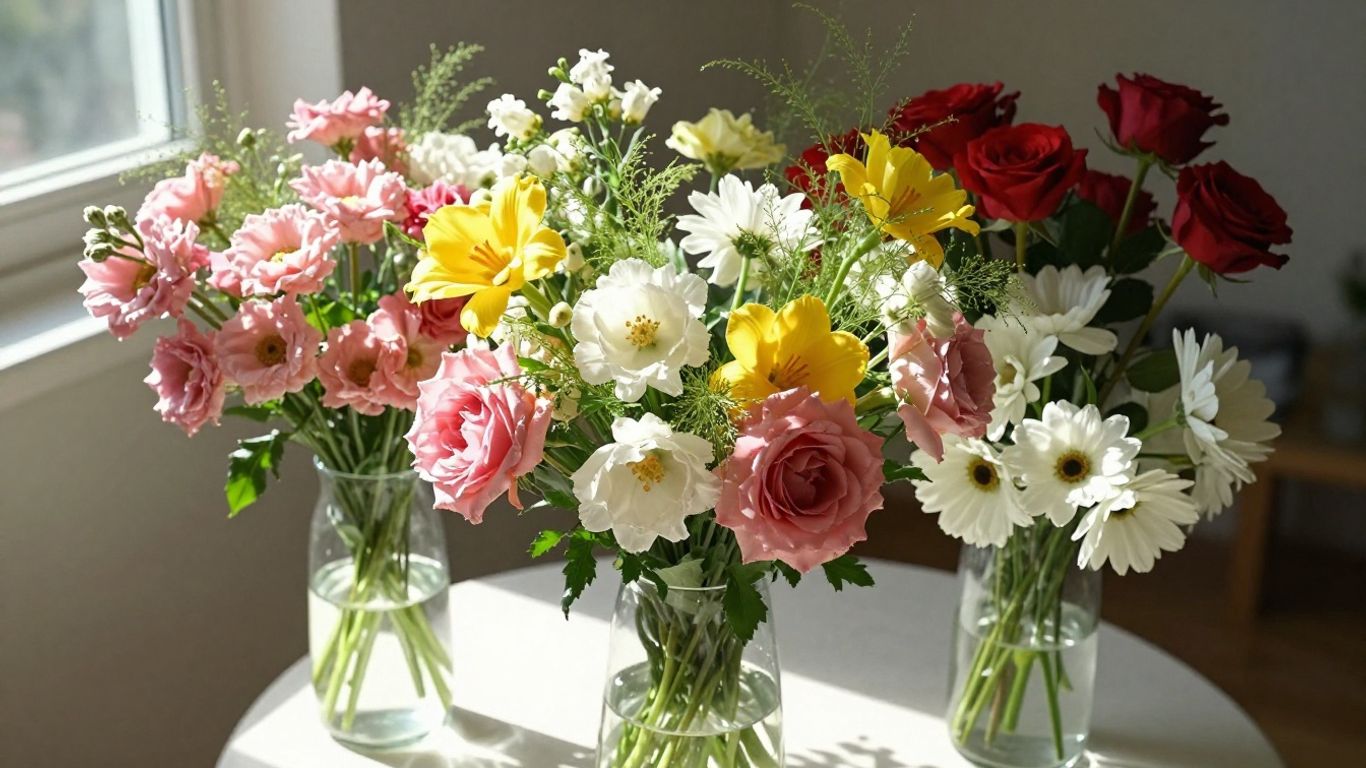
Pink generally feels tender, appreciative, and warm. Yellow brings cheer and friendship, while white can feel peaceful, clean, or quietly respectful. Red is the strongest signal of passion and romantic affection, though a single red flower can be softer than a dramatic red arrangement.
There are no absolute rules. A yellow flower may be meaningful because it was someone’s grandmother’s favorite, and white blooms may be chosen simply because they suit a bright room. Personal context always outranks a color chart.
When to choose a mixed bouquet over a single variety
Choose one variety when you want the message to be clear and visually composed. A bunch of tulips or daisies feels confident and uncomplicated. A mixed bouquet is better when you want to combine several impressions—cheer, tenderness, seasonality, and a little surprise.
Mixed flowers are also useful when you know only one preference. Build around that favorite bloom, then add supporting colors and textures that keep it from looking generic. The result feels collected rather than random.
Using soft, bright, or dramatic palettes intentionally
Soft palettes suit rest, recovery, quiet affection, and sensitive conversations. Bright palettes work well for congratulations, encouragement, and friendship. Dramatic combinations can be beautiful for someone with a bold style, particularly when balanced with simple greenery.
Notice the recipient’s surroundings. A vivid bouquet may enliven a neutral room, but a subdued home may call for a more restrained arrangement. The goal is not to display your own taste; it is to make the flowers feel at home with the person.
Pairing flowers with greenery, fragrance, and seasonal accents
Greenery gives flowers breathing room and can make a small bouquet appear generous. Eucalyptus, grasses, herbs, and leafy branches each create a different impression, from fragrant and relaxed to architectural and modern.
Seasonal accents add another layer of recognition. Berries, branches, dried grasses, or locally available foliage can make the bouquet feel tied to a particular month. If you are curious about how scent influences a space, a broader scent strategy guide offers useful context, though a home bouquet should remain subtle.
How to personalize a bouquet that feels meaningful
Personalization does not require custom packaging or a large budget. It may be as simple as choosing a color associated with a shared trip or remembering that the recipient dislikes overly fragrant flowers. The point is to show attention, not production value.
A bouquet feels especially thoughtful when several small decisions agree with one another: the flowers suit the person, the size suits the room, and the note sounds like the sender. That coherence is what turns a pretty gift into a meaningful one.
Adding a handwritten note with the right tone
Write as though you are speaking to the person across a kitchen table. A short note can mention why you chose the flowers, what you hope their week brings, or how often you have been thinking about them.
For romance, be warm without becoming theatrical. For friendship, use familiar language and perhaps a little humor. For comfort, remove pressure by saying that a reply is unnecessary. Clarity is kinder than a message so vague that the recipient has to guess what you mean.
Including favorite flowers, colors, or shared memories
One remembered detail can change the entire bouquet. Mention the flowers from a first date, the color of a childhood bedroom, or the wildflowers seen on a favorite walk. Even if that detail appears only in the note, it gives the arrangement a private history.
If you do not know a favorite flower, choose a color you have seen them wear or a style that matches their home. Observation is often the best substitute for certainty.
Choosing a vase, gift pairing, or keepsake detail
A useful vase can extend the life of the gesture, especially for someone who does not already keep one nearby. Select a simple shape that suits the bouquet rather than an ornament that competes with it.
A small pairing can work too: tea, a favorite snack, a handwritten photograph, or a modest keepsake. For a wine-loving recipient, you might even include a bottle after checking their preferences; a guide to what Chardonnay tastes like can help when you want to choose a style thoughtfully.
Avoiding messages that feel overly formal or romantic
The safest note is specific, natural, and proportionate to the relationship. Avoid grand declarations when the real intention is simply to brighten someone’s day. “Saw these and thought of you” can be more affecting than a polished paragraph that sounds unlike you.
If the relationship is uncertain, choose friendly flowers and make the purpose plain. A thoughtful gesture should give the recipient room to enjoy it, not leave them wondering whether they are expected to respond in kind.
How to send fresh flowers thoughtfully
Good delivery is part of the message. A bouquet that arrives when someone is away, has nowhere to place it, or cannot safely receive it may create more work than pleasure. Timing, packaging, and aftercare deserve as much attention as the flower choice.
Whether you order from a nearby shop or arrange delivery online, share useful details and keep expectations realistic. Fresh flowers are living materials; a little variation in shape and availability is part of their character.
Picking the right delivery date and time
Choose a date when the recipient is likely to be home or able to collect the flowers promptly. A delivery before a busy trip may be poorly timed, while a weekday afternoon might be perfect for someone working from home.
For comfort, send the bouquet soon after you learn someone is having a difficult time rather than waiting for a symbolic date. For celebration, allow enough time for the flowers to be enjoyed during the event without arriving so early that they fade.
Ordering locally versus using an online florist
A local florist may be helpful when you want advice about seasonal availability, a particular neighborhood, or a recipient’s delivery conditions. Online ordering can be convenient when you are coordinating from a distance, but read the details carefully and provide a reliable phone number.
Either way, ask what substitutions may occur. A thoughtful substitution preserves the intended color, mood, and scale rather than simply replacing one flower with another at random.
Protecting freshness during delivery
Flowers travel best when stems are hydrated, packaging allows some airflow, and the bouquet is protected from extreme heat or cold. Avoid leaving a delivery in direct sun, inside a hot vehicle, or beside a heater.
If the bouquet is a surprise, coordinate with a neighbor, receptionist, or friend when necessary. A discreet plan can protect both the flowers and the moment of discovery. If a delivery involves a larger household item as well, practical car shipping guidance is a separate resource—not something to combine with floral ordering—but it illustrates why timing and handling details matter.
Caring for the bouquet after it arrives
Trim the stems at an angle with a clean tool, place the flowers in fresh water, and remove leaves that would sit below the waterline. Keep the vase away from direct sun, drafts, ripening fruit, and heat sources.
Change the water regularly and remove fading stems as the bouquet develops. Some flowers open quickly while others take several days, so the arrangement may look different each morning. That gradual change is part of the pleasure.
Planning a budget without losing the personal touch
Set a comfortable amount before you begin browsing. A smaller seasonal bouquet with a sincere note can feel more personal than a large arrangement selected only because it looks expensive.
You can also spend thoughtfully by choosing fewer premium stems, using a simple vase, or selecting flowers that are naturally abundant at the time. The personal touch comes from the decision-making and the words, not from the size of the invoice.
Conclusion
The perfect bouquet is less about finding a flawless floral code than noticing what would make one particular person feel remembered. Choose flowers that suit the relationship, shape the mood with color and texture, add a note that sounds like you, and send them at a moment when they can be received with ease. That is how fresh flowers that whisper i am thinking of you become a gesture someone can feel long after the petals open.
Frequently Asked Questions
What flowers best say “I am thinking of you”?
Tulips, daisies, seasonal wildflowers, and soft-colored roses are flexible choices because they can feel affectionate without being too formal or intensely romantic.
Are roses always a romantic gift?
No. Color, quantity, arrangement style, and the accompanying note all affect the meaning. Yellow or pink roses can feel friendly and appreciative, while a small mixed bouquet may be more casual than a large red arrangement.
What bouquet should I send to a friend?
Choose cheerful colors, seasonal flowers, or a favorite bloom. A relaxed arrangement of daisies, tulips, or mixed flowers usually communicates warmth without creating romantic ambiguity.
What flowers are appropriate for comfort?
Softly colored flowers with a simple shape can feel calm and supportive. Consider the recipient’s fragrance preferences, and pair the bouquet with a note that offers care without asking for a response.
How do I make a bouquet feel personal?
Include a favorite flower or color, refer to a shared memory, and write a brief note in your everyday voice. A modest detail can make a standard arrangement feel chosen rather than generic.
Should I send flowers if I do not know the recipient’s preferences?
Yes, but choose a moderate-sized arrangement with gentle fragrance and a balanced palette. If possible, discreetly ask about allergies, pets, and flowers the person dislikes.
How can I keep delivered flowers fresh longer?
Place them in a clean vase with fresh water, trim the stems, remove submerged leaves, and keep the arrangement away from heat, direct sun, fruit, and drafts.