
Key Takeaways
The right thank-you bouquet balances flower meaning with the recipient’s personality, your relationship, and the moment you want to honor.
- Choose colors and flowers that make your gratitude clear.
- Let the relationship guide the bouquet’s style and size.
- Match the arrangement to the scale of the favor or occasion.
- Add a personal note rather than relying on symbolism alone.
- Plan delivery carefully so the gesture feels effortless.
Understand the meaning behind gratitude flowers
Flowers can say what a hurried message sometimes cannot. Their colors, shapes, and fragrance add feeling to a simple expression of thanks, while the arrangement itself can make the gesture feel intimate or celebratory. The best thank-you flowers that express deep gratitude are not necessarily the most elaborate; they are the ones that feel considered. Floral symbolism is useful, but it should guide your choice rather than dictate it.
Flowers traditionally associated with appreciation
Pink roses are often chosen for gratitude, admiration, and affection without the strongly romantic message that red roses can carry. Yellow roses suggest friendship and cheer, while peach tones can feel warm and sincere. Hydrangeas, orchids, tulips, chrysanthemums, and sunflowers also appear often in discussions of appreciation, though meanings vary by culture and tradition.
For a broader look at traditional associations, this guide to gratitude flowers considers roses, hydrangeas, orchids, and tulips together. Treat these meanings as a starting point, then think about whether the recipient actually enjoys those flowers.
How color influences the message
Color is often the first thing a recipient notices, so it deserves careful thought. Soft pink can feel tender and admiring, yellow is bright and friendly, peach is gentle and sincere, purple can suggest respect, and white may convey simplicity or remembrance. A mixed bouquet can combine these impressions, but too many competing colors may make the message less focused.
The setting matters as well. A sunny arrangement can lift a friend’s kitchen, whereas muted tones may suit a mentor, a family member, or someone receiving flowers during a quieter moment. When uncertain, choose a balanced palette and make the note do the most specific emotional work.
Symbolism versus personal preference
Floral meanings are cultural shorthand, not a universal dictionary. A flower may remind someone of a grandparent, a garden, or a favorite holiday, and that private association can be more meaningful than a traditional definition. Asking a discreet question about favorite colors or flowers can make the eventual gift feel especially thoughtful.
Personal connection matters most when the bouquet is meant to honor a meaningful act. If the recipient dislikes lilies or cannot tolerate strong fragrance, their preferences should outweigh a textbook association. Gratitude is more convincing when the gift feels chosen for the person, not merely selected from a symbolic list.
When to choose classic or unexpected blooms
Classic roses and cheerful sunflowers are safe choices when you want the message to be understood immediately. They work well for a broad range of relationships and occasions, especially when you do not know the recipient’s style very well. Unexpected flowers can be better when you already know their taste or want the bouquet to recall a shared memory.
A less familiar bloom can still feel accessible when paired with a recognizable flower or a restrained color palette. The aim is not to surprise for its own sake, but to give the recipient a small detail they will remember.
Choose flowers for the relationship
The same bouquet can feel different depending on who receives it. A friend may appreciate something relaxed and colorful, while a colleague may prefer a polished arrangement that does not feel overly intimate. Consider the closeness of the relationship, the recipient’s taste, and whether the flowers will be enjoyed at home, at work, or in a shared setting.
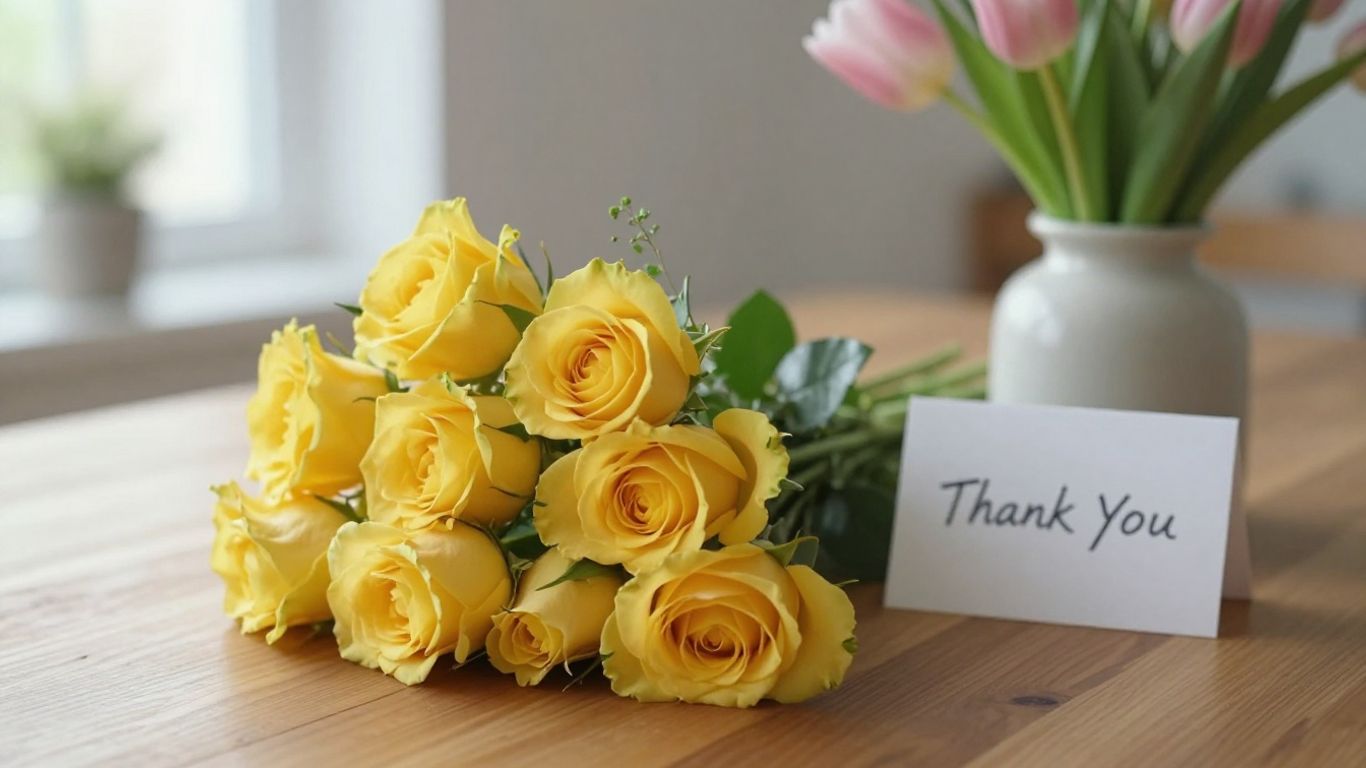
Thank-you flowers for a close friend
For a close friend, choose flowers with warmth and a little personality. Yellow roses, sunflowers, tulips, or a loose mixture of seasonal blooms can express affection and appreciation without becoming formal. If the favor was especially meaningful, include a flower in a color connected to a shared memory.
A relaxed hand-tied bouquet often feels right for friendship. It can be bright, generous, and slightly informal, particularly when accompanied by a note that mentions the specific kindness you are grateful for.
Thoughtful options for family members
Family gifts can carry more emotional history, so personal details matter. Choose a parent’s favorite bloom, a color associated with home, or a plant they can enjoy for longer if they like gardening. For siblings and relatives, seasonal flowers can create a cheerful gesture without making the moment feel overly solemn.
If the flowers mark support during a difficult period, a calm palette and a simple arrangement may be kinder than something exuberant. Let the recipient’s habits guide the choice: a vase of fragrant flowers is not ideal for someone sensitive to scent, and a large arrangement may not suit a small home.
Bouquets for mentors, teachers, and colleagues
Professional gratitude usually benefits from elegance and restraint. Pink or peach roses, tulips, orchids, and softly mixed seasonal flowers can acknowledge guidance or assistance without implying romantic feeling. Keep the arrangement polished, and consider whether it will be displayed in a classroom, office, reception area, or shared staff space.
A short note naming the help you received makes the gesture more memorable. For workplace gifts, a moderate size is often preferable, especially when the bouquet is being given to one person in front of a wider team.
Flowers for hosts, caregivers, and professional contacts
Hosts often appreciate flowers that can be placed easily in a vase, while caregivers may value a bright, comforting arrangement or a low-maintenance plant. For professional contacts, use classic shapes and a measured palette. The goal is to show genuine appreciation while respecting the boundaries of the relationship.
A useful way to narrow the choice is to ask what the recipient can enjoy immediately. Flowers for a host should not create extra work during a gathering, and flowers sent to a workplace should arrive in a condition that is easy to display.
Match the bouquet to the occasion
The scale and tone of a thank-you should reflect what happened. A small gesture after a neighbor collects your mail does not need the same arrangement as thanks for months of care or support. Think about the emotional weight of the occasion, how soon you can respond, and whether flowers should arrive privately or be shared with others.
Everyday acts of kindness
For an everyday favor, a petite bouquet or a handful of cheerful stems is often enough. The gesture feels natural when it is timely and uncomplicated. Yellow flowers, tulips, or a small mixed arrangement can brighten an ordinary day without making the recipient wonder whether a major announcement is coming.
A modest gift also leaves room for the message to feel spontaneous. Mention the practical kindness directly, whether it was a ride, a meal, a favor for a pet, or help with a small task.
Major favors and meaningful support
When someone has offered sustained help, choose a fuller bouquet with a stronger visual presence. Roses, hydrangeas, lilies, or a thoughtfully composed mixed arrangement can communicate that the support was noticed and deeply valued. The note should carry the details that flowers cannot.
You might mention what their help made possible, how it changed a difficult week, or why you will remember their kindness. A generous arrangement does not replace those words; it gives them a beautiful setting.
Professional appreciation and workplace etiquette
Workplace flowers should be appropriate to the organization and the relationship. Avoid arrangements that are strongly romantic, heavily scented, or so large that they disrupt a desk or reception area. If several people contributed to the help, a shared arrangement or a group note may be more fitting than singling out one person.
The timing can matter as much as the flowers. Delivering a thank-you after a project, presentation, referral, or period of mentorship is usually clearer than sending a gift long after the event without explanation.
Milestones, celebrations, and difficult moments
A promotion, graduation, recovery, or new home can call for lively colors and a celebratory shape. During grief, illness, or a stressful transition, softer flowers and a quiet message may be more appropriate. In every case, check whether the recipient’s setting has rules about flowers, especially in hospitals, care facilities, and workplaces.
The occasion should influence the bouquet without overwhelming the person. When the moment is emotionally complicated, a gentle arrangement and an honest note often communicate more than a dramatic display.
Select the right flower types
Flower type creates the bouquet’s first impression. Roses feel familiar and expressive, lilies bring height and fragrance, sunflowers add brightness, and orchids offer a more sculptural elegance. None is automatically the perfect answer, so compare the flower’s mood with the recipient’s personality and the practical conditions of the delivery.
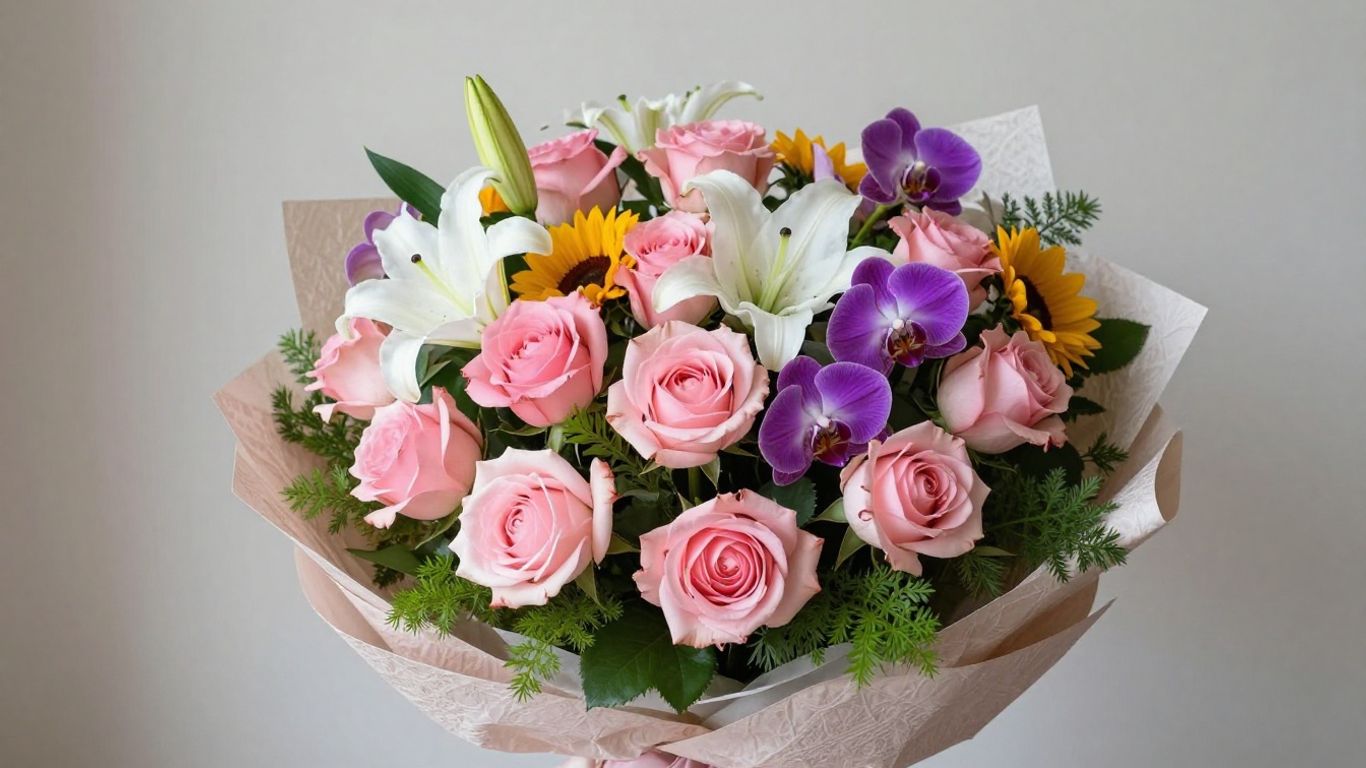
Roses for heartfelt appreciation
Roses are versatile because color can shift their tone. Pink roses generally feel admiring and grateful, yellow roses are friendly and sunny, and peach roses offer a softer expression of sincere thanks. White roses can create a clean, understated arrangement, especially when paired with greenery.
Red roses require more care because many recipients read them as romantic. They can be right for a partner or a close family member, but they are usually not the clearest choice for a colleague, teacher, or casual friend.
Lilies for elegance and admiration
Lilies bring height, shape, and a noticeable fragrance to an arrangement. They can suit someone who enjoys a refined, dramatic bouquet, particularly when the gift marks a significant favor or milestone. Their presence is formal enough for many professional settings but should be balanced with the recipient’s sensitivity to scent.
Ask the florist about pollen and bloom stage if the flowers are going into a home with pets or children. A beautiful flower is not practical if it creates concern or requires more care than the recipient wants.
Sunflowers for warmth and positivity
Sunflowers have an immediate, cheerful quality. Their broad faces and golden color work especially well for friends, siblings, hosts, and anyone who has offered encouragement. They can stand alone for a bold gesture or soften a mixed bouquet with an unmistakably upbeat note.
Because sunflowers have such a strong presence, a few stems may be more effective than an oversized mass. Pairing them with simple greenery or smaller flowers keeps the arrangement bright without making it feel busy.
Orchids and other refined choices
Orchids suit recipients with a taste for clean lines, sculptural forms, and longer-lasting displays. A potted orchid can be a thoughtful alternative to a cut bouquet for a mentor, host, or professional contact who enjoys caring for plants. Other refined choices include restrained arrangements of tulips, anthuriums, or seasonal flowers in a limited palette.
For more inspiration, this overview of flowers that symbolize gratitude notes that meanings can come from folklore and cultural tradition. That context is useful, but the recipient’s preferences and the occasion should still lead the decision.
Create a bouquet that feels personal
A personal bouquet does not require rare flowers or extravagant spending. It needs one or two details that show you were paying attention. Color, texture, vessel, and message can work together to turn a familiar arrangement into something that feels unmistakably intended for one person.
Combine colors with intentional meaning
Start with one main color that reflects the message, then add a secondary shade for balance. Pink and cream can feel gentle and admiring, yellow and white can feel open and friendly, and peach with soft green can feel warm without being loud. A florist can keep the arrangement cohesive even when you want to combine several meanings.
Try not to make every color carry a separate idea. One clear emotional direction usually feels more sincere than a bouquet that attempts to say everything at once.
Add the recipient’s favorite flowers
Favorite flowers are often more powerful than traditional gratitude blooms. They show that you remember what the person enjoys, whether that is a particular rose color, a fragrant garden flower, or a simple bunch of daisies. If their favorite flower is unavailable, ask for a similar shape or color rather than abandoning the personal detail.
You can also include a small botanical reference to a shared place or memory. A seasonal stem from a familiar garden style may quietly connect the bouquet to your relationship.
Choose a style that reflects their personality
The container and arrangement style should suit the recipient as much as the blooms do. A loose, meadow-like bouquet can fit someone relaxed and creative, while a compact arrangement with clean lines may appeal to a minimalist. A potted plant works for a practical person who prefers something lasting.
The five gratitude flower choices guide offers another useful reminder: the clearest gift is one that fits the recipient and relationship. Style is part of the message, not just decoration.
Include a handwritten thank-you message
A handwritten note gives the bouquet its emotional precision. Name the act you appreciate, say how it helped, and close with a warm sentence that sounds like you. Even two or three sincere lines can make a familiar bouquet feel deeply personal.
Write the note before delivery if possible, so it does not become an afterthought. Avoid vague praise when a specific detail is available; “Thank you for making that difficult week easier” will usually stay with someone longer than “Thanks for everything.”
Get the presentation and delivery right
Presentation affects how easily the recipient can enjoy the flowers. A bouquet should arrive hydrated, neatly arranged, and suited to the place where it will be received. Before ordering, consider the recipient’s schedule, access to a vase, allergies, pets, and any building or workplace delivery rules.
Choose the appropriate bouquet size
Small bouquets are ideal for everyday thanks, desk deliveries, and situations where the recipient may be traveling. Medium arrangements feel generous without taking over a room, while larger designs are best reserved for major milestones or shared spaces. Size should reflect both the occasion and the recipient’s available space.
If you are unsure, choose quality and balance over volume. A carefully arranged handful of fresh flowers can feel more elegant than an oversized bouquet that is difficult to handle.
Decide between fresh, preserved, and potted flowers
Fresh flowers offer fragrance, movement, and an immediate sense of occasion. Preserved flowers can suit someone who enjoys a lasting display, while potted flowers are useful for recipients who like caring for plants and have an appropriate place to keep them. The right format depends on lifestyle rather than sentiment alone.
Think about maintenance before choosing. A person with limited time may prefer a simple fresh arrangement, while an enthusiastic gardener may welcome a plant that can become part of their home.
Consider delivery timing and location
Deliver flowers when the recipient can reasonably receive and enjoy them. A home delivery may feel more private, while a workplace delivery can be suitable for public recognition if the person is comfortable with attention. For a host, sending flowers before an event may create extra preparation, so a later delivery can be kinder.
Confirm the address, access instructions, and preferred delivery window. If the gesture is time-sensitive, leave enough room for substitutions or a second delivery attempt rather than ordering at the last minute.
Avoid common gifting and etiquette mistakes
A thoughtful gift can lose some of its ease when practical details are overlooked. Before sending, check the flower’s fragrance, likely symbolism, and suitability for the recipient’s setting. The following quick review can prevent most awkward moments:
- Avoid red roses when the relationship is clearly non-romantic.
- Check for fragrance, pollen, allergy, and pet-safety concerns.
- Keep workplace arrangements moderate and easy to display.
- Include a note that names the specific reason for your thanks.
This small check is not meant to make gifting formal or anxious. It simply protects the feeling behind the gesture, allowing the recipient to experience the flowers as generosity rather than another problem to solve.
Conclusion
The most meaningful thank-you bouquet brings together a suitable flower, a considerate color palette, and a message that names what you appreciate. Whether you choose familiar roses, bright sunflowers, elegant orchids, or a favorite seasonal bloom, let the recipient’s personality and the occasion guide you. A well-timed arrangement with a sincere note can make gratitude feel visible, memorable, and entirely personal.
Frequently Asked Questions
What flowers best express deep gratitude?
Pink roses, yellow roses, sunflowers, hydrangeas, orchids, tulips, and chrysanthemums are commonly associated with appreciation, friendship, admiration, or warmth. The best choice also depends on the recipient’s preferences and the situation.
Are roses appropriate for a thank-you gift?
Yes. Pink, yellow, peach, and white roses can communicate appreciation in different ways. Red roses may suggest romance, so choose them only when that meaning fits the relationship.
What color flowers should I send to a friend?
Yellow, pink, peach, and mixed seasonal colors can work well for a friend. Choose the shade that reflects your friendship and, when possible, include a color the recipient already enjoys.
How large should a thank-you bouquet be?
The bouquet should match the favor, setting, and recipient’s lifestyle. A small arrangement suits an everyday kindness, while a medium or larger bouquet may fit major support, milestones, or celebrations.
Is it better to send fresh or potted flowers?
Fresh flowers create an immediate gesture, while potted flowers last longer and suit people who enjoy caring for plants. Consider the recipient’s space, schedule, and comfort with maintenance before deciding.
What should I write in a thank-you flower card?
Mention the specific kindness, explain briefly how it helped, and close with a sincere expression of appreciation. A short, personal note is usually more effective than a long generic message.
Can I send thank-you flowers to a workplace?
Yes, provided the arrangement is moderate, easy to display, and appropriate for the relationship. Check the workplace’s delivery rules and avoid strongly romantic colors or overpowering fragrance when the setting is professional.