
Key Takeaways
The right Valentine’s bouquet does more than look beautiful: it gives shape to a feeling that can be difficult to say aloud.
- Choose flowers whose colors and forms fit your relationship.
- Let your partner’s personality guide the bouquet’s style.
- Add a card message that sounds like your own voice.
- Use seasonal blooms to make the arrangement feel less expected.
- Care for the flowers from the moment they arrive.
Understand the message behind “you are my everything”
Saying “you are my everything” is a declaration of deep affection, gratitude, and emotional closeness. A bouquet can carry that feeling gently, without making the gesture feel overly formal. The most convincing arrangement is not necessarily the largest one; it is the one that feels chosen rather than selected at random. Think about what your relationship feels like in ordinary moments, then let that guide the flowers.
Why flowers express deep devotion
Flowers work beautifully as emotional gifts because they combine color, fragrance, texture, and a fleeting sense of occasion. Their beauty asks to be noticed, while their short life reminds us to appreciate the present. Red blooms may feel passionate, pale petals calm and faithful, and unusual varieties quietly intimate. The symbolism is a starting point, but your intention gives it meaning.
Choosing blooms for a long-term partner
For a spouse or long-term partner, choose flowers that acknowledge the life you have built together. A classic rose arrangement can honor commitment, while a mix of flowers may better reflect shared memories, favorite places, or a private joke. Consider pairing the bouquet with an experience, such as revisiting your wedding venue or watching a keepsake wedding video together. The gift becomes richer when it connects the present to your history.
Matching the bouquet to your relationship stage
A new relationship often calls for warmth without too much ceremony. Tulips, ranunculus, or a small gathering of bright seasonal flowers can feel affectionate and open. For an established partnership, fuller arrangements and more layered color can express the depth of what you share. Whatever the stage, let the gesture feel specific to the person receiving it.
Adding a personal message to strengthen the sentiment
The card should explain what the flowers cannot. Mention a small habit you adore, a difficult season you survived together, or a future you are excited to meet side by side. If you are stuck, browsing a collection of Valentine’s card messages can help you find a starting point, but rewrite the thought until it sounds like you. One honest sentence is usually more moving than a polished paragraph with no personal detail.
Choose classic flowers that symbolize lasting love
Classic flowers remain popular because their shapes and colors are immediately understood. They also give you a dependable foundation, especially when you want the bouquet to feel unmistakably romantic. You can keep the arrangement traditional or soften it with airy greenery and less expected textures. Start with the message, then decide how formal the final design should feel.
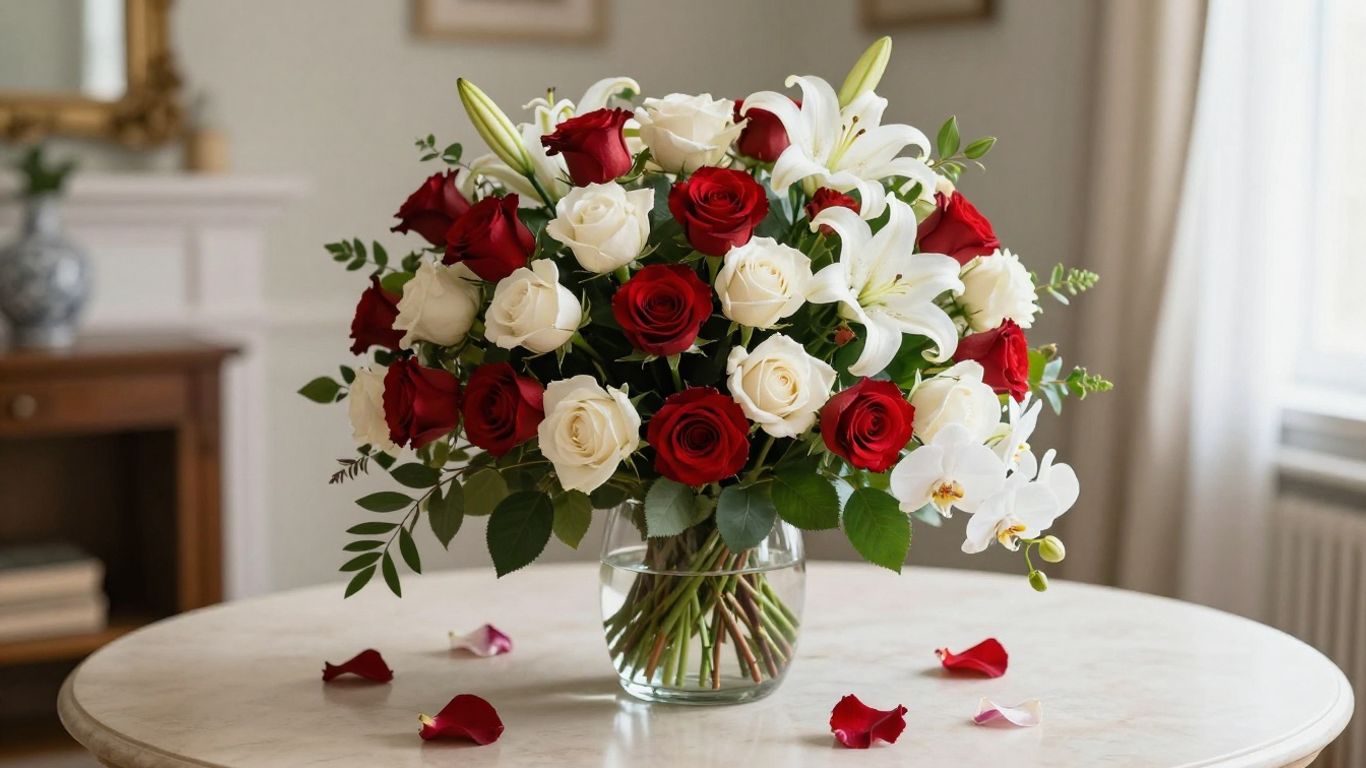
Red roses for passion and commitment
Red roses are the clearest choice for passionate love, especially when you want to acknowledge both desire and devotion. A dozen long-stem roses feels ceremonial, while garden-style roses create a softer, more abundant impression. You can also mix shades of red to give the bouquet depth. If your partner loves tradition, this familiar choice may be exactly right.
White roses for loyalty and devotion
White roses bring a quieter kind of romance. Their clean color suggests loyalty, sincerity, and a love that feels steady rather than showy. They work well in an arrangement for a spouse, particularly when paired with soft greenery or a few pale blush flowers. White roses can also balance a bouquet that includes stronger red or purple tones.
Lilies for admiration and emotional depth
Lilies have a sculptural presence and a fragrance that can fill a room, making them a natural choice for someone you deeply admire. Their open petals add drama without relying on a sea of roses. Before choosing them, make sure the recipient enjoys strongly scented flowers. Removing pollen-bearing parts can also help protect clothing and furniture.
Orchids for enduring love and elegance
Orchids suit a partner with a refined, modern taste. Their unusual shapes and long-lasting presence make them feel deliberate, elegant, and slightly unexpected. A few orchid stems can stand alone in a simple vase, or they can bring a graceful accent to a larger bouquet. Their restraint often says as much as abundance.
Explore romantic alternatives to a traditional rose bouquet
There is no rule that says Valentine’s romance must arrive as roses. Alternatives can feel more personal, especially when they match a partner’s favorite color, season, or style. Floral meanings also vary by tradition, so treat them as helpful associations rather than strict rules. For more background on the language of Valentine’s flowers, explore this guide to flower meanings.
Tulips for sincere and lasting affection
Tulips are graceful, cheerful, and wonderfully clean-lined. Red tulips can carry a romantic message, while pink, white, or purple varieties let you create a more nuanced palette. They are especially appealing for someone who prefers a contemporary arrangement to a formal rose presentation. Their simple silhouettes look beautiful gathered closely in a single-color bunch.
Peonies for tenderness and good fortune
Peonies have generous, ruffled heads that make a bouquet feel soft and abundant. They suit a tender message, an anniversary, or a Valentine’s gift for someone who loves lush garden flowers. Because their availability can be seasonal, they may be best used as a centerpiece bloom with complementary flowers around them. Their fullness creates a sense of celebration without needing a huge quantity.
Carnations for devoted, heartfelt love
Carnations deserve more attention than they often receive. Their layered petals suggest enduring affection, and their sturdy stems make them practical for arrangements meant to last. Choose deep red for a more intense feeling, blush for gentleness, or a mixed palette for a relaxed, cheerful bouquet. They are a thoughtful option when you want meaning and resilience together.
Ranunculus for charm and fascination
Ranunculus have tightly layered petals and slender stems, giving them a romantic look with a little more personality than a standard rose. They work beautifully in peach, coral, cream, and pink combinations. Their charm is ideal for a partner who notices details and likes flowers that feel delicate but not predictable. Grouping several stems together makes their intricate centers especially striking.
Build a bouquet that feels personal
A personal bouquet begins with observation. Notice whether your partner gravitates toward quiet neutrals, saturated color, wild gardens, or carefully edited interiors. Then consider the setting where the flowers will live, because a design that suits a sunny kitchen may not suit a minimalist bedroom. The goal is not to follow a formula but to make several small choices that point toward one person.
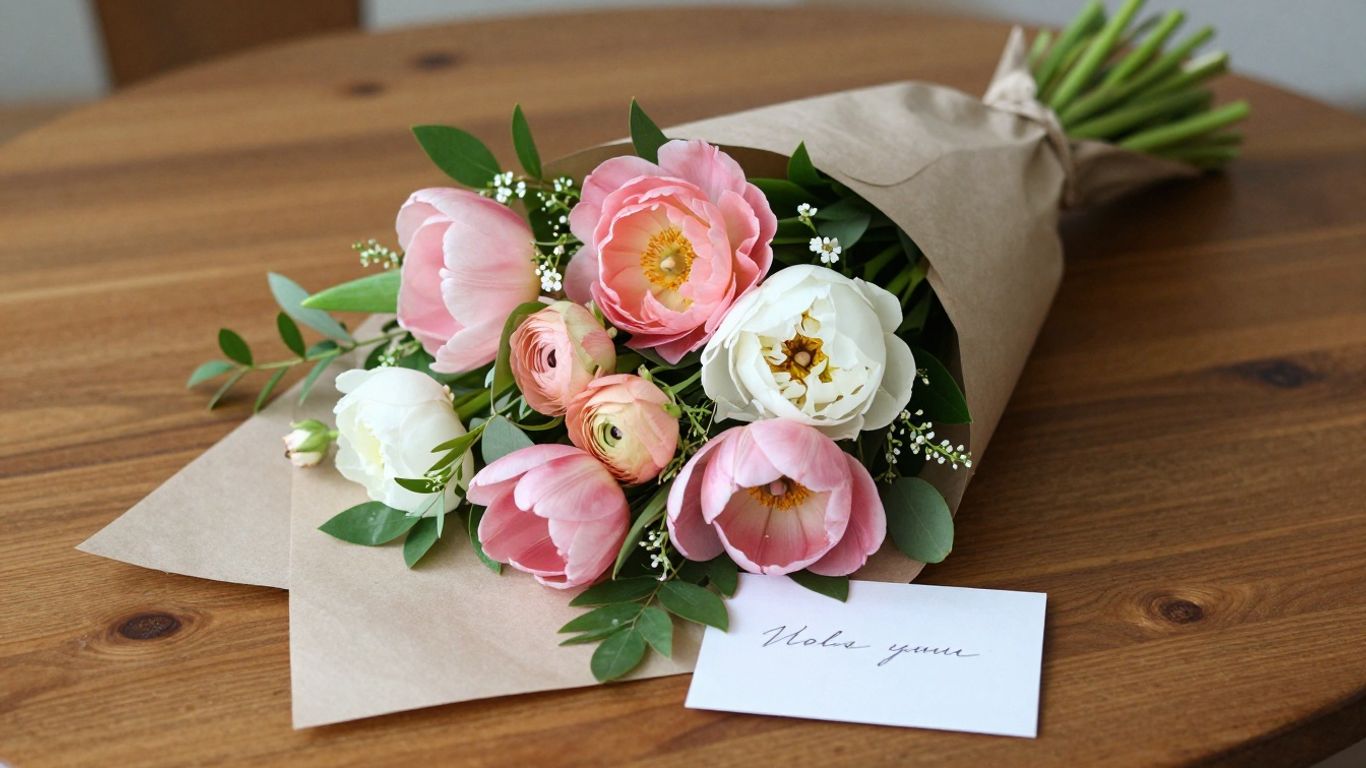
Combining colors to create a meaningful arrangement
Color can make the emotional tone of a bouquet immediately clear. Red and burgundy feel intense, pink and cream feel tender, and purple with white can seem elegant and reflective. Greenery keeps strong colors from becoming heavy, while a small amount of peach or yellow can add lightness. Choose two or three main colors instead of trying to include every shade you love.
Selecting flowers based on your partner’s personality
A quiet, bookish partner might appreciate a restrained bouquet of white tulips and greenery. Someone energetic may enjoy vivid ranunculus, coral roses, or a lively mixed arrangement. For a partner who values practicality, a hardy design in a vase they can reuse may feel more considerate than an oversized display. Personal taste matters more than a universal flower dictionary.
Including favorite blooms or seasonal flowers
A favorite flower is often the most meaningful choice, even if its traditional symbolism is less obviously romantic. You might include the bloom your partner carried in a graduation bouquet or the flower that grows near a place you visit together. Seasonal stems can make the arrangement feel rooted in this particular February rather than copied from a catalog. If flowers are only one part of a larger gift, even a practical body scrubber guide can inspire a useful self-care addition, provided it genuinely suits the recipient.
Choosing a modern, wildflower, or luxury style
Modern arrangements favor clean lines, unusual negative space, and a limited palette. Wildflower styles feel loose, textured, and a little spontaneous, while luxury designs usually rely on premium blooms, generous scale, and careful presentation. Let the style echo your partner’s home and clothing rather than your own idea of what romance should look like. Even surrounding details can be chosen thoughtfully, from a simple vase to a lighting upgrade guide for a cozy evening at home.
Pair the flowers with a message that says it all
A card turns a lovely delivery into a conversation between two people. Write as though you are speaking privately, not composing a caption for an audience. The best message usually includes one feeling and one concrete reason for it. A few carefully chosen words can stay with someone long after the flowers have faded.
Short card messages for a romantic bouquet
Short notes are ideal when the flowers already make a strong visual statement. Try “You make every day feel like home,” “Still my favorite person,” or “All my love, today and always.” These lines are warm without taking attention away from the arrangement. Add the recipient’s name or a private nickname to make even a brief message feel unmistakably personal.
Sentimental notes for a spouse or long-term partner
For a long-term partner, mention the parts of love that are easy to overlook: patience, humor, teamwork, and the comfort of being known. You could write, “Thank you for making the ordinary parts of life my favorite parts,” or “I would choose our life together again.” A note like this honors the relationship as it really is, not only as it appears on a holiday.
Playful messages for a new relationship
A new relationship can welcome a little teasing. “I like you more than I planned,” “You’re my favorite Valentine so far,” or “I brought flowers before I could overthink it” keeps the mood light. Playfulness can be romantic because it shows confidence and ease. Keep the joke kind, and avoid language that assumes more commitment than the relationship has reached.
Meaningful ways to say “you are my everything” without clichés
Instead of repeating a grand declaration, describe its evidence. Say, “You are the person I want beside me for the good news and the hard days,” or “Life feels more like mine because I get to share it with you.” You might also write, “I love the future more because you are in it.” These messages communicate the same depth while sounding lived-in and sincere.
Make your Valentine’s blooms last longer
Good care protects both the beauty of the bouquet and the memory attached to it. Fresh flowers are living stems, so small daily habits can make a noticeable difference. Ask the florist about any special care needs, especially for fragrant or delicate varieties. A few minutes of attention helps the arrangement remain part of the celebration instead of becoming a fading afterthought.
Preparing fresh-cut flowers when they arrive
Unwrap the flowers carefully and remove any leaves that would sit below the waterline. Cut a small amount from the stems with a clean, sharp tool, preferably at an angle, so the ends can take up water. Place them in a thoroughly washed vase with fresh water and the recommended flower food. Give the arrangement room to open rather than packing every stem tightly together.
Finding the best location for the arrangement
Set the vase somewhere cool, away from direct sun, radiators, heating vents, and strong drafts. Keep it apart from ripening fruit, which can shorten the life of some flowers. A visible spot is lovely, but a cooler room may preserve the bouquet better than a warm windowsill. Choose a place where your partner can enjoy it often without the stems being bumped.
Changing the water and trimming the stems
Refresh the water every day or two, washing the vase if it becomes cloudy. Trim the stems again when you change it, and remove petals or leaves that begin to wilt. These simple steps keep the arrangement cleaner and help the remaining flowers look fresh. If one bloom fades early, take it out rather than allowing it to distract from the rest.
Preserving meaningful flowers as a keepsake
When the bouquet begins to fade, select a few undamaged flowers for pressing or air-drying. Pressed petals can become part of a card, journal, or framed memory, while dried stems may be kept in a small vase. The result will not preserve the bouquet exactly as it looked on Valentine’s Day, but it can preserve the feeling of having received it. A keepsake works best when it is modest and connected to the story behind the flowers.
For couples who want to make the evening part of a larger ritual, a first-night conversation guide can offer a gentle prompt toward communication and closeness. And if you are planning a surprise delivery, an app idea validation guide is a useful reminder to clarify the need, audience, and details before acting—whether the project is digital or simply a carefully planned romantic gesture.
Conclusion
The most heartfelt Valentine’s bouquet is the one that reflects a real person and a real shared life. Choose flowers for their beauty, but choose the colors, style, and message for what they say about your relationship. Whether you give classic roses, seasonal tulips, or a personal mix of favorite blooms, care and attention will make the gesture feel like a true answer to the words “you are my everything.”
Frequently Asked Questions
What flowers best say “you are my everything”?
Red roses are the most direct traditional choice, but tulips, peonies, orchids, and mixed seasonal flowers can express the same depth in a more personal way. The best option is the bloom that suits your partner’s taste and your shared story.
Are roses the only romantic Valentine’s flowers?
No. Tulips, ranunculus, peonies, carnations, lilies, and orchids can all create a romantic arrangement. Color, presentation, and the message on the card often matter as much as the flower variety.
What color flowers express lasting love?
Red commonly suggests passion and commitment, while white can suggest loyalty and devotion. Pink often feels tender, and deep purple or burgundy can add richness. Combining colors allows the bouquet to express more than one feeling.
How many flowers should a Valentine’s bouquet include?
There is no required number. A small, carefully selected group can feel intimate, while a fuller bouquet creates a more dramatic surprise. Let the size suit the recipient’s space, your budget, and the tone of the occasion.
What should I write on a Valentine’s flower card?
Write one sincere feeling and support it with a specific detail. Mention what you appreciate, a memory you share, or something you look forward to together. A natural sentence will usually feel more meaningful than a generic declaration.
How can I make fresh Valentine’s flowers last longer?
Use a clean vase, trim the stems, remove submerged leaves, and replace the water regularly. Keep the arrangement away from heat, direct sun, drafts, and ripening fruit. Remove fading blooms as needed.
Can I preserve Valentine’s flowers after they fade?
Yes. A few flowers can be pressed between heavy books or air-dried in a cool, dry place. Preserved blooms can be used in a frame, journal, or handmade card as a small keepsake of the occasion.