
Key Takeaways
A long-distance Valentine’s bouquet feels most memorable when it carries a story, not just a price tag.
- Choose flowers, colors, and textures that suit your relationship.
- Use a note or small keepsake to make the delivery personal.
- Schedule the order early and confirm the recipient’s plans.
- Consider hardy blooms or a plant if you want the gift to endure.
- Thoughtful details usually matter more than bouquet size.
Match the flowers to your relationship story
The best bouquet begins with your relationship, not a universal list of “romantic” flowers. Think about what you want your partner to feel when the delivery arrives: adored, reassured, remembered, or gently surprised. Emotional valentines flowers for long distance love should sound like the two of you, even when the arrangement itself comes from somewhere else.
Use flower meanings to express specific emotions
Flower symbolism can give your gesture a starting point, especially when you are struggling to put a feeling into words. Red roses can suggest passion and devotion, while pink roses often feel softer and more affectionate. Tulips may suit a relationship that feels warm and hopeful, and lilies or sunflowers can bring a sense of admiration and brightness.
Meanings are guides rather than rules. If your partner loves yellow roses because they remind them of home, that personal association matters more than a traditional flower dictionary. Choose the emotional message first, then let the florist help you build an arrangement around it.
Choose blooms connected to shared memories
A flower from your first date, a color from your wedding, or a plant you once cared for together can turn an ordinary bouquet into a private reference. Maybe you bought tulips at a farmers market during an early weekend together, or your partner always pauses to admire peonies in spring. Those details make the distance feel smaller because the bouquet points back to a real moment.
You do not need a rare flower to make this work. A familiar bloom, paired with one sentence explaining the memory, can carry more feeling than an expensive arrangement chosen without context. If you are collecting ideas for a gift that lasts beyond the day itself, a personalized song can also turn shared memories into a longer-lasting companion to the flowers.
Reflect your partner’s personality and style
A dramatic red-and-black arrangement may delight someone who loves bold design, but overwhelm a partner whose home is filled with pale neutrals and simple ceramics. Notice the flowers they buy for themselves, the colors they wear, and whether they prefer wild, abundant shapes or tidy, sculptural lines. Your choice should feel like something they would welcome into their space.
It can help to describe your partner to the florist in ordinary language: “They love soft colors and garden flowers,” or “They prefer bright, modern arrangements.” This gives the bouquet a human point of view instead of making it look like a generic holiday purchase.
Balance romance with authenticity
Romance does not have to mean extravagance. A modest bouquet in a beloved color, delivered with a thoughtful message, can feel deeply intimate. Personal details carry the feeling; the flowers simply give that feeling a beautiful physical form.
Try to avoid choosing a style only because it photographs well online. Your partner may value an unusual combination, a locally grown arrangement, or even a small bunch they can easily place beside their laptop. Authenticity is especially important across distance, where the message and intention do much of the emotional work.
Choose flowers that communicate across the distance
When you cannot hand over the bouquet yourself, the flowers need to arrive with enough presence to create a moment. Fragrance, color, shape, and durability all influence that first impression. A useful long-distance flower guide can offer inspiration, but your partner’s taste should remain the deciding factor.
Send roses for classic romantic devotion
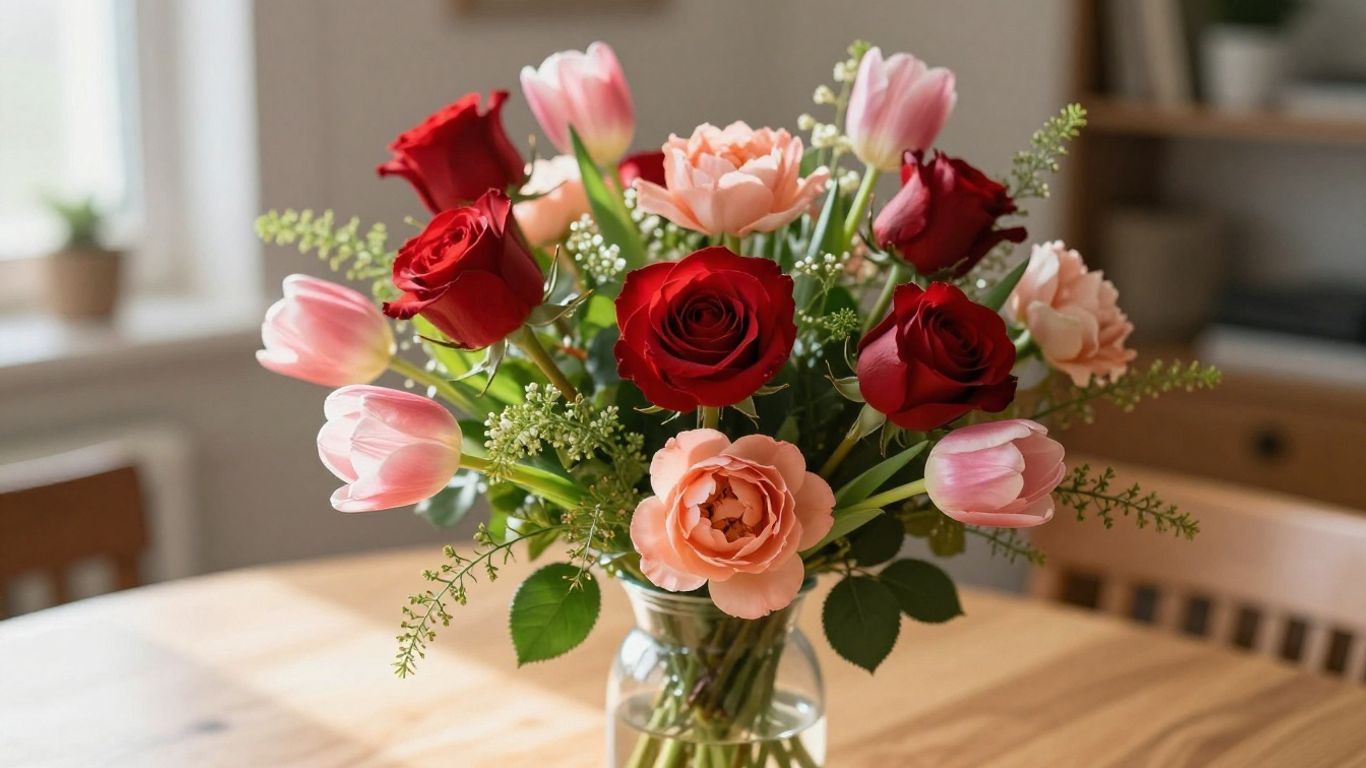
Roses remain a natural choice when you want to communicate familiar, unmistakable romance. Red roses suit established devotion, while blush, peach, or lavender shades can soften the mood for relationships that feel tender, playful, or still unfolding. A mixed rose arrangement can also avoid the formality of a dozen identical stems.
Consider the setting as well as the symbolism. If your partner works from home, a medium arrangement may be easier to enjoy than a towering display. If they love traditional Valentine’s Day rituals, a fuller red rose bouquet may be exactly right.
Pick tulips for warmth and hopeful love
Tulips bring a lighter, more optimistic energy to Valentine’s Day. Their clean stems and open cups work beautifully in relaxed arrangements, and they can feel romantic without being overly formal. Red tulips can carry a strong love message, while pink, white, or mixed colors may feel affectionate and cheerful.
They are a particularly good choice when your relationship is defined by companionship as much as intensity. Pair them with a note about looking forward to the next visit, a future trip, or an ordinary day you hope to share soon.
Consider lilies, orchids, or sunflowers for a personal message
Lilies can suit someone who appreciates graceful, fragrant flowers, though it is wise to check whether the recipient has pets, since some lilies are dangerous to cats. Orchids feel elegant and enduring, especially for a partner who enjoys houseplants or minimalist décor. Sunflowers are joyful and direct, making them a lovely fit for someone who brings energy and humor into your life.
Do not choose a flower solely because its meaning sounds romantic. Think about scent sensitivity, allergies, pets, available space, and the kinds of flowers your partner actually enjoys. A fresh, durable bouquet is only a good choice if it also feels comfortable in the recipient’s home.
Combine complementary blooms to tell a fuller story
A mixed bouquet can express several layers of feeling at once: roses for devotion, tulips for hope, and greenery for calm and continuity. Ask for one leading flower and two or three supporting elements rather than adding every bloom available. This keeps the arrangement visually coherent and gives each choice room to be noticed.
Before ordering, write down the message you want the bouquet to deliver in three words. “Devoted, playful, hopeful” might lead to red roses, bright tulips, and delicate filler flowers. That small exercise helps the combination feel deliberate rather than crowded.
Design a bouquet that feels personal
The bouquet is only one part of the gift. Color, packaging, the delivery note, and even the vessel can change how the gesture feels when it reaches your partner. For more ideas about pairing flowers with small treats or meaningful objects, browse this guide to thoughtful flower add-ons, then choose only what fits your relationship.
Select colors with emotional meaning
Color can make the same flower feel entirely different. Deep reds and burgundy suggest intensity, blush and peach feel tender, yellow brings warmth, and white can create a calm, classic look. A favorite color may matter more than any conventional symbolism, particularly if it connects to your partner’s clothing, home, or a shared place.
You can also use a restrained palette to make the bouquet feel more intentional. Two main colors with a little greenery often look polished, while a loose range of sunset shades can feel warmer and more spontaneous. Ask the florist what will be freshest in that palette rather than insisting on a specific stem that may be unavailable.
Add a handwritten note or custom message
A note gives the flowers a voice. Keep it specific enough that nobody else could have written it: mention a shared joke, the next time you will meet, or the small habit you miss most. “I love you” is meaningful, but “I still smile when I pass the bakery we found in Portland” makes the distance tangible.
If the florist limits character count, write one vivid sentence instead of trying to summarize the entire relationship. You can always follow the delivery with a longer letter, voice message, or call. The best note sounds like you, including a little imperfection.
Include meaningful extras such as photos or keepsakes
A printed photograph, a favorite snack, a small framed memory, or a ribbon in a significant color can make the delivery feel more complete. Choose one or two extras that invite your partner to pause, touch, or remember something. Too many add-ons can make the gift feel assembled from a catalog rather than chosen for a person.
If you include food, check the recipient’s preferences and allergies. If you include a keepsake, make sure it is useful or emotionally resonant rather than simply decorative. The aim is to create another small point of connection after the initial surprise fades.
Choose a presentation that suits your partner
Some people love an abundant, wrapped bouquet; others prefer a low arrangement in a vase that can go straight onto the table. A ceramic container may become part of the gift, while recyclable paper can suit someone who dislikes excess packaging. Even the shape of the arrangement can reflect personality: loose and garden-like, neat and modern, or bright and exuberant.
Tell the florist where the flowers will probably live. A desk arrangement, bedside bouquet, and dining-table centerpiece all need different proportions. Presentation is not an afterthought when your partner is receiving the flowers without you there to adjust them.
Plan delivery for a long-distance Valentine’s Day
A beautiful arrangement can lose some of its effect if it arrives after the call, while your partner is away, or during a weather delay. Valentine’s Day delivery requires a little more planning than an ordinary surprise. The practical details are part of the affection because they help the moment happen smoothly.
Schedule delivery around February 14
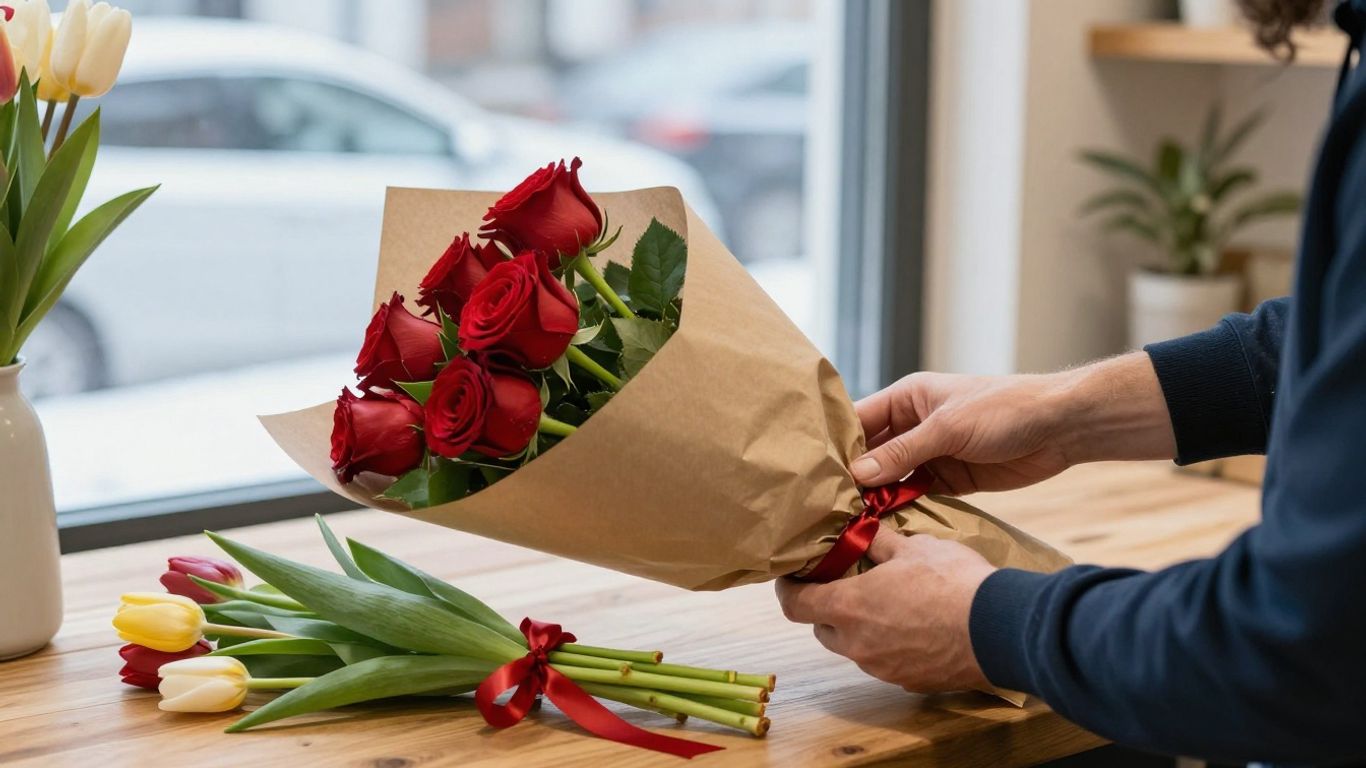
Decide whether the surprise should arrive on February 14 or on a quieter day nearby. The holiday itself feels traditional, but an earlier delivery may offer more choice and less pressure. If your partner has a busy work schedule, a Friday afternoon or the weekend before may create a better opportunity to enjoy the bouquet.
Order as early as you reasonably can and confirm the requested delivery window. A guide to sending flowers at the right time can help you think through timing, delivery method, and presentation without treating the calendar date as the only option.
Confirm the recipient’s address and availability
Double-check the apartment number, building instructions, phone number, and whether the recipient will be home. For offices, verify reception hours and whether flowers can be accepted. A discreet message asking about their schedule may be less mysterious, but it is better than sending a perishable gift to an empty building.
If the surprise must remain secret, ask a trusted friend or relative to confirm the details. You can also choose a delivery location your partner visits reliably, provided the florist allows it and the recipient is comfortable receiving gifts there.
Account for weather, freshness, and delivery risks
Winter conditions can affect travel, access to buildings, and the condition of delicate stems. Ask how the flowers will be protected, whether they arrive hydrated, and what happens if the driver cannot complete the delivery. Freshness matters, but so does having a realistic backup plan.
Use a florist or service that can explain its delivery process clearly. Keep confirmation emails and order details until the bouquet has arrived. If the arrangement is delayed or damaged, contact the provider promptly rather than leaving your partner to solve the problem.
Coordinate flowers with a virtual date or surprise call
The delivery becomes more emotional when it opens into shared time. Arrange a video call for the likely arrival window, or plan a simple activity you can do together afterward: order the same meal, open a bottle, watch a familiar film, or read old messages aloud. The bouquet marks the beginning of the evening rather than standing in for it.
Leave a little flexibility in the plan. Delivery times can shift, and your partner may need a moment to receive the flowers, arrange them, and take in the surprise. A relaxed call often feels more loving than a tightly timed production.
Choose flowers that will last beyond Valentine’s Day
Longevity can be part of the message, particularly when visits are infrequent. A bouquet that changes over several days gives your partner repeated reminders of the gesture. Before ordering, decide whether you want the excitement of fresh-cut flowers, the permanence of preserved stems, or the ongoing care of a living plant.
Compare fresh-cut bouquets with preserved flowers
Fresh flowers provide scent, movement, and the unmistakable pleasure of a new arrival. They are best when you want the gift to feel immediate and seasonal. Preserved flowers can last much longer and suit someone who likes keepsakes, but they may have a different texture and less fragrance.
Ask what care each option requires and how it will be packaged. A preserved arrangement is not automatically more personal; it simply offers a different rhythm. Fresh flowers can be meaningful precisely because they are temporary and tied to one particular day.
Select hardy blooms for longer vase life
Some flowers generally tolerate several days in a vase better than especially delicate varieties. Carnations, chrysanthemums, alstroemeria, and many varieties of roses can be practical choices when delivery involves distance. Ask the florist which locally available blooms are freshest and most durable at the time of ordering.
A mixed bouquet can last unevenly, so choose combinations with similar care needs when possible. This allows your partner to enjoy the arrangement as it opens rather than watching one fragile flower fade while everything else remains fresh.
Add care instructions and flower food
A short care card makes it easier for the recipient to enjoy the bouquet. Basic guidance usually includes trimming stems, using a clean vase, changing the water, and keeping flowers away from direct heat or strong drafts. Follow the florist’s specific instructions, since different flowers can have different needs.
The care ritual can become a small shared moment. Send a message while your partner trims the stems, or talk about where the bouquet looks best in the room. A practical detail becomes more intimate when you participate from afar.
Consider potted plants as a lasting reminder
A potted orchid, flowering plant, or small indoor plant may suit someone who enjoys tending to living things. It can remain after the holiday and grow alongside the relationship, though it should not be presented as a responsibility unless your partner genuinely likes plant care.
Choose a plant that matches their light, space, and experience level. A low-maintenance option is kinder than a delicate specimen for someone who travels often. Include a simple care note and explain why you chose that particular plant.
Make the gesture meaningful without overspending
Distance can make gifting feel expensive because delivery, timing, and extras add up quickly. A clear budget lets you spend on the part your partner will notice most instead of paying for features that do not suit them. Thoughtfulness is not measured by the height of the arrangement.
Set a realistic budget for flowers and delivery
Start with the full cost, including delivery, taxes, a vase, card, and any service fees. Compare that total with what you can comfortably spend, rather than choosing the bouquet first and trying to justify it later. A smaller arrangement delivered reliably is better than an oversized one that creates financial strain.
You can also ask about seasonal substitutions. Florists often know which flowers are beautiful and plentiful in the recipient’s area, and flexibility may help you stay within budget without making the gift feel plain.
Prioritize meaningful details over bouquet size
A specific note, favorite color, or shared-memory reference can make a modest bouquet feel remarkably intimate. If you are adding something else, choose an item with a clear connection to your partner rather than several generic extras. A smaller, personal gesture often feels more considered than a large package with no story.
For example, a simple tulip bouquet paired with a photo from your last visit may say more than a grand arrangement chosen at the last minute. Let the emotional detail lead; let the budget follow.
Compare local florists, online services, and subscription options
Local florists may offer useful knowledge about what is freshest nearby and can sometimes answer detailed questions about delivery. Online services can simplify ordering across state lines, while subscriptions may make sense for couples who enjoy receiving flowers regularly rather than only on holidays. Compare the actual arrangement, delivery terms, replacement policy, and customer support.
For a broader household-planning task, you might separately need Colorado moving information, True Appliance Repair, or BillsRemodeling.com; those services address moves, appliance repairs, and bathroom renovations rather than flower delivery. Keeping those needs separate helps you judge a floral order on the criteria that actually matter here.
Avoid common long-distance flower-gifting mistakes
The most common problems are usually preventable: an outdated address, an unsuitable delivery window, a scent or pet-safety issue, and a message that says very little. Take five minutes to review the order as if you were the recipient. Picture where the flowers will arrive, who will accept them, and what your partner will understand from the note.
A quick final check can include these practical questions:
- Will someone be available to receive the flowers?
- Does the arrangement suit the recipient’s pets, allergies, and home?
- Is the delivery date flexible if February 14 is especially busy?
- Have you included one unmistakably personal detail?
That review protects the emotional intention behind the order. If you are also handling a separate home concern, keep it distinct—for example, Bellows Falls pest control concerns flea and tick treatments, not Valentine’s gifting—so the floral plan stays simple and focused.
Conclusion
The most meaningful long-distance Valentine’s flowers are not necessarily the rarest or largest. They are the ones that reflect a shared memory, arrive at a considerate moment, and give your partner a feeling they can return to after the call ends. Choose with attention, write from experience, and let the bouquet become one small but tangible way of being present.
Frequently Asked Questions
What flowers are best for a long-distance Valentine’s Day gift?
Roses, tulips, lilies, orchids, sunflowers, and hardy mixed bouquets can all work well. The best choice depends on your partner’s taste, home, pets, allergies, and the feeling you want to express.
How early should I order Valentine’s flowers for delivery?
Ordering several days or weeks ahead usually gives you more choice and more flexibility. If you want delivery on February 14, confirm the florist’s ordering deadline and delivery window as early as possible.
Should I send red roses in a long-distance relationship?
Red roses are a fitting choice for classic romantic devotion, but they are not required. Choose another flower or color if it better reflects your partner’s personality or a shared memory.
What should I write in a Valentine’s flower note?
Write something specific to the relationship, such as a memory, a quality you admire, or a reference to your next visit. One vivid, personal sentence is often stronger than a long general message.
How can I make a flower delivery feel more personal?
Choose a meaningful color or bloom, add a personal note, and consider one small extra such as a photograph or favorite treat. Coordinating the delivery with a call can make the moment feel shared.
Are preserved flowers better than fresh flowers for long-distance love?
Neither is universally better. Fresh flowers create an immediate sensory experience, while preserved flowers can remain as a keepsake. Choose based on your partner’s preferences and the kind of memory you want the gift to create.
What is a thoughtful Valentine’s flower gift on a budget?
A smaller bouquet with a favorite flower, a carefully written note, and dependable delivery can feel very special. Seasonal blooms and local availability may also help reduce costs without reducing the personal meaning.