
Key Takeaways
A get-well bouquet can offer warmth and companionship during recovery, even though it cannot replace medical care. The most loving choice is one that suits the recipient’s room, senses, routine, and personality.
- Choose flowers that fit the recipient’s physical environment and energy level.
- Favor cheerful or calming colors according to the mood you hope to create.
- Keep hospital arrangements compact, easy to maintain, and gentle in fragrance.
- Add a personal note or small comfort item rather than relying on flowers alone.
- Confirm delivery rules and timing before sending anything.
Understand how flowers can support emotional recovery
Recovery can make ordinary days feel unusually long. A thoughtful bouquet brings a small change of scenery and gives the recipient something pleasant to notice, care for, or simply enjoy. If you are looking for get well flowers to speed up recovery with love, think of the gift as emotional support rather than a cure. Its value lies in the care behind it and the reminder that someone is present.
The comfort of a thoughtful floral gesture
Flowers can say, “I’m thinking of you,” without asking the recipient to answer a long message or host a visit. Their color and texture may soften a clinical room or make a bedroom feel less temporary. Even a modest arrangement can become part of a daily rhythm: opening the curtains, checking the water, and noticing a new bloom.
The gesture also gives family members a tangible way to participate when they cannot be there. A get well soon bouquet can carry affection across distance, especially when the card explains why you chose it.
How color, fragrance, and freshness influence mood
Color is often the first thing a person notices, so choose tones that feel appropriate to them. Bright yellow, coral, and orange can bring energy, while soft pink, lavender, cream, and white may feel quieter. Fragrance is more personal: a scent that seems lovely to one person may feel overwhelming during nausea, headaches, or medication changes.
Freshness matters too. Flowers with clean water, firm stems, and opening buds tend to feel cared for from the moment they arrive. A get well flowers guide can offer further inspiration, but the recipient’s preferences and sensitivities should guide the final choice.
Setting realistic expectations beyond medical care
Flowers may lift the atmosphere, but they do not speed physical healing on their own and should never be presented as treatment. Recovery depends on the condition, care plan, rest, and support recommended by qualified professionals. The bouquet works best as a gentle supplement to that care.
A sincere message can make this distinction feel natural: wish them comfort, patience, and better days rather than promising a fast recovery. That keeps the gift hopeful without placing pressure on someone who may be healing slowly.
Choose flowers that match the recipient’s needs
The best bouquet is not always the largest or most dramatic one. Consider where the recipient is staying, how much energy they have, and whether someone will be available to maintain the flowers. Practical kindness matters when a person is tired, uncomfortable, or managing many appointments. A little advance checking can prevent a beautiful gift from becoming another task.
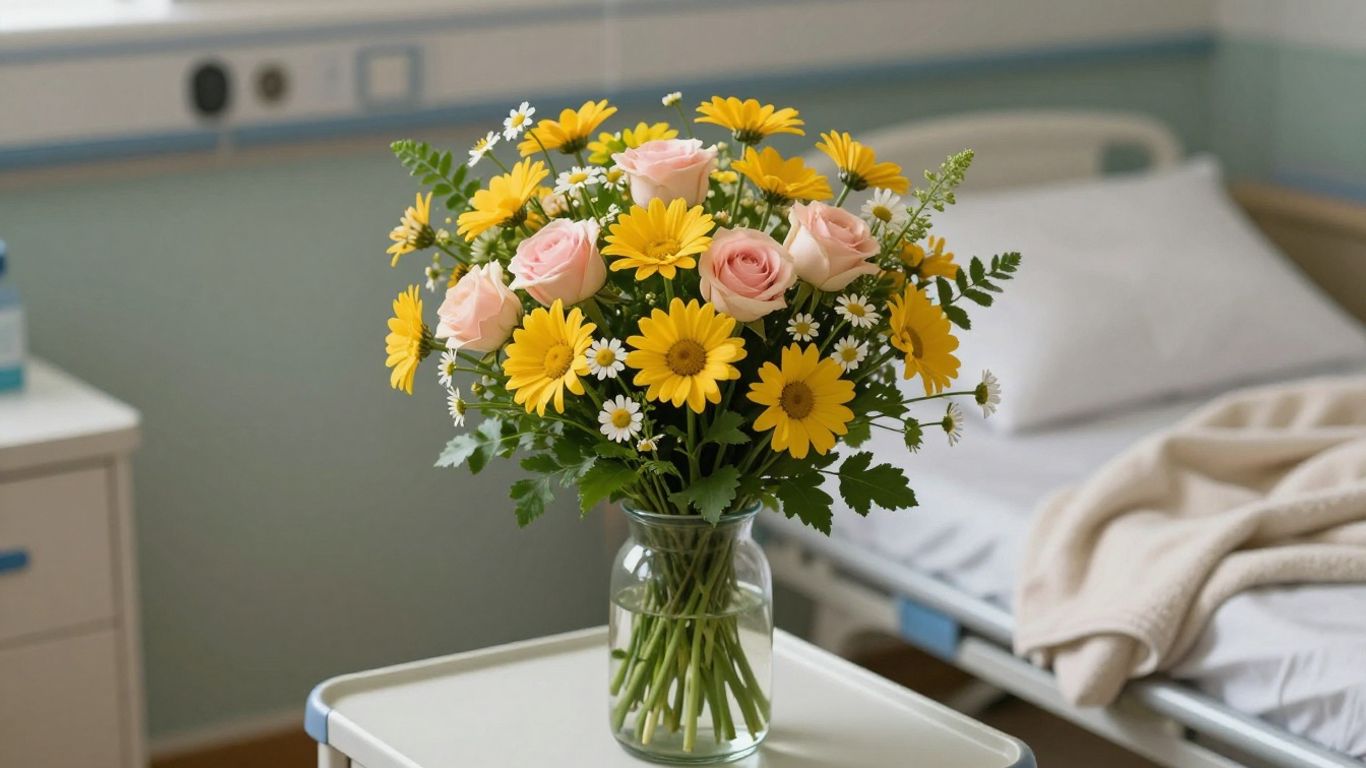
Low-maintenance arrangements for hospital rooms
Hospital rooms usually have limited surfaces, medical equipment, and staff who need clear access around the bed. A petite or medium arrangement is easier to place than a sprawling vase, and a ready-to-display container saves the recipient from finding one. Durable flowers with sturdy stems can be a sensible choice when daily care is uncertain.
Ask the florist for an arrangement that can tolerate a few missed water changes. A compact hospital flower arrangement may also help you compare container and allergy considerations before ordering.
Fragrance-free options for sensitive recipients
Strong fragrance can be unpleasant for someone experiencing nausea, migraines, allergies, or respiratory sensitivity. When in doubt, select flowers known for a mild or minimal scent and ask the florist to avoid heavily perfumed varieties. Keep foliage simple as well, since some greenery can release a noticeable aroma when handled.
It is considerate to check with the recipient or a close family member first. If direct contact is difficult, a fragrance-free arrangement in soft or cheerful colors is generally a safer expression of care than a highly scented bouquet.
Pet-safe flowers for home recovery
A bouquet sent to a home should be safe for the animals who share that space. Cats and dogs may nibble leaves, knock over vases, or drink from the water when no one is watching. Ask for pet-safe selections, place the arrangement well out of reach, and avoid loose decorative pieces that could be swallowed.
A plant may suit a long recovery, but only if the recipient wants ongoing care. Otherwise, fresh cut flowers can offer beauty without creating a lasting responsibility.
Select flowers with comforting meanings
Flower meanings are not fixed rules, and personal associations matter more than a traditional dictionary. Still, color and bloom choice can help you shape the feeling of the gift. Start with the emotion you want to share—optimism, calm, affection, or familiarity—and build from there. The arrangement should feel like it came from someone who knows the recipient, not from a formula.
Cheerful blooms that express optimism
Sunflowers, daisies, gerberas, and bright mixed blooms often create an open, sunny impression. Warm colors can make a room feel more animated, particularly when the recipient has been spending long hours indoors. Choose a balanced mix rather than a crowded mass of color, so the bouquet remains easy to look at from the bed or chair.
Cheerfulness does not have to mean loudness. A few yellow stems among white, peach, or pale pink flowers can feel encouraging while remaining gentle.
Calming flowers that convey peace and care
For someone who prefers quiet surroundings, consider pale colors, rounded shapes, and restrained greenery. Cream roses, lavender-toned blooms, lisianthus, and soft seasonal flowers can create a peaceful effect without demanding attention. A fragrance-free design is especially useful when calm matters more than sensory richness.
The container can reinforce that mood. A simple ceramic or clear glass vase often feels more restful than a highly decorative vessel, and its clean shape keeps the flowers at the center.
Personal favorites that make the gift more meaningful
A recipient’s favorite flower, color, or garden memory can matter more than any symbolic meaning. Perhaps they love the carnations their grandmother grew, the tulips that signal spring, or a particular shade of blue. Including that detail shows that the bouquet was chosen for them rather than selected from a generic “get well” category.
If flowers are not suitable, a small personal alternative can carry the same thought. A Garnet guide may help when a loved one enjoys stones or jewelry, while a Get Well Soon Song Gift may suit someone who finds comfort in music.
Design a practical get well arrangement
Good design balances beauty with use. Think about the recipient’s reach, the available table space, and whether the bouquet will arrive with everything needed to enjoy it. A practical arrangement is not less loving; it simply shows that you have considered the recipient’s actual day. Before ordering, picture where it will sit and who will care for it.
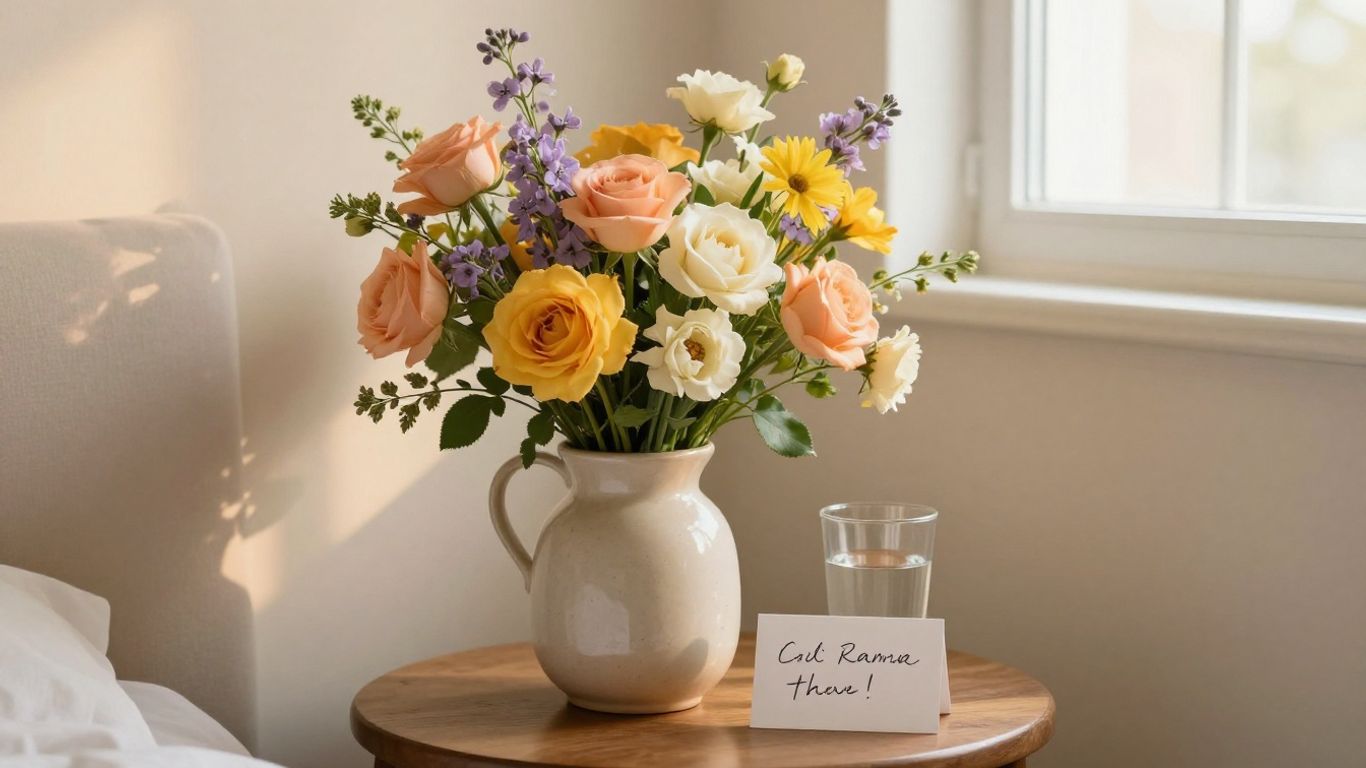
Choosing the right size for limited spaces
A low, compact arrangement is often ideal beside a hospital bed or on a small bedside table. Avoid tall designs that block the recipient’s view or wide ones that compete with food, medication, and personal belongings. For home delivery, ask about the room where the bouquet will live rather than assuming there is a large central table.
Size can also reflect the recipient’s energy. A small vase that offers a clear view of each flower may be more comforting than an elaborate display that requires rearranging.
Selecting a vase or container that is easy to use
Choose a stable container with a broad base, a manageable weight, and an opening that makes adding water straightforward. Lightweight plastic or durable ceramic may be preferable to delicate glass in a busy home or care setting. A handle can help someone with limited strength, but it should not make the vase easy to tip.
Ask whether the arrangement arrives already arranged in water. A florist who understands the setting can recommend a container that needs little handling and remains attractive as the flowers open.
Adding thoughtful extras such as a note or small gift
A small extra should make recovery easier, not add clutter. Consider a soft pair of socks, a favorite snack if permitted, a puzzle book, or a long charging cable. Check dietary restrictions and care instructions before including food, plants, candles, or scented products.
If you are assembling a wider care package, practical help can be just as personal as an object. For example, a private transfer could help with a necessary journey, while an unrelated LED distributor guide is useful only for someone whose current project genuinely involves commercial lighting. The point is to match any extra to a real need, not to fill space.
A short card is usually the most valuable addition because it explains the feeling behind the arrangement. Keep it close to the flowers and easy to read without unpacking the entire gift.
Personalize the message with love and encouragement
The card often lasts longer than the flowers, so give it a little thought. Write in your ordinary voice rather than trying to sound poetic or unusually positive. A few honest lines can feel more comforting than a polished message that does not sound like you. Let the recipient feel cared for, not managed.
Writing a warm and sincere card
Begin with affection and recognition: tell them you are thinking of them, missing them, or cheering them on. Mention the flowers briefly, then focus on the relationship. “I hope these bring a little color to today” is gentle, specific, and easy to receive.
You can also offer practical support, such as a meal, a call, or a quiet visit. Only make promises you can keep, and leave room for them to decline without guilt.
Balancing encouragement with sensitivity
Avoid language that suggests they should recover faster or stay cheerful for everyone else. “You’ve got this” may be encouraging for one person and exhausting for another. Try acknowledging that the process may be difficult while still expressing confidence in their support system and care.
Words such as “one day at a time,” “rest as much as you need,” and “there is no pressure to reply” can feel reassuring. They offer companionship without demanding optimism.
Including memories, humor, or personal details
A shared memory can make the card unmistakably yours. Recall a funny mishap, a favorite trip, or the way the recipient always brings color into other people’s lives. Humor works best when you know they are in the mood for it and when the joke never minimizes their condition.
Even a small detail—“I chose these because you always stop to admire yellow flowers”—can turn a standard delivery into a lasting moment. Personalization is less about length than attention.
Arrange delivery for the best experience
Delivery is part of the gift, not an afterthought. A bouquet that arrives during a procedure, after discharge, or when no one can safely carry it inside may miss its purpose. Confirm the destination, timing, and recipient’s current routine before placing the order. A little coordination protects both the flowers and the surprise.
Timing flowers around appointments and rest
Ask when the recipient is usually awake, comfortable, and available for deliveries. Home delivery may work best earlier in the day, while a hospital delivery may need to avoid rounds, therapy, or visiting restrictions. For a scheduled procedure, coordinate with a family member rather than relying on a narrow delivery window.
If the recovery is unpredictable, choose a florist with clear communication and flexible delivery options. A delayed bouquet can still be meaningful when the recipient knows it was sent with care.
Confirming hospital, hospice, or home delivery rules
Facilities may restrict flowers because of infection-control policies, allergies, space, or unit-specific rules. Call the front desk or care coordinator before ordering, and ask whether the recipient can accept a vase arrangement. Confirm the building name, room or unit, phone number, and any check-in instructions.
For home delivery, verify the exact address and whether someone can receive the package. If pets, gates, or apartment access could complicate arrival, include useful instructions without exposing unnecessary personal information.
Keeping the bouquet fresh after it arrives
Once the flowers arrive, trim the stems with clean scissors and place them in fresh water if the florist has not already done so. Remove leaves that sit below the waterline, keep the arrangement away from direct heat and sun, and change the water regularly. Follow the care note included with the bouquet because flower varieties differ.
For someone recovering, offer to handle these steps instead of assigning them a chore. If flowers are not welcome, a simple message and practical assistance may be the kinder choice. Even a cart recovery guide can remind a sender to complete an order thoughtfully, though the recipient’s needs—not urgency—should determine what is purchased.
Conclusion
The most loving get-well flowers are fresh, manageable, and chosen with the recipient’s comfort in mind. Pair them with a sincere message, confirm that delivery is welcome, and let the gesture offer companionship without making promises about healing.
Frequently Asked Questions
Can flowers really speed up recovery?
Flowers cannot replace medical treatment or directly control physical healing. They can, however, offer emotional comfort, brighten a room, and remind someone that they are supported.
What are the best get-well flowers for a hospital?
Choose a compact arrangement with mild or minimal fragrance and a stable, easy-care container. Always check the hospital’s rules before ordering.
Should I avoid fragrant flowers for someone who is sick?
Yes, strong scents may bother people experiencing nausea, headaches, allergies, or respiratory sensitivity. When uncertain, ask the recipient or choose fragrance-free flowers.
What flower colors are most comforting?
Warm yellow, peach, and coral can feel cheerful, while soft pink, lavender, cream, and white often create a calmer mood. The recipient’s personal preferences matter most.
Are flowers safe around pets?
Not every flower is safe for cats and dogs. Ask the florist for pet-safe options and place the arrangement where animals cannot nibble the stems or drink the vase water.
What should I write in a get-well card?
Write a warm, simple message that acknowledges the recipient and offers support without pressuring them to recover quickly. A personal memory can make the note especially meaningful.
When should I send get-well flowers?
Send them when the recipient is likely to be able to receive and enjoy them, avoiding procedures, rest periods, and facility restrictions. Confirm the delivery details first.