
Key Takeaways
Flowers for someone having a rough day do not need to be elaborate to feel meaningful. Choose with the person’s mood, preferences, and practical circumstances in mind.
- Match bright, calming, or gentle flowers to the kind of support they may welcome.
- Let favorite colors and flowers guide the choice whenever possible.
- Consider bouquets, plants, arrangements, and keepsakes based on their space and routine.
- Write a simple note that acknowledges the hard day without trying to fix it.
- Deliver thoughtfully, then check in with genuine care.
Match the flowers to how they may be feeling
The best flowers for someone having a rough day are chosen with feeling, not just appearance, in mind. A lively bouquet may help someone who needs a distraction, while softer colors can feel more appropriate when they are tired or overwhelmed. You do not need to diagnose their mood; simply think about what kind of presence you want the gift to offer. A thoughtful gesture says, “I’m here,” without demanding a cheerful response.
Choose cheerful blooms for an emotional lift
Bright flowers can add movement and color to a quiet room. Sunflowers, daisies, and vivid mixed arrangements often suit a friend who might appreciate a little visual energy or an uncomplicated reminder that someone is thinking of them. If you are looking for more ideas, this guide to encouragement flowers explores similarly uplifting choices.
Send calming flowers when they need comfort
When the day has been exhausting, a gentle arrangement may be kinder than something loud. Pale pinks, whites, blues, and purples can create a restful feeling, especially when paired with airy greenery. Fragrance matters too, so avoid strongly scented blooms if you are unsure what they enjoy.
Consider encouraging flowers for stressful moments
Stress can make even small decisions feel like work, so choose something easy to receive and care for. A modest bouquet with sturdy stems, or a plant that needs little attention, can offer beauty without creating another task. Add a note that gives them permission to have a quiet day rather than asking them to perform happiness.
Avoid assuming flowers will solve a serious problem
Flowers can express care, but they are not a substitute for practical support, medical care, or a serious conversation. If someone is grieving, ill, unsafe, or in crisis, pair the gift with a real check-in and appropriate help. The gesture works best as one part of a wider circle of care.
Choose the best flowers for encouragement
There is no single correct bloom for a difficult day. Flower meanings are flexible, and the recipient’s taste matters more than a traditional symbolism chart. Still, familiar flowers can help you begin, especially when you want the bouquet to carry warmth, hope, or friendship before you have found the right words.
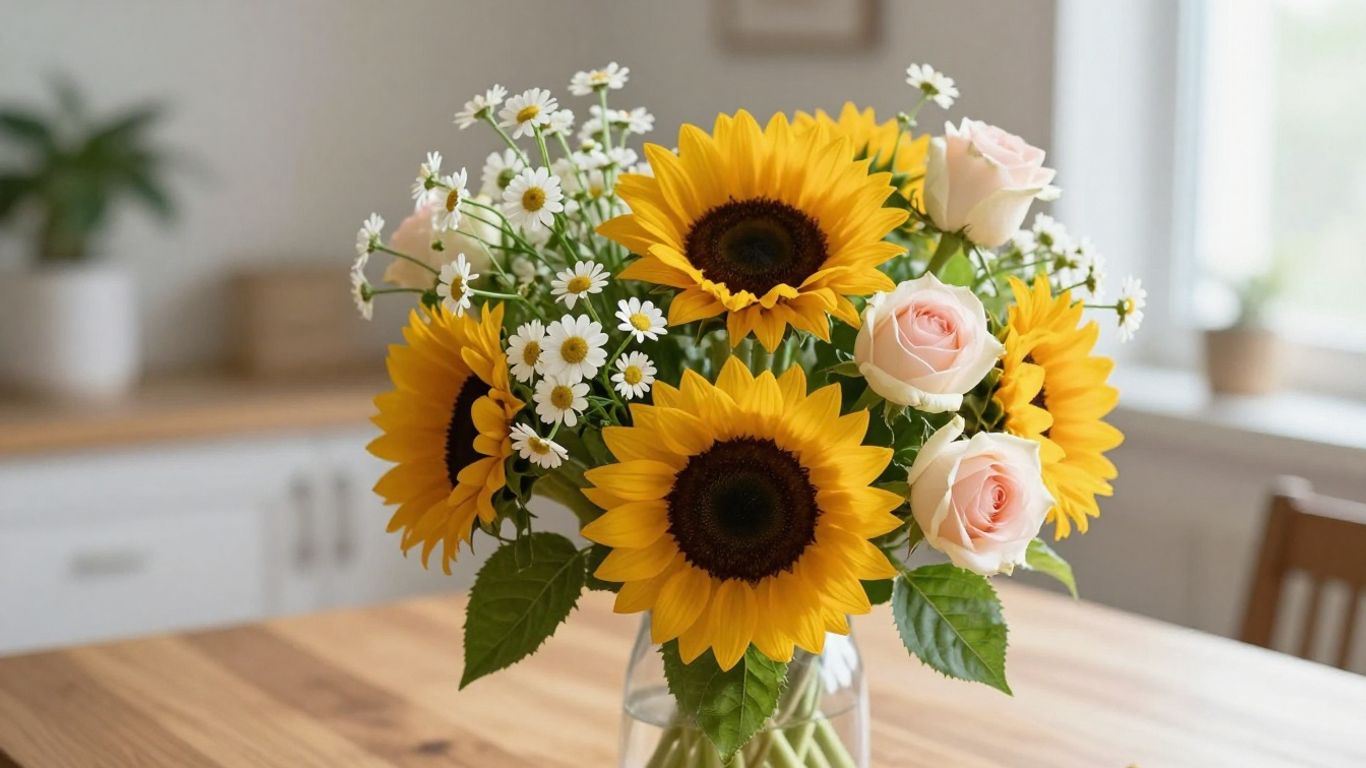
Sunflowers for warmth and optimism
Sunflowers have a naturally sunny presence, with broad faces and strong stems that make them feel generous and hopeful. They work well for a friend who enjoys bold color or needs a bright point in an otherwise gray week. A few stems can feel just as personal as a large bunch.
Daisies for a bright, uncomplicated gesture
Daisies are friendly, fresh, and easy to understand. Their simple shape suits a low-pressure gift for a coworker, neighbor, or friend when you want to say you care without making the moment feel heavy. Gerbera daisies add stronger color, while smaller white daisies keep the mood understated.
Roses for care and emotional support
Roses can communicate tenderness without being limited to romance. Yellow roses may suggest friendship, while pink roses often feel gentle and affectionate; choose the shade according to your relationship. If you want a shorter message to pair with them, a collection of flower card messages can help you find a natural starting point.
Tulips for fresh energy and hope
Tulips have a clean, lively shape that can make a room feel newly arranged. Their range of colors lets you tune the gesture, from sunny yellow to soft pink or calm purple. They are a good choice when you want to offer encouragement without making a grand statement.
Mixed bouquets for a personal combination of sentiments
A mixed bouquet gives you room to combine brightness, softness, and a little greenery. Include flowers that remind you of the recipient, or choose a palette based on their home. Personal details matter most when the gift is meant to feel like support from you, rather than a generic solution.
Select colors that communicate the right message
Color can influence the first impression of a bouquet, though it should never be treated as a fixed emotional code. The same shade may feel playful to one person and overwhelming to another. Think about their usual clothing, home decor, and favorite objects, then use flower color as a gentle guide. A florist can also create a balanced arrangement if you describe the feeling you hope to convey.
Yellow flowers for happiness and friendship
Yellow flowers feel open, warm, and companionable. They are especially fitting for a friend or colleague when you want to offer a little brightness without romantic overtones. Pair yellow blooms with white or green if a full, high-energy arrangement might be too much.
Pink flowers for tenderness and compassion
Pink can make a bouquet feel caring and soft. Blush tones suit a quiet expression of affection, while brighter pinks bring more energy. This color works for family, close friends, and anyone who may appreciate a gentle reminder that they are loved.
Orange flowers for energy and encouragement
Orange blooms bring warmth and momentum to a room. They can suit someone beginning a new chapter, facing a demanding project, or needing a nudge toward hope. Use orange as an accent if the recipient prefers muted colors.
Blue and purple flowers for peace and calm
Blue and purple arrangements often feel reflective and restful. They can be a thoughtful choice after a stressful event or during a period when the recipient needs quiet. Since naturally blue flowers are less common, a florist may use lavender, purple blooms, or blue-toned accents to create the effect.
White flowers for comfort and simplicity
White flowers offer a clean, peaceful appearance and can be appropriate when words feel difficult. They are versatile for sympathy, recovery, and private moments, but consider the recipient’s cultural associations before choosing an all-white arrangement. Greenery or a soft pastel accent can make the gift feel warmer.
Decide between a bouquet, plant, or floral arrangement
The form of the gift affects how easily it fits into the recipient’s life. A bouquet offers an immediate change in the room, while a plant asks for longer-term attention. Think about whether they have a vase, outdoor space, pets, or the energy to maintain something living. Presentation matters, but convenience is often the more caring choice.
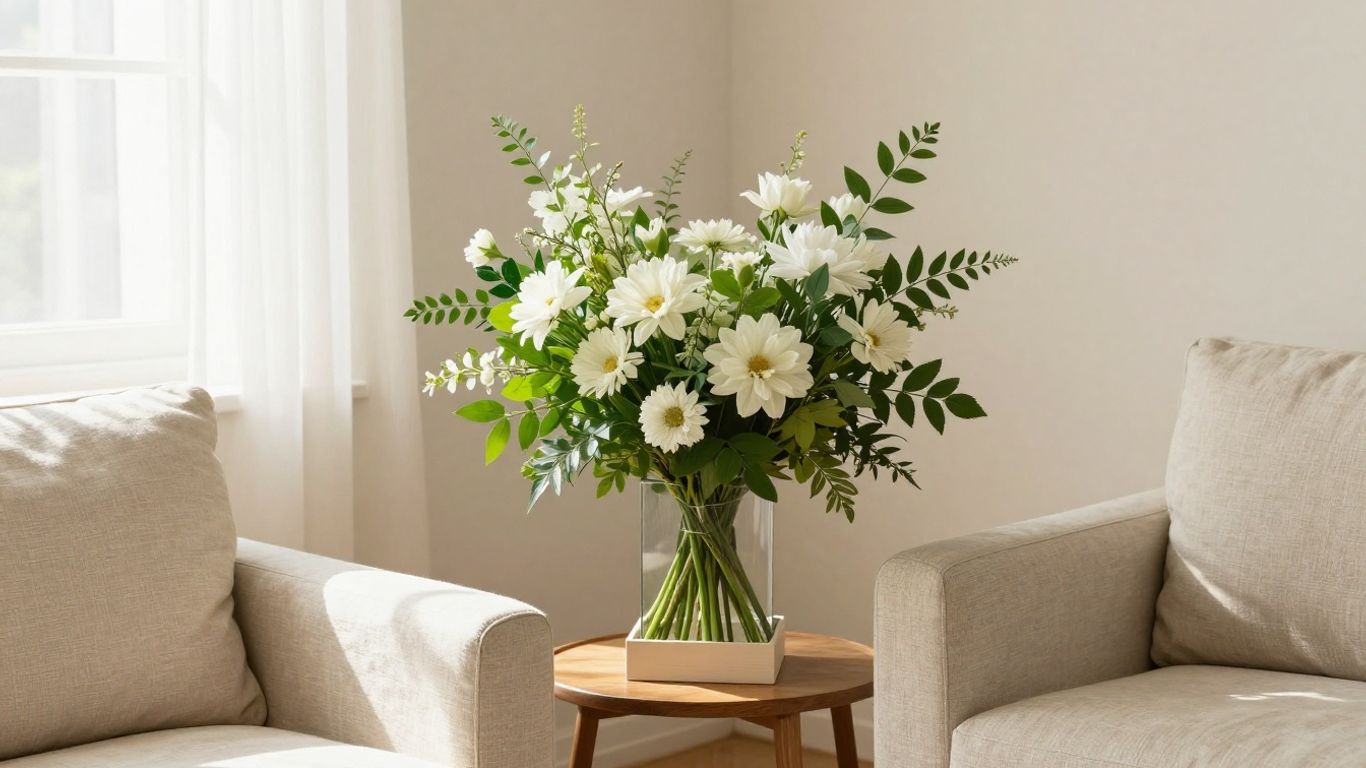
Bouquets for an immediate mood boost
A fresh bouquet creates a visible moment of comfort as soon as it arrives. It is a natural choice for a same-day surprise, a recovery gift, or a simple “thinking of you.” Choose a size they can place easily, and include care instructions if the arrangement needs them.
Potted plants for lasting encouragement
A potted plant can continue offering color after cut flowers fade. Select a hardy option if the recipient is busy or tired, and avoid making the gift feel like an obligation. A small flowering plant is often more manageable than a large indoor specimen.
Small arrangements for desks and apartments
Compact arrangements suit small kitchens, bedside tables, office desks, and shared homes. They are easier to move and less likely to crowd the recipient’s routine. Small does not mean impersonal; a carefully chosen color or flower can carry plenty of feeling.
Dried flowers for a keepsake gift
Dried flowers last beyond the original moment and can become a quiet reminder of support. They suit someone who likes natural textures or prefers gifts that require no maintenance. Keep them away from heat sources, flames, and places where dust easily collects.
Flower boxes for convenient delivery and presentation
Flower boxes can arrive arranged and protected, which makes them useful when a vase is unavailable. They also offer a tidy presentation for apartments, hospital rooms, and workplaces. Check how the flowers are meant to be removed and displayed so the recipient does not have to puzzle over the packaging.
Personalize the flowers for someone having a rough day
A little observation can make an ordinary bouquet feel remarkably specific. Consider what the person likes, what their day currently allows, and what might create extra work. If their difficult day involves health concerns, be especially attentive to food, fragrance, and household sensitivities; a guide to bladder-friendly choices illustrates why personal triggers can matter. The goal is comfort that fits, not a beautiful gift that creates another problem.
Include their favorite flower or color
A favorite bloom immediately makes the gesture more personal. If you do not know the exact flower, use a color they wear or decorate with often. You can also mention a shared memory, such as a garden visit or a flower that reminds you of home.
Consider allergies, pets, and household safety
Before ordering, ask discreetly about allergies and whether pets or young children share the space. Some common flowers and plants can be unsafe for animals, and strong fragrance may bother someone with sensitivities. When uncertain, choose a low-scent arrangement and confirm the florist’s recommendations.
Choose a size that fits their space and lifestyle
A large bouquet may be beautiful but difficult to display, especially in a small apartment or crowded hospital room. A compact arrangement can be easier to enjoy and maintain. Match the gift to their available surfaces, vase supply, and current energy.
Add a small treat or practical comfort item
A favorite tea, soft socks, a snack, or a handwritten card can make the flowers more useful. Ask about dietary restrictions before adding food. For broader ideas beyond flowers, this list of simple ways to help offers practical gestures that can accompany a caring delivery.
Time the delivery around their schedule
A delivery is most comforting when it does not interrupt sleep, work, appointments, or privacy. If they are away often, send the flowers to a trusted household member or choose a delivery window they can manage. A quick message asking whether they will be home can preserve the surprise without creating anxiety.
Write a supportive message to accompany the flowers
The card does not need to explain the situation or produce an instant change of mood. A few honest lines usually feel better than a long speech. Write as you would speak to the person, with warmth and enough space for them not to respond right away. The flowers bring the visual gesture; the note makes it yours.
Keep the note warm and simple
Try a sentence such as, “Thinking of you and sending a little color for today.” You might also write, “No need to reply—I just wanted you to know I’m here.” Short messages are easier to read when someone is tired or emotionally overloaded.
Acknowledge the difficult day without minimizing it
Avoid insisting that everything will be fine or telling them to stay positive. Instead, name what you know: “I’m sorry today has been so hard.” This validates their experience while keeping the focus on companionship rather than advice.
Offer specific help instead of vague promises
If you can help, make the offer concrete. Say that you can bring dinner Thursday, pick up groceries, or handle a small errand. Specific support is easier to accept than “Let me know if you need anything,” especially when the person has little energy for planning.
Use encouraging messages for friends, family, or coworkers
Adjust the tone to the relationship. A friend may appreciate an inside joke, a family member may want direct reassurance, and a coworker may prefer a brief note that respects boundaries. You can also write, “One step at a time—I’m rooting for you,” without pretending to know exactly what they need.
Know when a caring check-in matters more than a perfect phrase
Sometimes the best message is simply a follow-up call or text. If the situation sounds serious, ask directly how they are doing and listen without rushing to fill the silence. General wisdom about service and responsibility, such as these Robert Baden-Powell quotes, can inspire care, but presence is usually more valuable than borrowed words.
Order and deliver flowers thoughtfully
The practical details can determine whether the gesture feels smooth or stressful. Before placing an order, confirm the address, delivery date, recipient’s availability, and any building instructions. A local florist may be able to answer questions about substitutions more clearly than an automated checkout. When the order is right, the recipient can focus on the kindness rather than the logistics.
Choose same-day delivery for an urgent pick-me-up
Same-day delivery is useful when you learn that someone is struggling today, but availability varies by location and order time. Check whether the florist offers a realistic window rather than assuming the flowers will arrive immediately. If same-day service is unavailable, a thoughtful message now and flowers tomorrow can still feel timely.
Compare local florists and online flower services
Look at the arrangement style, delivery area, fees, and customer support before choosing. Local florists may offer more flexible substitutions, while online services can make ordering from a distance simple. The most suitable option is the one that can deliver the right kind of gesture reliably.
Check delivery windows and substitution policies
Flowers may change with the season, so read the substitution policy carefully. A replacement should preserve the general color, size, and feeling of the arrangement. If a particular flower is meaningful, contact the florist instead of relying on an automatic substitute.
Protect the surprise while respecting their privacy
Use a delivery address where the recipient can safely receive the gift. For a workplace or shared building, avoid revealing private details in the card or delivery notes. A surprise should feel welcome, not like an unwanted public announcement.
Follow up after the flowers arrive
Send a relaxed message later that day or the next morning. Ask whether the delivery reached them and, more importantly, how they are feeling. If they do not respond, do not take it personally; leave the door open and check in again when appropriate.
Conclusion
Choosing flowers for someone having a rough day is less about finding a perfect bloom than offering thoughtful, well-timed care. Let their preferences, circumstances, and comfort guide the color, format, note, and delivery. A modest bouquet paired with genuine presence can say enough: they are remembered, supported, and not facing the day entirely alone.
Frequently Asked Questions
What are the best flowers for someone having a rough day?
Sunflowers, daisies, tulips, roses, and mixed bouquets are all thoughtful options. The best choice depends on the recipient’s favorite flowers, color preferences, allergies, and current circumstances.
Are bright flowers always the right choice?
No. Bright colors can lift some people’s spirits, while others may prefer soft, calming shades during a difficult period. Consider the person rather than relying on a universal meaning.
What flower color expresses friendship?
Yellow is often associated with happiness, warmth, and friendship. A yellow bouquet can be especially suitable for a friend or coworker when you want to avoid a romantic message.
Should I send a bouquet or a potted plant?
Send a bouquet for an immediate gesture and a potted plant for longer-lasting encouragement. Choose the option that best fits the recipient’s space, routine, and energy level.
What should I write on a card with the flowers?
Keep the message short, sincere, and specific. Acknowledge that the day is difficult, say you are thinking of them, and offer practical help if you can provide it.
Is it appropriate to send flowers to a coworker?
Yes, provided the arrangement and note are professional and respectful. A small, cheerful bouquet delivered privately can communicate support without making the coworker feel exposed.
Should I check in after sending flowers?
Yes, a gentle follow-up shows that the gesture was part of ongoing care. Give them room if they do not respond, and continue checking in according to the seriousness of the situation and your relationship.