
Key Takeaways
The best flowers for your best friend who deserves the world are chosen with attention to who she is, what she is feeling, and the little details that make your friendship yours.
- Start with the feeling you want the bouquet to express.
- Match the flowers, colors, and arrangement to her personality.
- Use symbolism as a guide, not a strict rulebook.
- Think about delivery timing, allergies, pets, and practical details.
- Make the gift memorable with a personal note or shared reference.
Start with the feeling you want to express
Before choosing a flower, decide what you want her to feel when the bouquet arrives. You may be celebrating her steady presence, offering comfort, or simply reminding her that she matters. Once that feeling is clear, the flowers become more than a pretty arrangement; they become a message with shape, color, and scent.
Celebrate her everyday impact
Some friendships deserve to be celebrated on ordinary days. If she is the person who checks in, remembers the small things, or makes a difficult week feel lighter, choose a bouquet that reflects that constant warmth. Bright seasonal flowers can say, without much fuss, “I notice what you bring into my life.”
A spontaneous delivery is especially lovely when there is no birthday or achievement attached to it. The surprise itself makes the gesture feel sincere. For more inspiration around an unexpected bouquet, you might enjoy these just-because flower ideas, which focus on pairing blooms with a personal message.
Offer comfort during a difficult season
When your friend is grieving, exhausted, unwell, or facing an uncertain stretch, the flowers should feel gentle rather than celebratory. Soft colors, a simple shape, and a modest arrangement can communicate care without asking her to perform happiness. A note that says “I’m here, and you do not need to reply” may mean more than a grand declaration.
Consider whether she has space for a large arrangement or the energy to care for delicate stems. A compact bouquet or long-lasting plant may be kinder. The goal is not to fix the difficult season; it is to let her feel accompanied through it.
Mark a milestone or personal achievement
A new job, completed degree, creative project, move, recovery, or brave decision all deserve recognition. Choose flowers with some lift and movement, especially if the occasion calls for confidence and momentum. Strong stems, lively colors, or an arrangement that feels abundant can suit a moment when she is stepping into something new.
Try to name the achievement in the card rather than relying on a generic congratulations. Specific praise shows that you understand how much effort went into the milestone. Even a short sentence about the late nights, uncertainty, or courage behind it can make the bouquet feel wonderfully personal.
Say “thank you” without waiting for an occasion
Gratitude does not need a formal reason. You can send flowers after a long conversation, a favor she offered months ago, or simply because you realized how lucky you are to know her. A thoughtful “thank you” bouquet works best when it sounds like your natural voice instead of a polished greeting-card line.
For message inspiration, these thoughtful note ideas offer examples of connecting a flower gift to support, affection, and friendship. Borrow the feeling, not the wording, so the final note still sounds like you.
Match the flowers to her personality
Flowers feel more generous when they look as though they belong to the person receiving them. Think about her home, clothes, hobbies, and the way she responds to color. A bouquet for a minimalist will probably look different from one for a friend whose kitchen windowsill is full of lively pots and cuttings.
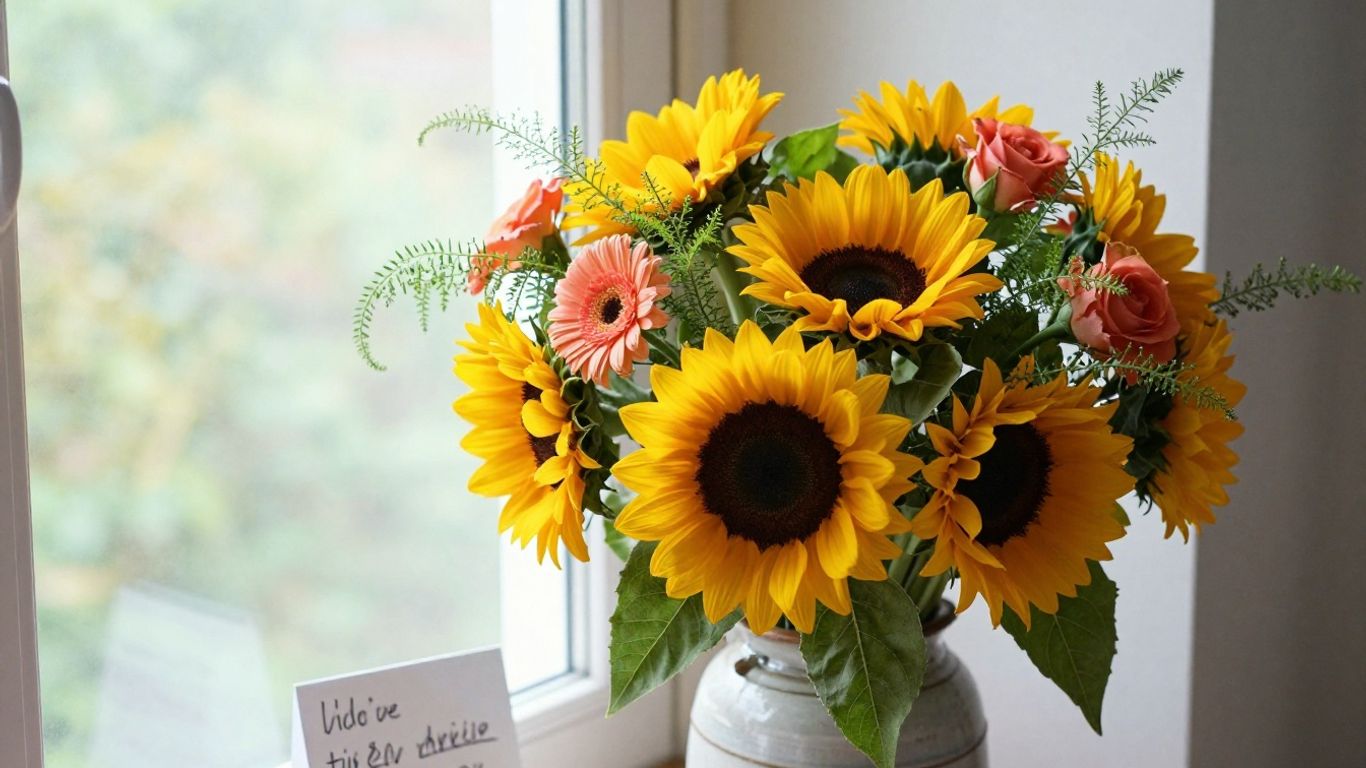
You do not need to identify her personality perfectly. Just notice the visual clues she gives you every day, then choose an arrangement that feels familiar rather than overly formal.
Choose cheerful blooms for an optimistic friend
For the friend who brings energy into every room, look for sunny colors and open-faced flowers. Yellow, orange, coral, and vivid pink can create a buoyant arrangement, while varied heights keep it from feeling too carefully controlled. Sunflowers, gerberas, zinnias, and bright mixed seasonal stems are natural places to begin.
A cheerful bouquet does not have to be enormous. Color and freshness create much of the effect. If she enjoys playful surprises, a mix of unexpected shapes may suit her better than a perfectly matched collection of one flower.
Pick elegant flowers for a refined style
A friend with a calm, polished style may appreciate restraint. Choose a limited color palette, clean lines, and flowers with graceful forms. White, cream, blush, deep plum, or a quiet combination of two shades can feel sophisticated without becoming distant.
Pay attention to the vessel as well. A simple ceramic container or clear glass vase may suit her home more than an ornate basket. The finished gift should look considered, but not so precious that she feels unable to enjoy it.
Select wildflowers for a free-spirited personality
For someone who loves flea markets, road trips, handmade objects, or a slightly untidy garden, a relaxed gathering of flowers can feel especially right. Wildflowers, airy grasses, small blossoms, and uneven textures create a sense of movement. The arrangement should seem gathered rather than engineered.
Seasonality works beautifully here. Flowers that are available at the moment often have the loose, natural quality that makes this style appealing. A few unusual stems can give the bouquet a story without requiring an elaborate explanation.
Consider low-maintenance plants for a practical friend
Some friends love the meaning of flowers but would rather receive something that lasts. A potted plant, hardy greenery, or a flowering plant can be a thoughtful alternative for someone who prefers useful gifts and uncluttered spaces. Choose based on her routine, not on an idealized version of plant ownership.
Ask yourself whether she has natural light, pets, and time for regular care. A small, manageable plant is more considerate than an impressive one that becomes a chore. Include simple care details so the gift feels welcoming from the first day.
Understand what different flowers can symbolize
Flower symbolism can help you find a starting point, especially when you are unsure how to translate a feeling into a bouquet. Still, meanings vary by culture, color, and personal experience, so treat them as suggestions rather than rules. The most convincing message usually comes from symbolism combined with something you know she genuinely likes.
Roses for admiration and lasting friendship
Roses can express admiration, affection, and a bond that has endured through different seasons of life. For a best friend, you do not have to choose a romantic color or arrangement. Peach, yellow, coral, or mixed garden roses can feel warm and appreciative, while a softer palette may suit a quieter friendship.
If roses are her favorite, let that preference lead. If she finds them too formal, use a few roses among looser seasonal flowers. The personal choice matters more than a fixed dictionary of meanings.
Sunflowers for joy, warmth, and encouragement
Sunflowers bring an immediate sense of brightness. Their size and open faces make them fitting for encouragement, congratulations, or a reminder that better days are still possible. They can stand alone in a simple bunch or add height and energy to a mixed arrangement.
They are especially fitting for a friend who is naturally sunny, though they can also be meaningful when someone needs a little light. Add greenery or smaller flowers to soften their strong presence if a full sunflower bouquet would feel too bold.
Tulips for affection and thoughtful appreciation
Tulips have a clean, graceful shape that works well for sincere affection. Pink tulips can feel tender, yellow ones cheerful, and white ones peaceful, though your friend’s own associations should guide the final choice. Their seasonal quality can also make the gift feel timely and fresh.
A bunch of tulips is lovely when you want the message to be uncomplicated. They look thoughtful without seeming overproduced, which makes them a good choice for a casual thank-you or a small surprise between friends.
Lilies and orchids for grace and strength
Lilies and orchids can bring an elegant, composed quality to a bouquet. They may suit a friend who is resilient, self-possessed, or drawn to sculptural flowers. Their forms add presence without needing many different varieties around them.
Take scent seriously, particularly with lilies. Some people love a fragrant arrangement, while others find strong perfume overwhelming. If you are uncertain, ask discreetly or choose a less-scented alternative that still has the graceful shape you want.
Mixed bouquets for a layered personal message
A mixed bouquet is often the best choice when your message has several layers. You might combine bright flowers for her humor, soft blooms for your affection, and textured greenery for the steadiness she brings to your life. The result can feel like a portrait made from small details.
A few simple pairings can help you make the choice without overthinking it. Use this as a loose guide, then adjust it for her taste:
| Feeling or occasion | Flower direction | Helpful color idea | Overall effect |
|---|---|---|---|
| Everyday appreciation | Mixed seasonal blooms | Coral, yellow, or pink | Warm and lively |
| Comfort and support | Soft flowers with greenery | White, cream, or pale blue | Gentle and calm |
| Personal achievement | Upright, energetic stems | Orange, purple, or bright yellow | Confident and celebratory |
| Quiet friendship | Tulips or garden flowers | Blush, peach, or lavender | Sincere and graceful |
The table is a starting point, not a prescription. If she dislikes roses but loves daisies, the daisy bouquet will carry more meaning because it reflects her rather than a tradition.
Build a bouquet around her preferences
Once you have a feeling and a general style in mind, narrow the arrangement through the details she has already shared with you. Favorite colors, disliked scents, and the way she decorates her home can tell you more than a list of symbolic meanings. Her preferences are the real brief.
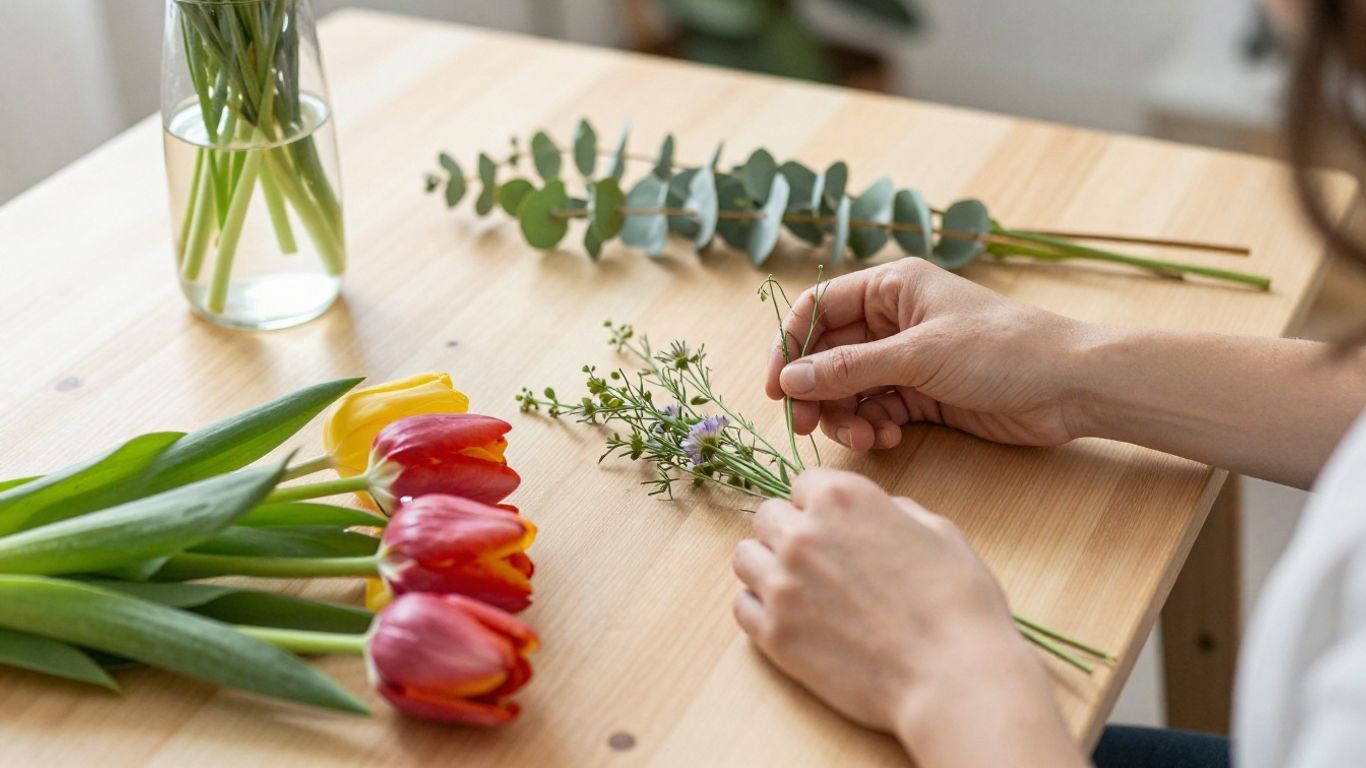
A florist can help translate those details into flowers that are fresh and available, but you should still have a clear personal idea before you order. Even one specific clue can make a standard arrangement feel chosen rather than selected at random.
Use her favorite colors as the foundation
Color is usually the quickest way to make a bouquet feel like it belongs to her. Start with one shade she wears often or uses around her home, then build around it with neighboring tones or a quiet contrast. A friend who loves green may prefer a leafy, botanical arrangement, while someone drawn to jewel tones may enjoy deeper purples, reds, and pinks.
You do not need to match her favorite color exactly. Sometimes a nearby shade creates a more sophisticated result. If blue is her color, for instance, lavender, white, and silvery foliage may feel more natural than trying to find a completely blue bouquet.
Combine complementary flowers and textures
A bouquet becomes more interesting when flowers have different shapes and surfaces. Pair rounded blooms with tall stems, fine greenery with broad leaves, or soft petals with seed heads and grasses. Contrast gives the eye somewhere to move and helps the arrangement feel abundant without simply adding more flowers.
Keep the combination coherent by repeating one color or texture. Too many unrelated elements can make the gift feel busy. A small amount of variation usually does more than a crowded collection of every flower available.
Avoid scents or blooms she may dislike
A beautiful arrangement is not thoughtful if it triggers a headache, allergy, or strong aversion. Think about what she has mentioned in the past and whether she shares a home with someone sensitive to pollen or fragrance. When you are unsure, choose lower-scent options and ask the florist about practical alternatives.
It is also worth checking whether pets may reach the flowers. Some popular blooms can be unsafe for animals, so a pet-owning friend may appreciate a safer arrangement or a plant selected with household considerations in mind. A little caution protects the pleasure of the gift.
Add meaningful details such as greenery or seasonal stems
Greenery can carry its own memory. Perhaps your friend loves eucalyptus, grows herbs, or once brought home a particular branch from a trip. Including a familiar texture or seasonal stem can make the bouquet feel connected to a shared place or story.
You can also ask for flowers that are naturally available at the time of year you are sending them. Seasonal stems often look fresher and more relaxed. When the arrangement has one personal detail and a little natural variation, it feels less like a template.
Choose the right way to send the flowers
The delivery method shapes the experience almost as much as the flowers themselves. A hand-delivered bouquet can turn into an afternoon together, while a surprise delivery can reach her during a busy day and create a welcome pause. Think about her schedule, your distance, and whether she enjoys public gestures or quieter ones.
The best choice is the one that makes receiving the flowers easy. A gorgeous bouquet that arrives when she is away, blocks a doorway, or requires immediate attention may create more work than delight.
Decide between local delivery and hand delivery
Local delivery is useful when you live far apart or want the surprise to arrive while you are not there. It also lets her enjoy the moment privately, which may suit a friend who dislikes being the center of attention. Hand delivery feels more intimate and gives you the chance to see her reaction, share a hug, or stay for a cup of tea.
If you hand over the bouquet, bring it in a container that is easy to carry and place somewhere stable. If you arrange delivery, confirm the address, access instructions, and a safe location for the flowers. Small logistics keep the gesture smooth.
Select a bouquet size that fits the occasion
Size should follow the message and her living space. A compact bunch can be perfect for a casual thank-you, a desk, or a small apartment. A larger arrangement may suit a major milestone, a shared celebration, or a friend who loves making a visual statement.
Consider the vase she is likely to have available. If the bouquet is very full, a suitable vessel makes the gift easier to enjoy. Otherwise, a smaller arrangement with strong color and shape may have more impact than an oversized one that needs rearranging.
Plan delivery timing for maximum impact
A surprise is most effective when it fits naturally into her day. Morning delivery can brighten a demanding workday, while late afternoon may give her time to enjoy the flowers at home. For birthdays and milestones, schedule early enough that the bouquet is part of the celebration rather than an afterthought.
Give yourself room for delays, especially around holidays or severe weather. If the flowers are meant to support her through a difficult moment, a sincere message delivered promptly is usually better than waiting for a perfect date.
Account for pets, allergies, and household considerations
Before sending anything, consider the home the bouquet is entering. Ask whether she has cats, dogs, young children, allergies, or a roommate who may need to accept the delivery. You can quietly check with someone close to her if you do not know the answer.
A few practical questions can prevent an awkward surprise:
- Does she have a vase or need one included?
- Will someone be home to receive the flowers?
- Are there pets or allergies that affect the flower choice?
- Does she prefer cut flowers, a plant, or a small arrangement?
These details do not make the gift less romantic. They show that you are thinking about her real life, not only the photograph you imagined when choosing the bouquet.
Make the gift feel personal and memorable
Flowers are temporary, which is part of their charm. They mark a moment, brighten a room, and then become a memory rather than another permanent object to store. The personal touches around the bouquet are what help that moment stay with her.
You do not need to add expensive extras. A message that could only come from you, a familiar snack, or a small reference to your shared history will usually matter more than an elaborate package. For additional ideas about celebrating a close friend, these birthday gift suggestions include flowers alongside other thoughtful gestures.
Write a heartfelt note that sounds like you
Begin with her name and say the thing you might say during a real conversation. Mention the quality you appreciate, the way she has helped you, or the reason you thought of her today. Short is fine; honest is better than elaborate.
You could write, “You make hard weeks feel manageable, and I wanted you to have something bright today.” Or be more casual if that is how you speak. The note should sound like it came from your friendship, not from a catalogue.
Include an inside joke or shared memory
A private reference turns a beautiful bouquet into your bouquet. Mention the road trip where every flower looked like a roadside weed, the café where you first met, or the phrase you still repeat after a ridiculous shared mishap. The memory does not have to be profound to be meaningful.
Keep the reference kind and easy to understand. If the card might be read by someone else, avoid anything that could embarrass her. The best inside jokes create an immediate smile and bring the two of you into the same moment.
Add a small companion gift she will use
A companion gift can extend the gesture without competing with the flowers. Choose something modest and specific: her favorite tea, a pastry from a local bakery, a useful notebook, or a snack she rarely buys for herself. Practicality can be affectionate when it reflects what she actually enjoys.
Avoid adding items just to make the package look larger. One well-chosen extra is enough. If she prefers experiences, a promise to meet for lunch or take a walk may be more welcome than another object.
Share simple flower-care instructions
Care instructions make it easier for her to enjoy the arrangement for as long as possible. Explain how to trim the stems, where to place the vase, and when to refresh the water. If the flowers arrived arranged by a florist, keep the guidance brief and practical rather than turning it into a project.
You can tuck the instructions into the card or send them in a message after delivery. Mention any special care the specific flowers need, particularly if the arrangement contains delicate stems or a plant. Help should feel like part of the gift, not homework.
Capture the moment without taking away from it
A photograph can preserve the surprise, but ask before posting or taking a close-up of her reaction. Some people love a dramatic delivery photo; others would rather enjoy the moment privately. Let her decide whether the memory belongs online, in a shared album, or simply between the two of you.
If you are together, take one relaxed picture after the initial surprise has passed. Then put the phone away. The flowers are there to create connection, not to produce proof that you made a thoughtful gesture.
For a visual guide to choosing and arranging flowers for a close friend, this friendship flower inspiration may give you a few more ideas. And if you are celebrating a group of close women or planning a shared outing, these friendship celebration ideas can help you turn a bouquet into time spent together.
Conclusion
Choosing flowers for your best friend who deserves the world is less about finding a flawless bouquet and more about paying attention. Let her personality, your shared memories, and the feeling you want to express guide the colors, flowers, timing, and note. A thoughtful arrangement does not need to be extravagant; it only needs to make her feel seen.
Frequently Asked Questions
What are the best flowers for a best friend?
The best flowers are the ones that suit her personality and preferences. Sunflowers, tulips, roses, mixed seasonal bouquets, and thoughtful plants can all work well when their colors and style feel personal.
Can I send flowers to my best friend without an occasion?
Yes. A spontaneous bouquet can be especially meaningful because it shows appreciation without being tied to a birthday or holiday. A short note explaining that you were thinking of her makes the gesture feel intentional.
What color flowers are appropriate for a best friend?
Choose colors she already enjoys or wears often. Yellow, pink, orange, coral, lavender, white, and mixed seasonal shades can all express friendship, but her personal taste matters more than a fixed color meaning.
Are roses too romantic for a best friend?
Not necessarily. Roses come in many colors and styles, and they can express admiration, gratitude, and lasting affection between friends. If you are concerned about the tone, choose a relaxed garden style or combine roses with other flowers.
What should I write on a flower card for my best friend?
Write something specific and natural. Mention what you appreciate about her, why you thought of her, or a memory that belongs to both of you. A sincere two-sentence note is usually enough.
Should I send a bouquet or a potted plant?
Choose a bouquet for a moment of color and celebration, or a plant if your friend prefers lasting, practical gifts. Consider her available space, light, pets, and willingness to provide regular care before deciding.
How can I make a flower gift more personal?
Use her favorite colors, avoid scents she dislikes, include a shared memory, and select a delivery time that suits her routine. A small companion gift or simple care instructions can make the gesture even more considerate.