
Key Takeaways
A comforting bouquet begins with attention, not price. Choose flowers that suit the person’s feelings, add words that sound like you, and let the gesture leave room for whatever they are carrying.
- Consider the recipient’s situation before choosing color or flower type.
- Keep fragrance, allergies, pets, and delivery details in mind.
- Use a note to acknowledge difficult feelings rather than dismiss them.
- A modest arrangement can feel more personal than an extravagant one.
- Continue showing up after the flowers arrive.
Understand what makes flowers feel comforting
Flowers can soften a room, but their emotional effect depends on context. A bouquet meant to comfort should feel considered rather than automatic. The most moving gestures often come from noticing what someone might actually welcome. That is the heart of choosing flowers that arrive with a shoulder to cry on.
The emotional language of color and flower type
Color quietly sets the tone. Yellow and warm orange can bring energy to a friend who needs a lift, while white, cream, blush, and muted lavender may feel more fitting when someone is grieving or exhausted. The flower itself matters too, but personal associations matter more than any fixed dictionary of meanings.
If you know their favorite bloom, start there. A familiar flower can feel like a small reminder of home, an old garden, or an ordinary day before things became difficult. For broader ideas about choosing flowers for friends, this friendship flowers guide offers another useful starting point.
How fragrance can soothe or overwhelm
Fragrance is intimate, and not everyone experiences it as comforting. Strong lilies, hyacinths, or heavily scented roses may be beautiful but overwhelming in a hospital room, a small apartment, or a home with someone sensitive to smells. When in doubt, choose lightly scented flowers and let the arrangement’s shape and color do more of the talking.
It is also worth asking whether the recipient has allergies. A short, discreet question can prevent a thoughtful gesture from becoming an uncomfortable one. Flowers should bring ease, not another problem to manage.
Choosing arrangements that feel warm rather than formal
The shape of a bouquet changes its emotional temperature. Loose, garden-style arrangements tend to feel approachable, while tightly structured designs can read as ceremonial or formal. A familiar vase, soft foliage, and varied heights often make flowers feel as though they belong in the recipient’s everyday life.
Think about the person’s home and personality. Someone who loves clean lines may prefer a simple arrangement, while a colorful, eclectic friend might enjoy something abundant and slightly untamed. The best choice feels like it was selected for them, not for a generic occasion.
When simplicity communicates more than extravagance
A small bunch can say, “I was thinking of you,” without asking the recipient to perform gratitude. This matters when they are tired, grieving, or short on space. A quieter gesture can feel deeply generous because it leaves emotional room around the person.
That principle applies to the presentation too. One kind note, a manageable vase, and flowers that do not require elaborate care may be more welcome than a grand display. Comfort is often found in what does not demand anything back.
Match the bouquet to the recipient’s situation
The right bouquet changes with the circumstances. Grief, illness, heartbreak, and private stress all call for different levels of brightness and ceremony. Before ordering, pause over what the person is facing and what kind of attention they usually appreciate.
A useful choice is not necessarily the most impressive one. It is the one that meets them where they are, whether that means offering warmth, marking a hard day, or simply reminding them they are not alone.
Supporting someone through grief
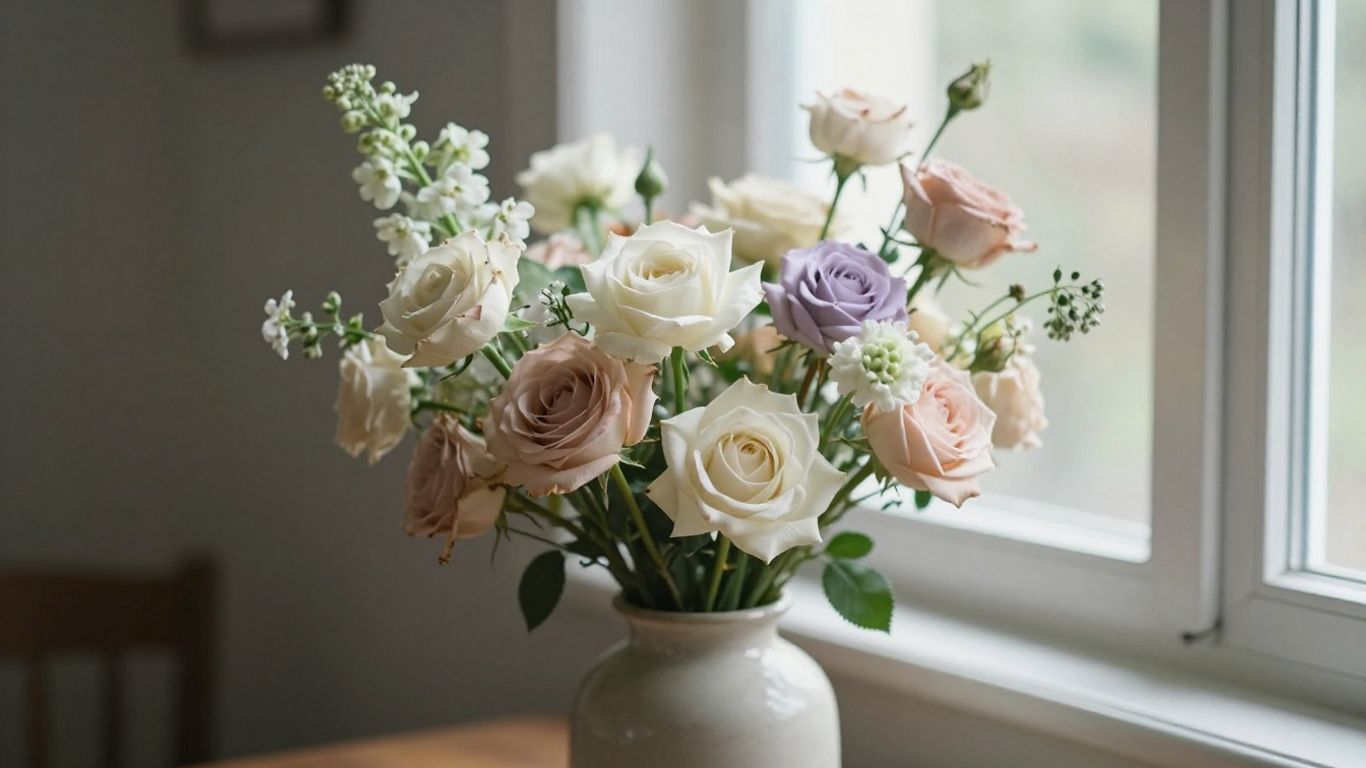
For grief, choose flowers with a calm presence rather than a celebratory flourish. White, cream, pale pink, and soft green can feel respectful, though a loved one’s favorite colors may be even more meaningful. If you knew the person who died, a flower connected to a memory can make the gesture personal without becoming theatrical.
Your note should not try to explain the loss or promise that everything will be fine. A simple acknowledgment of the person’s pain is usually kinder. Sympathy arrangements can also be guided by this condolence flowers resource, particularly when you are unsure how formal the gesture should be.
Encouraging a friend after a breakup or setback
A friend recovering from a breakup or disappointment may welcome more color, but cheerfulness should not become pressure. Sunflowers, yellow roses, daisies, or a mixed bouquet can bring light without pretending the hard part never happened. Add a line that recognizes both truths: you know they are hurting, and you are still here.
Avoid turning the flowers into a speech about moving on. The recipient may need company before advice, and a bouquet can quietly offer that distinction.
Showing up for someone facing illness or stress
When someone is ill or under sustained stress, practical details matter as much as appearance. Choose an arrangement that is easy to place, does not need complicated trimming, and will not crowd a bedside table. If they are in hospital, check the facility’s policies before arranging delivery.
A care package can be useful alongside flowers, but it should reflect the person’s needs rather than your assumptions. Small comforts, a favorite snack, or a gentle note may be more helpful than another decorative item.
Celebrating quiet resilience without ignoring difficult feelings
Not every difficult season has a clear milestone. Sometimes flowers are right because someone has kept going through an ordinary, draining stretch. In that case, choose something encouraging but not relentlessly upbeat. You can celebrate their steadiness while still admitting that the days have been hard.
A message such as “No need to reply—I’m thinking of you” gives the gift a soft landing. It offers care without requiring the recipient to turn their pain into a positive story.
Choose flowers that express the right message
Flower symbolism can be useful, but it is never a substitute for knowing the person. The same rose, tulip, or orchid can feel romantic, friendly, formal, or familial depending on the relationship and the surrounding words. Let symbolism guide you lightly, then trust your knowledge of the recipient.
The safest bouquet is one whose tone matches the relationship. If you are worried about being misunderstood, choose an open, conversational note that makes your intention clear.
Sympathy flowers versus friendship flowers
Sympathy flowers usually lean toward calm colors and restrained forms, while friendship flowers can be brighter and more relaxed. Still, there is no single correct palette. A grieving friend might appreciate vivid flowers because they remind them of the person they lost, and a cheerful bouquet may comfort someone who has had a terrible week.
The note does much of the clarifying. “I’m here with you” reads differently from “Congratulations,” even when the flowers are identical. When gratitude is the main feeling, a thank-you flower guide can help you think through color, type, and tone.
When to send bright, cheerful blooms
Bright flowers work well when the recipient enjoys color or when you are offering encouragement after a manageable setback. They can suit a birthday, a new beginning, or a friend who needs a little visual warmth in the room. The gesture feels most sincere when it does not insist that the recipient be cheerful in return.
Pair the brightness with language that stays grounded. “I hope this gives you one pleasant corner of the day” is gentler than “Smile—you’ll feel better soon.”
When soft, understated arrangements are more appropriate
Soft arrangements are often a good choice for grief, recovery, overwhelm, or a professional setting where an exuberant display might attract unwanted attention. Pale tones, greenery, and a compact shape can communicate care without making the recipient explain themselves to everyone who sees it.
Understated does not mean impersonal. A favorite flower, a familiar color, or a vase chosen for their home can make a restrained bouquet feel remarkably specific.
How to avoid messages that feel forced or overly sentimental
Skip grand promises, clichés, and language that tells someone how they ought to feel. You do not need to turn the bouquet into a lesson about strength. Say what you know: that you are thinking of them, that you remember, or that you can help with something concrete.
A quick test helps: would you say the sentence aloud in your normal voice? If not, shorten it. Natural words usually carry more comfort than polished ones.
Add a personal touch beyond the bouquet
Flowers are a beginning, not the entire message. The note, timing, and small details around the delivery can make the gesture feel distinctly yours. Personalization does not require a long story or an expensive extra.
Sometimes it means remembering what the recipient likes. Sometimes it means respecting their need for quiet. The most thoughtful addition is the one that reduces distance without creating another obligation.
Writing a note that acknowledges their feelings
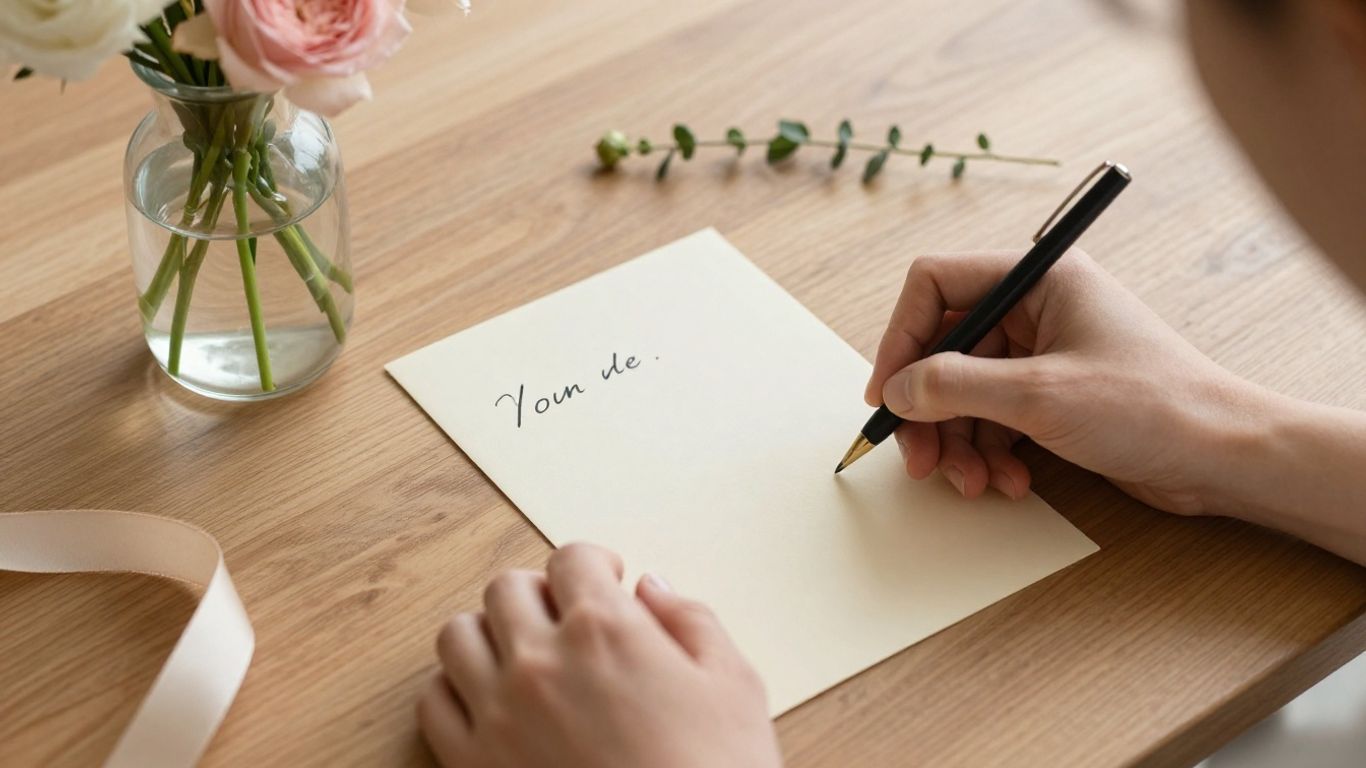
Start by naming the moment without trying to solve it. “I’m sorry this is such a hard week” or “I know you have a lot on your plate” can feel more supportive than an optimistic slogan. Then offer presence in a way that does not require an immediate answer.
Keep the note short enough to read in one breath. A few honest lines can stay with someone longer than a paragraph of advice.
Sharing a meaningful memory or inside reference
A shared memory can bring warmth when it is offered gently. Mention the rainy café where you both hid from a storm, the plant they kept alive against the odds, or a phrase that always makes them laugh. Such references remind the recipient that your care is rooted in knowing them.
Avoid using a happy memory to hurry them out of sadness. Let it sit beside the difficult feeling rather than compete with it.
Including practical gifts for comfort and care
Practical extras can be welcome when they are chosen with care. Consider tea, a soft snack, a small candle only if you know they enjoy fragrance, or something useful for rest. For a person managing daily routines independently, even guidance on a comfortable shower brush for seniors may be relevant in a broader care package, provided it genuinely suits their needs.
Keep the bouquet from becoming clutter. A few well-chosen items are easier to receive and use than a large basket assembled without the person in mind.
Knowing when a simple message is more considerate
Sometimes the recipient is overwhelmed, private, or receiving many messages. In those moments, flowers with a brief note may be enough. “Thinking of you. No need to respond” gives affection without opening a conversation they cannot manage.
The same restraint applies when practical matters are already pressing. If a family is juggling bills or a move, quiet emotional support may be preferable to a collection of things they must sort and store. Even unrelated decisions, such as reading about clearer mortgage applications, can remind us that reducing complexity is often a form of care—but the bouquet itself should remain focused on the person.
Make delivery feel thoughtful and respectful
A beautiful arrangement can arrive at the wrong moment. Delivery is part of the message, especially when the recipient is grieving, unwell, or working through a stressful change. A little planning protects the surprise while respecting their routines and boundaries.
You do not need to control every detail. You simply need to avoid making the person solve avoidable problems when the flowers arrive.
Choosing the right delivery time
Daytime delivery is usually practical for a home, but not always for someone who works long hours or has medical appointments. If the flowers are for a difficult anniversary, arriving earlier in the day may give them privacy before visitors or obligations begin.
For a workplace, consider whether the recipient would enjoy public recognition or prefer discretion. A surprise is only kind when it feels welcome.
Confirming the recipient’s preferences and availability
If you can ask without spoiling the gesture, check whether they will be home and whether they have a preferred delivery window. You might also ask a trusted relative or friend to help, particularly if the recipient is recovering or avoiding visitors.
Some people love surprises; others find unexpected deliveries stressful. Knowing that difference is more valuable than preserving a perfect reveal.
Sending flowers to a home, hospital, or workplace
Each location has its own practical concerns. A home delivery may need a safe place out of the sun, a hospital may restrict certain flowers or containers, and a workplace may have reception procedures. Include accurate contact details and make sure the recipient can manage the arrangement once it arrives.
If you are coordinating several forms of communication or visual material around a community gesture, thoughtful videographer and photographer planning can help keep the tone consistent. That is separate from the flowers, but the same principle applies: plan around the people involved, not just the finished presentation.
Handling allergies, pets, and household sensitivities
Ask about allergies and pets when possible. Some flowers, pollen, foliage, and floral treatments may be unsuitable for a particular home. A pet owner may also prefer an arrangement kept well away from curious animals, or a non-floral alternative altogether.
When you cannot confirm details, tell the florist what you know and choose a simpler, lower-risk arrangement. Thoughtfulness includes being willing to change the plan.
Offer ongoing support after the flowers arrive
The bouquet will eventually fade, but the feeling behind it does not have to. A quiet follow-up can matter more than the initial surprise, especially when the recipient’s situation is ongoing. Support becomes believable through small, repeated acts.
Do not measure the gesture by whether they send a perfect thank-you. Their silence may mean they are tired, grieving, or simply taking in the kindness.
Following up without pressuring them to respond
Send a short message after a few days, and remove the expectation of a reply. “Just checking in; no need to write back” is enough. If they do respond, listen before offering solutions.
A second message should not become a demand for an update. Let the recipient decide how much of their experience they want to share.
Pairing flowers with a check-in or shared activity
A walk, a quiet coffee, or a grocery run can extend the care in a natural way. Offer something specific rather than saying only, “Let me know if you need anything.” Specific offers are easier to accept.
You might say, “I’m free Thursday evening and can bring dinner,” or “Would you like company while you sort through the week?” The invitation leaves room for no.
A simple video about choosing meaningful flowers can offer inspiration, but it should never replace direct attention to the person. Use outside ideas as prompts, then return to what you know about their actual needs.
Recognizing when they may need practical help
Sometimes flowers reveal that a person is struggling more than they have said. Watch for signs that ordinary tasks are becoming difficult, and offer help in concrete, manageable ways. These may include a meal, transport, errands, childcare, or company at an appointment.
A helpful offer has clear limits and a clear time. That makes it easier for both people to understand what is being offered without turning care into an indefinite promise.
Letting consistent presence matter more than one grand gesture
One impressive bouquet can be lovely, but dependable attention is what builds trust. Keep remembering birthdays, difficult anniversaries, and ordinary Tuesdays. Send a message, make a call, or show up with something useful when the moment is right.
Friendship often grows through this unremarkable consistency. As this reflection on nurturing real friendships suggests, connection needs tending rather than a single dramatic display.
Conclusion
The most comforting bouquet is not necessarily the largest or brightest. It is the one chosen with patience, delivered with respect, and accompanied by words that allow the recipient to feel exactly as they do. Choose for the person in front of you, then keep showing up after the flowers begin to fade.
Frequently Asked Questions
What flowers are best for comforting someone?
Choose flowers that suit the recipient’s personality and situation. Soft colors and lightly scented blooms are often versatile, but a favorite flower can feel more personal than a traditional sympathy choice.
Are bright flowers appropriate for someone who is grieving?
They can be, especially if bright colors remind the person of someone they love or bring welcome warmth. Let your knowledge of the recipient guide you, and avoid treating cheerfulness as a requirement.
What should I write on a sympathy flower card?
Acknowledge the loss, express your care, and avoid trying to explain or fix the grief. A short message such as “I’m thinking of you and am here” is often enough.
How can I avoid sending flowers with a romantic message?
Choose relaxed colors, mixed blooms, or the recipient’s favorite flowers, and make the relationship clear in the note. The overall tone matters more than one specific flower.
Is it better to send flowers to someone’s home or workplace?
It depends on their privacy, schedule, and preferences. Home delivery is usually more personal, while workplace delivery may be welcome for someone who enjoys public support.
What if the recipient has allergies or pets?
Ask discreetly when possible, and tell the florist what you know. You can choose low-scent flowers, a non-floral gift, or another gesture that will be safe in the household.
Should I follow up after sending flowers?
Yes, but keep the follow-up gentle and free of pressure. A brief message that does not require a reply can reassure someone that your support did not end with the delivery.