
Key Takeaways
Flowers can become gentle reminders of worth when their colors, meanings, or personal associations speak to you.
- Sunflowers, irises, and proteas can suggest confidence, courage, and resilience.
- Roses, peonies, and daffodils offer ways to think about self-love and renewal.
- Choose flowers by what they mean to you, not by tradition alone.
- A bouquet, journal entry, or small milestone can turn flowers into a daily reminder.
- Caring for blooms can be a soothing ritual, and imperfect flowers are still worth keeping.
How flowers can serve as reminders of self-worth
A flower cannot define your value, but it can give a feeling or intention a visible place in your day. The right bloom might recall a difficult season you moved through, or simply make an ordinary room feel more welcoming. The phrase flowers that remind you of your worth is personal by nature: the most meaningful choice is the one that helps you notice what you already value in yourself.
Why floral symbolism can feel personal
Flowers have accumulated meanings through stories, customs, and individual memories, so a bloom can feel like a small shorthand for a quality you want to honor. Those meanings are not universal rules. A rose may call one person to mind a relationship, while another sees a reminder to offer themselves patience and care. You can explore traditional flower meanings, then keep only the interpretations that feel true to your own life.
How color and scent shape a flower’s meaning
Color and scent can shift the mood of a bouquet before you have named what it means. A bright yellow bloom may feel lively to one person, while a soft pink one may seem calming; scent can bring back a place, a season, or someone you love. These impressions are personal, but considering them can help you choose flowers with a feeling in mind. The table offers a few starting points rather than fixed definitions.
| Detail | Possible feeling | A question to ask yourself |
|---|---|---|
| Bright color | Energy or optimism | What gives me a lift? |
| Soft color | Calm or tenderness | Where could I use more gentleness? |
| Familiar scent | Comfort or memory | What does this bring back for me? |
Let your own reaction guide you more than a chart. If a flower’s color feels cheerful but its scent is too strong, you can still choose it—or find another bloom that better suits your space and mood.
When your own associations matter most
Personal history can make a flower meaningful in a way no traditional guide could predict. Perhaps a particular bloom reminds you of a garden you tended as a child, a friend who stood by you, or a moment when you felt brave. That association does not need to be grand to count. You might also find a thoughtful reflection on self-acceptance and growth helpful when you are choosing a reminder that feels like yours rather than someone else’s idea of what flourishing should look like.
Flowers that symbolize confidence and inner strength
Some flowers are often associated with strength because of the way they grow, their distinctive forms, or the feelings people attach to them. Those associations can be useful when you want to mark a quality you are learning to recognize in yourself. Think of them as invitations, not instructions: you do not have to feel confident every day for a flower to remind you that courage is possible.
Sunflowers and the choice to turn toward the light
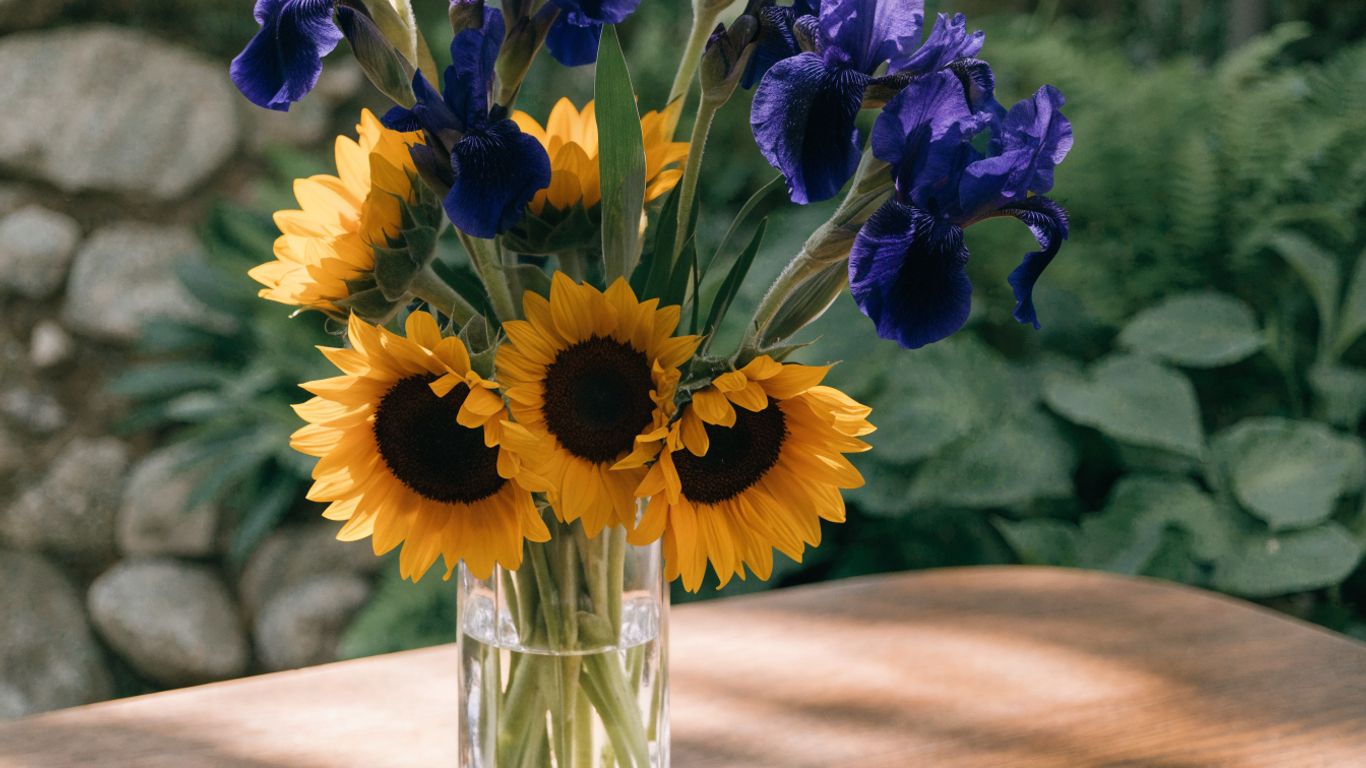
Sunflowers are often linked with warmth, hope, and an orientation toward light. Their bold shape and vivid color can make a room feel more open, which is one reason they work well as a visible reminder to keep looking for what supports you. The meaning need not be constant positivity; it can simply be the choice to notice one good thing while making room for harder feelings too.
Irises and the courage to keep growing
Irises have a striking form, and their traditional associations often include faith, hope, or wisdom. You might choose one to mark a period of learning, or to remind yourself that growth can be uneven and still be real. The bloom’s upright shape can feel quietly steady on a desk or windowsill, especially on days when progress seems difficult to measure.
Proteas and the beauty of resilience
Proteas are memorable for their unusual structure and sturdy presence. Their association with resilience can make them a fitting choice after a demanding season, when you want to recognize not only what you achieved but also the effort it took to get there. Resilience does not mean having to manage everything alone; it can include rest, asking for support, and beginning again at your own pace.
Flowers that represent self-love and renewal
Self-love is not a single mood or a reward for getting everything right. It can be the everyday practice of treating yourself with the consideration you readily offer other people. Flower meanings are flexible, but roses, peonies, and daffodils can each offer a gentle prompt to care for yourself, welcome joy, or make space for a fresh beginning.
Roses as symbols of love for yourself and others
Roses are widely associated with love, though their color and context can shape what they suggest. A rose on your table can be a quiet gesture of affection toward yourself, without needing to wait for a special occasion or another person to give it to you. If you like pairing a bloom with words, try a simple self-love affirmation that feels believable rather than grand.
Peonies as reminders to welcome abundance
Peonies, with their layered petals and generous shape, can bring to mind abundance, comfort, and the pleasure of letting good things in. Their presence might remind you that accepting a compliment, taking a break, or enjoying a small treat does not have to be earned through exhaustion. For a broader look at how recognition and well-being can matter in working life, see this resource on total rewards; the same underlying idea—that care and appreciation matter—can be worth remembering in your personal life, too.
Daffodils as signs of fresh starts
Daffodils are closely associated with spring in many places, making them natural companions for thoughts of renewal and new beginnings. You might bring them home when you start a project, settle into a new routine, or simply need a reminder that a difficult chapter is not the whole story. A fresh start need not be dramatic; sometimes it is one kind decision made today.
How to choose flowers that reflect your story
Choosing flowers for yourself can be less about finding the “right” meaning and more about noticing what you respond to. Consider the qualities you value, the colors you enjoy seeing, and what is available where you live. The flowers that remind you of your worth do not need to match a traditional list or look like anyone else’s bouquet.
Match a flower to a quality you value in yourself
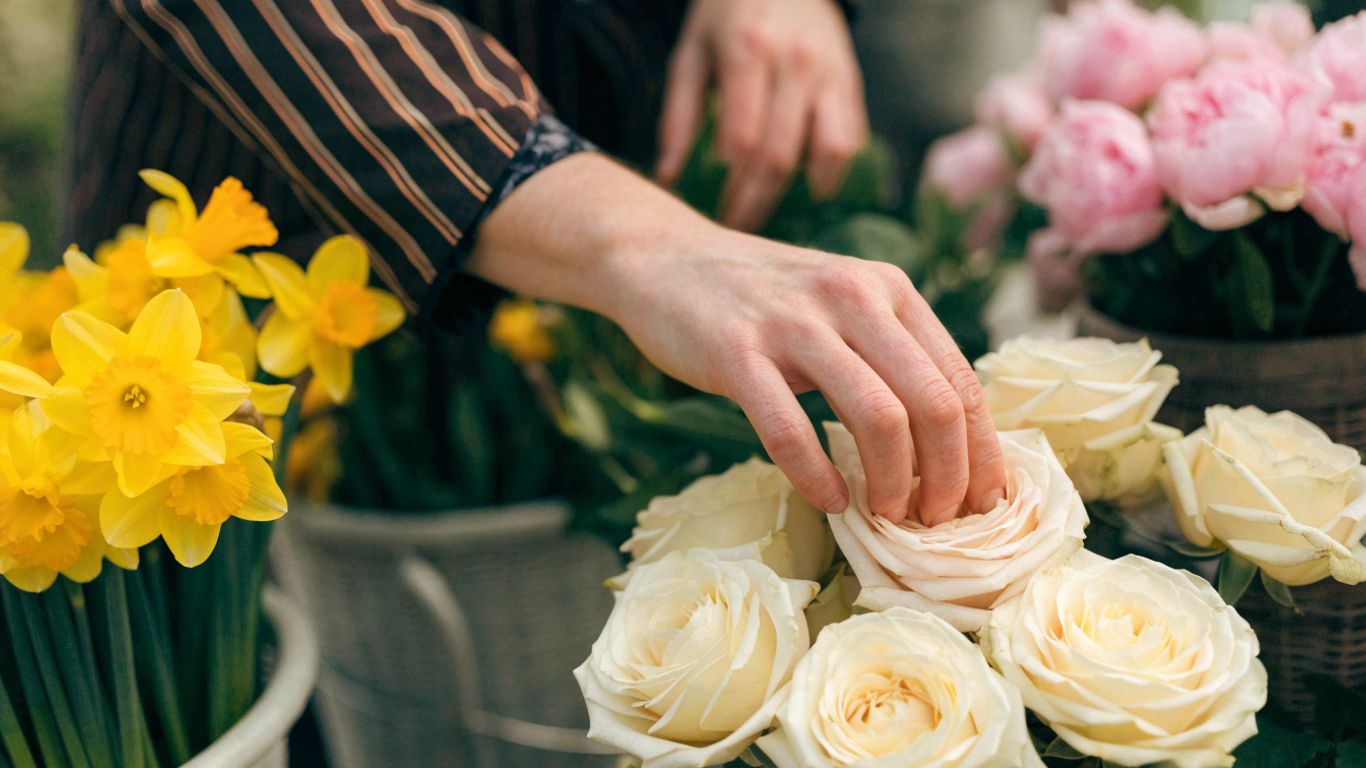
Start with a quality you want to recognize: patience, humor, determination, tenderness, or curiosity. Then choose a bloom whose appearance or association feels close to that quality. If no flower comes to mind, begin with the feeling you want to invite into your space and let your eyes lead you; your response can be more useful than a prescribed symbolism.
Consider color, season, and availability
A meaningful choice can also be practical. Seasonal flowers may be easier to find, and a color you genuinely enjoy is more likely to feel at home in your room. Think about fragrance, vase size, and how much tending you want to do. These small considerations make it easier to choose a bouquet you will enjoy rather than one that feels like another obligation.
Choose blooms based on personal meaning, not just tradition
Traditional flower language can be a starting point, but your own associations deserve equal weight. A bloom might remind you of a place you love, a family member, or a challenge you met in your own way. People may also be holding many different parts of life at once—family routines, home well-being, or a wedding celebration—and a flower can be a personal touch within any of them. For those contexts, practical reading on family health at home or wedding terms and conditions addresses different needs; neither determines what a flower has to mean to you.
Ways to use flowers as everyday self-worth reminders
A bouquet can be more than decoration if you give it a small intention. You might connect it to a quality you are practicing, a boundary you honored, or a moment of rest you allowed yourself. There is no need to make the gesture elaborate; a single stem can be enough to change how a familiar corner of your home feels.
Create a bouquet with an intention in mind
Before arranging the flowers, choose a simple intention such as “I can take this one step at a time” or “I deserve room to rest.” Then select blooms and foliage that suit the feeling, rather than trying to make every stem carry a separate message. A few accessible ideas can help you begin:
- Pick one color that matches the feeling you want to welcome.
- Include a flower that recalls a person, place, or season you cherish.
- Keep the arrangement simple enough to enjoy without fuss.
- Place it somewhere you will naturally see it during the day.
The intention does not have to become a rule you must follow. Let it be a kind reminder that you can return to when you need it, and change it whenever your needs shift. A quiet flower ritual can sit alongside other gentle forms of self-care, like the ideas in this peaceful flower-inspired self-care guide.
Pair a bloom with a journal entry or affirmation
A flower can give a journaling prompt a tangible starting point. Write about what the bloom brings to mind, or name one thing you handled with care that day. Keep the entry honest and modest; “I made it through a hard afternoon” can be more helpful than forcing a bright, sweeping statement. A recurring line beside a familiar vase can also become a small ritual of noticing yourself.
Give yourself flowers to mark a personal milestone
Flowers can mark a milestone even when nobody else knows it happened. Maybe you finished a demanding task, asked for what you needed, or got through a week that took more energy than expected. You do not need to wait for a birthday or ceremony. If a life event is also part of the moment, you might be sorting through details such as a visa bulletin; let the practical task be what it is, and choose a flower simply to acknowledge yourself along the way. For everyday reasons to send or buy blooms, browse these just-because flower ideas.
How caring for flowers can become a self-care ritual
Tending flowers can offer a calm pause in the day, especially when you approach it as care rather than a performance. A few unhurried minutes spent trimming stems or changing water may help you slow down and notice what is in front of you. The ritual can be small, imperfect, and adapted to your space; it does not need to become another standard you have to meet.
Make a simple routine for arranging and tending blooms
Choose a routine that fits your week: refresh the water when you make coffee, trim stems every few days, or take a moment to clear away leaves as they fade. As you work, notice the flower’s shape and color, and let the task be enough on its own. You could link it with a brief personal reflection practice if writing helps you pause, but the care itself can be the whole ritual.
Let imperfect flowers remind you that worth is not tied to perfection
A bent stem, a petal that has dropped, or a bloom that opens unevenly is not a failure. Flowers change as they grow and fade, and their beauty does not depend on staying untouched. Letting an arrangement be a little imperfect can be a useful reminder that your worth is not a prize for being flawless, productive, or cheerful all the time.
Choose a low-maintenance or reusable alternative when fresh flowers are not practical
Fresh flowers are not always convenient or affordable, and that does not make the reminder less meaningful. A hardy potted plant, dried flowers, a reusable paper bloom, or even a photograph of a favorite flower can serve the same personal purpose. Choose what fits your space, budget, and energy; the point is the connection you make, not whether the flowers are freshly cut.
Conclusion
Flowers can offer a gentle, visible way to honor qualities you already carry—strength, tenderness, resilience, or the willingness to begin again. Choose a bloom for its color, scent, story, or simply the way it makes you feel, then let it remind you that care and self-respect belong in ordinary days, too.
Frequently Asked Questions
What flowers are commonly associated with self-love?
Roses are often linked with love, and many people choose them as a reminder to extend care to themselves as well as others. Your own associations matter just as much as traditional meanings.
Which flowers can represent confidence?
Sunflowers are often connected with warmth and optimism, while irises can suggest hope or wisdom. Choose the bloom that feels most encouraging to you.
Can flower colors have different meanings?
People often attach different feelings to colors, but there is no single rule that applies to everyone. Personal taste, memory, and context all shape what a color means to you.
How can I use flowers as a daily reminder of my worth?
Put a bloom somewhere you will see it, pair it with a short journal entry, or choose an intention while arranging a bouquet. A simple, repeatable gesture is often enough.
Do I need to follow traditional flower meanings?
No. Traditional symbolism can offer ideas, but a flower’s personal meaning may come from a memory, a favorite color, or a quality you want to celebrate.
What can I use instead of fresh flowers?
A potted plant, dried arrangement, reusable paper flower, or picture of a meaningful bloom can all serve as a reminder. Pick an option that suits your circumstances.
How do I care for flowers without making it another chore?
Keep the routine modest, such as refreshing water while making coffee or trimming stems when you notice they need it. If caring for fresh flowers feels like too much, choose a lower-maintenance alternative.